
Mercury retrograde begins again on 24 October 2026, and warnings about misdirected messages, ill-advised contracts, missed meetings and devices breaking down “because of the planet” will inevitably appear around that date. Something interesting really is happening in the sky—but not what the phrase suggests when taken literally: Mercury does not slow down, stop in space or begin moving backwards around the Sun. Retrograde motion is an apparent change in the planet’s position against the stars, as seen from Earth.
That is precisely what makes the story compelling. The apparent “backward” movement is a predictable consequence of Solar System geometry, the planets’ differing speeds and the observer’s perspective. NASA and The Planetary Society explain it through the same basic mechanism: the planets continue along their orbits, but to an observer who is also moving, some temporarily appear to reverse direction against the stellar background.
At the same time, “Mercury retrograde” has a cultural life of its own. From Mesopotamian astronomical and astrological observations, through interpretations in the Greco-Roman world, to horoscopes shared online, the planet has become a symbol of communication, travel and negotiation. Symbolic meaning, however, is different from evidence of a measurable influence on contracts, phones or personal relationships. There is no need to ridicule a tradition in order to distinguish between those two levels.
In this InfoBuz analysis, we explain the dates for 2026, why the optical-geometric effect occurs, why it happens three times this year, how to interpret the terms stationary, inferior conjunction and shadow period, what ancient civilisations understood, and how modern claims can be tested. There is also a notable scientific coincidence: shortly after the October–November episode, the European-Japanese BepiColombo mission is scheduled to enter orbit around the planet on 21 November 2026.
For more on astronomy, see also Why 10 grams of dust from Phobos could change Mars’s story: the MMX mission and the road to 2031, which provides complementary background.
Editorial research: 23 October 2026. Main sources: NASA, The Planetary Society, the National Astronomical Observatory of Japan, ESA, OpenStax, the Internet Encyclopedia of Philosophy and Nature. Exact-to-the-minute times for “stations” may vary between catalogues because of the coordinates used, ephemerides, time-zone conversions and rounding. For a general readership, we give the shared calendar dates; we do not claim that a particular minute is a physically visible event in the sky.
Mercury retrograde without the myths: the 30-second explanation
Mercury retrograde means that, viewed from Earth, Mercury’s position relative to distant stars appears for a time to move in the direction opposite to its usual motion. It is not a physical reversal of the planet’s orbit. Mercury continues to orbit the Sun, and Earth is moving too. The combination of the two movements produces the apparent change of direction seen in the sky.
According to astronomical calendars and ephemerides for 2026, the periods are 26 February–20 March, 29 June–23 July and 24 October–13 November. There is no robust scientific evidence that these periods cause electronic failures, arguments or delays involving paperwork. If you prefer to use them as a cultural prompt for reflection, that is a personal meaning—not a physically demonstrated forecast.
1. Mercury retrograde dates in 2026: all three periods
In 2026, Mercury has three periods of apparent retrograde motion in the coordinate system commonly used by astrological calendars. Two have ended, while the third begins on 24 October, one day after this article’s research date. The coming episode ends on 13 November 2026.
| Period in 2026 | Approximate duration | Status on 23 October | Associated astronomical event |
|---|---|---|---|
| 26 February–20 March | About 23 days | Ended | Inferior conjunction in March |
| 29 June–23 July | About 24 days | Ended | Inferior conjunction in July |
| 24 October–13 November | About 20 days | About to begin | Inferior conjunction on 4 November |
Dates checked against Astrodienst’s retrograde-motion tables, NASA DE421 ephemeris calculations presented by Sterngucker, and the NAOJ astronomical calendar. “Station” times differ in some catalogues, especially according to the definition of projected direction, without changing these calendar dates.
In tropical Western astrology, the October–November cycle is described as taking place in Scorpio. This is a classification within the symbolic system of the 12 zodiac signs, not a claim that the planet is passing through a physical region of space with a demonstrated capacity to alter the life of a particular person.
2. What the word “retrograde” means in astronomy
In the usual representation of the sky, Mercury moves from one night to the next in one direction against the background of distant stars. Astronomers call this apparent motion direct or prograde. At certain times, its projected position appears temporarily to move in the other direction: this is apparent retrograde motion.
NASA explicitly explains that the planet does not actually start moving backwards in its orbit. Its position in the sky changes because the observer is on another moving planet and our lines of sight change.
The word “apparent” matters too: the phenomenon is not an invented illusion, but a real geometrical change in the direction in which you need to look to see the planet. An astronomical ephemeris can predict that direction accurately. What does not change is the direction of the planet’s motion around the Sun.
3. A thought experiment: two cars on a road and a moving observer
Imagine travelling on a two-lane road with another car in the adjacent lane. When you overtake it, the slower car may seem to move backwards relative to your window, even though both vehicles are moving forward. It has not suddenly reversed direction; its position relative to you has changed.
Mercury’s geometry is more complex, because the planets follow orbits around the Sun and are viewed against extremely distant stars. But the analogy captures the right principle: relative motion can produce an apparent reverse displacement.
In the case of Mars or Jupiter, Earth, on a faster inner orbit, periodically “overtakes” the planet. With Mercury, the complementary situation applies: Mercury has an inner orbit and travels around the Sun faster than Earth does. That is why the explanation about “Earth overtaking Mars” should not simply be repeated without adapting it to Mercury.
You can also read InfoBuz’s analysis of how position, time and movement are used in GPS. They are different phenomena, but both show that perspective and physical calculation matter more than intuitive impressions.
4. Mercury orbits the Sun in 88 days. Earth takes about 365
According to NASA, Mercury completes an orbit around the Sun in about 88 Earth days, the shortest orbital period of the eight planets. Earth completes one orbit in about 365.25 days. Mercury is an inner planet, much closer to the Sun, with a high average orbital speed.
Because of that difference, Mercury periodically returns to similar geometrical configurations relative to Earth. A full cycle of the relative Sun–Mercury–Earth positions is called the synodic period; for Mercury, it is about 116 days.
An indicative formula, treating the orbits in simplified terms through their average periods, is: 1/S = 1/88 − 1/365.25. The result is S ≈ 115.9 days. This explains why there are roughly three apparent-retrograde episodes in a calendar year—sometimes four, depending on where the cycles fall relative to the start and end of the year.
The synodic-period calculation does not on its own give the precise, minute-by-minute moment of each station. For that, astronomers use ephemerides and numerical models that account for real, elliptical orbits and the observer’s location.
5. What are “retrograde station” and “direct station”?
On the days when apparent direct motion changes to retrograde motion, a planet’s projected angular velocity in a given coordinate system passes through zero. We say the planet is stationary in the sky. This describes the rate of change of a coordinate, not the planet’s physical speed through space.
Around 24 October 2026, Mercury apparently changes direction, and around 13 November 2026 it returns to direct motion. In the interval between those dates, differences in position can be followed mathematically or in astronomical simulation software.
There is a nuance often omitted from popular calendars: if a “station” is defined through a change in ecliptic longitude or another projected sky coordinate, the calculated times can differ. In NAOJ tables, Mercury’s 24 October station has a different time from some astrological ephemerides based on ecliptic longitude. For ordinary use, both describe the same apparent transition around that day, not two reversals of the orbit.
6. What is the inferior conjunction of 4 November 2026?
Mercury and Venus can pass, as seen from Earth, between our planet and the Sun. When Mercury is in approximately the same geocentric direction as the Sun and lies on the Earth–Sun side, the configuration is called an inferior conjunction. For the current cycle, it occurs on 4 November 2026, according to NASA and NAOJ calendars.
This does not mean Mercury will automatically cross the Sun’s disc as a visible black dot. A solar transit requires further alignment with the orbital plane so that the planet is actually projected across the Sun’s disc. Most inferior conjunctions are not transits.
Important warning: do not try to find Mercury near the Sun with binoculars or a telescope not equipped with professional solar filters. Accidentally viewing the Sun through an optical instrument can cause severe eye damage. Around conjunction, Mercury is apparently too close to the Sun for ordinary safe observation.
7. When is Mercury easier to see in October and November 2026?
Mercury never moves very far from the Sun in the sky because its orbit lies inside Earth’s. That is why it is harder to observe than Jupiter or Saturn. It generally needs to be sought shortly after sunset or before sunrise, with an unobstructed horizon and a sufficiently clear sky.
According to NASA’s 2026 astronomical calendar, Mercury reached greatest eastern elongation on 12 October, a period favourable for evening-sky observation depending on latitude and season. On 20–21 November, after the retrograde episode, calendars indicate a western elongation, an opportunity for the morning sky.
Elongation is the angular separation between a planet and the Sun as viewed from Earth. It does not indicate their physical distance in kilometres. Actual visibility depends on the ecliptic’s angle to the horizon, twilight, latitude and weather conditions. We do not promise that Mercury will be visible to the naked eye from every Romanian city on a particular morning.
For other astronomical events during the season, see InfoBuz’s October 2026 Draconids calendar and its Leonids guide for November. Meteors and Mercury retrograde are distinct astronomical phenomena.
8. The “shadow period”: an astrological term, not Earth’s physical shadow
Many astrological calendars set out three stages: pre-shadow, retrograde proper and post-shadow. In that system, the pre-shadow starts when Mercury first crosses the zodiacal degree at which it will turn direct again, while the post-shadow ends when the planet returns to the degree where retrograde motion began.
For the autumn 2026 cycle, such calculations place the pre-shadow roughly between 4 and 24 October, and the post-shadow between 13 and 30 November. These stages have meaning within the astrological convention used to mark out the cycle on a zodiacal coordinate. They are not periods in which Earth casts a shadow on Mercury, and they do not represent a new physical mechanism affecting electrical devices.
The term can cause confusion because astronomy does involve real shadows: eclipses, transits and other configurations in which bodies block light. “Mercury in pre-shadow” is neither an eclipse nor an astronomical warning. If you encounter the phrase, ask about the definition of the system being used rather than assuming it is a phenomenon observable with special glasses.
9. If all planets have apparent retrograde motion, why do we always talk about Mercury?
Mars, Jupiter, Saturn, Uranus and Neptune can also have periods of apparent retrograde motion. NASA explains the same general principle of perspective: for the outer planets, Earth periodically overtakes them in its orbit, and they appear to loop backwards against the stars.
Mercury appears more frequently in popular conversations because its cycle is fast and because, in Western astrological tradition, it came to be associated with messages, trade, travel, negotiations and communication. A phone error or wrongly sent email can readily fit an already familiar cultural narrative.
There is no need to infer that Mercury exerts special forces on mobile-phone networks. The planet has gravity and a magnetic field as a real astronomical object, but its mere apparent change of direction in the sky does not entail a physical reversal of those properties on Earth. Astronomical observations can also be tested independently of symbolic interpretations.
10. Did Mercury retrograde exist before internet astrology?
Of course. Apparent retrograde motion is a consequence of the orbital system and exists independently of people and their calendars. Ancient civilisations observed planetary positions and developed ways to predict their movements long before modern orbital astronomy.
According to the OpenStax Astronomy university textbook, Mesopotamian astrology developed in Babylonia around two and a half millennia ago, and observations of celestial bodies were also used to interpret events concerning kings and communities. The Internet Encyclopedia of Philosophy documents earlier traditions of astral divination and the earliest surviving individual horoscope, dated to 410 BC in Babylon.
It is necessary to separate observing a celestial object from interpreting it as a sign for human life. The first supported the development of calendars and, eventually, mathematical astronomy; the second became a cultural system of meanings. The two were historically intertwined, but they are not equivalent under the standards of modern science.
11. From Babylon to Ptolemy: how astrological interpretation emerged
Hellenistic astrology combined Mesopotamian traditions, Greek ideas about the cosmos and methods for describing planetary positions. In the Greco-Roman world, systems for interpreting zodiacal positions and the moment of birth were developed. In the second century AD, Claudius Ptolemy wrote Tetrabiblos, one of the important texts in the Western astrological tradition.
The historical context should not be reduced to a story in which “one astrologer invented Mercury retrograde”. Observations of planetary movement are much older, while the meanings assigned to them evolved across regions and periods. Ptolemy was also known for his astronomical works, illustrating the historical connection between the fields.
The planet’s Roman name, Mercurius, refers to the swift messenger of the gods, a figure associated with roads, commerce and exchange. NASA notes the name’s connection to the Roman god known for speed. The astrological association between Mercury and communication is a cultural interpretation developed over time; it is not a measurement of physical influence on conversations.
12. Why the geocentric model made retrograde motion seem problematic
Seen from Earth, the celestial world appears to revolve around the observer. For ancient astronomers, explaining planetary loops became a mathematical challenge. Geocentric models used combinations of circles, including epicycles, to describe apparent positions and generate predictions.
The modern heliocentric model offers a more intuitive geometrical explanation: all the planets in question move around the Sun, and Earth itself is a moving observer. The model does not remove the need for precise calculations, but it explains why a planet can seem to reverse direction without physically changing the direction of its orbit.
This does not mean every ancient prediction was wrong, or that ancient astrologers did not observe the sky carefully. Some observations and mathematical methods had real historical value, even if cosmological explanations and interpretations of human destiny are not automatically accepted by contemporary science.
13. Does Mercury “in Scorpio” mean the same thing as the planet seen in the constellation Scorpius?
Not necessarily. In tropical Western astrology, zodiac signs are 12 equal sectors of 30 degrees linked to a seasonal reference system. Astronomical constellations are real, officially delineated regions of the sky, with different angular sizes. There is also the precession of Earth’s axis, which slowly changes the relationship between certain celestial markers and the calendar.
Therefore, “Mercury retrograde in Scorpio” in a horoscope and “Mercury lies against the background of the constellation Scorpius” on an astronomical chart should not be presented as identical claims. They are different reference systems. Other astrological traditions also use sidereal systems or distinct conventions.
For an explanation of zodiac signs, ascendants and natal moons as terms in astrological tradition, InfoBuz has a guide to reading a horoscope. This article focuses on the observable astronomical phenomenon and the cultural origins of its interpretation.
14. What does contemporary astrology say about communication, technology and contracts?
In popular astrological interpretations, Mercury retrograde periods are often linked to misunderstandings, misread messages, technical errors, transport delays and the return of unresolved issues. Some common advice is prudent in itself: check a contract, save a backup or reread a message before sending it.
But the usefulness of a precaution does not prove the proposed cause. It is worth making backups regardless of Mercury’s position, because devices can fail for documented technical reasons. It is sensible to check a contract because it has legal consequences, not because the sky has temporarily become hostile to negotiation.
Astrological interpretations vary among authors, schools and platforms; there is no single, precise and uniform prediction that can be attributed to everyone who follows astrology. For readers interested in the month’s symbolism, InfoBuz also publishes its horoscope for November 2026. That belongs to the interpretative genre, not a scientific analysis of orbital motion.
15. What scientific evidence is there that Mercury retrograde causes problems in people’s lives?
There is no robust scientific evidence supporting a causal link between Mercury’s period of apparent retrograde motion and phone failures, failed negotiations, break-ups or administrative delays. Demonstrating such a link would require measurable definitions, systematically collected data, comparison groups, control of confounding factors and reproducible results.
A study often cited in the wider discussion of astrology is the double-blind test by Shawn Carlson, published in Nature in 1985. The paper examined claims about interpreting natal charts and describing personality; its results did not support the claimed performance. It is important not to present this study as an experiment that directly tested phone failures during Mercury retrograde; it concerns other astrological claims.
A specific test of communications would require, for example, verifiable statistics on the number of IT incidents reported daily, compared across retrograde and non-retrograde periods while controlling for seasonality, online traffic, holidays, software changes and other factors. Without such a demonstration, the astrological prediction remains an interpretation, rather than a validated technical explanation.
16. Why does it feel so convincing when a phone actually breaks?
One psychological explanation is selective attention: once we learn that an event is supposed to cause problems, we become more alert to situations that fit the expectation. If a phone freezes, the experience can become the “evidence” we recount. If it works normally for hundreds of hours, that usually does not become an equally memorable recollection.
Confirmation bias describes the tendency to seek out, interpret or remember information that confirms a pre-existing belief more easily. Another difficulty is the base rate: communication errors, late buses and device problems occur in every week of the year. Without a baseline figure, a few dramatic examples can look like a real increase.
There is also the issue of elastic wording. A prediction such as “you will encounter a communication difficulty” covers a great many possible situations, from a late reply to a minor misunderstanding. The broader the wording, the easier it is to find a later event that seems to confirm it.
This is not a judgement on the intelligence of people who follow horoscopes. Everyone is vulnerable to these cognitive shortcuts, including people who believe they never fall into the trap of a coincidence.
17. A 21-day test: how to check a prediction without fooling yourself
If you want to explore the subject rigorously, you can keep a log of incidents before and after the retrograde period. The exercise is no substitute for a large scientific study, but it shows why selectively remembering a few situations is insufficient.
- Define the event before you start. For example, “an important message sent to the wrong recipient” or “a technically interrupted call”, rather than “an unclear day”.
- Count ordinary days too. Record the same categories outside the retrograde period for comparison.
- Record how many opportunities there were for an error. Sending 10 emails in a day is not the same as sending 100.
- Do not alter the definitions along the way. Otherwise, you can include any new situation simply because it fits the story.
- Look for alternative explanations. A software update, an operator experiencing problems or severe weather can cause real delays.
- Do not draw strong conclusions from a small sample. A few weeks in one person’s life do not demonstrate a universal link.
A useful question is: “If Mercury retrograde did not exist as a cultural idea, would I notice this incident as genuinely unusual?” That does not dismiss the value of a personal experience; it helps separate the experience from the causal explanation assigned to it.
18. When can planets physically affect Earth, and why retrograde is not the mechanism?
The gravity of celestial bodies exists, but their effects depend on mass, distance and geometry. Solar light and radiation affect Earth’s environment. The Moon makes an important contribution to tides. Space missions study real phenomena such as magnetic fields, particles, interaction with the solar wind and orbital perturbations.
By contrast, apparent retrograde motion is a change of projection in the sky. It is not a gravitational or magnetic switch. There is no documented physical mechanism through which the temporary decrease in Mercury’s apparent longitude would alter a messaging app’s algorithm or increase a router’s errors.
It is sometimes also confused with solar storms, which have real causes and effects studied by space physics. For the difference between dramatic claims and documented effects on GPS, communications or power grids, see InfoBuz’s analysis of extreme solar storms. A geomagnetic storm caused by solar activity is not an effect of astrological “retrograde”.
19. What astronomers observe when tracking Mercury: data, not horoscopes
Astronomers can calculate a planet’s position at past and future moments using numerical ephemerides, orbital parameters and observations. When an ephemeris predicts Mercury in a particular direction as seen from Earth, that prediction can be checked through observations and measurements using suitable instruments and methods.
Astronomy is not based on saying an event was “good” or “bad” for a zodiac sign. It tracks positions, distances, velocities and physical phenomena. For example, NASA provides data on orbital period, diameter and distance from the Sun, while NAOJ publishes tables of celestial events that can be compared with other catalogues.
Minute-level differences between two calendars should not become the basis of a theory about “hidden dates”. Some arise from time zones, calculation methods and even the coordinates used to decide that apparent variation is zero. When reading a table, check which system, time unit and event definition it uses.
An example from the same family of issues requiring precision is InfoBuz’s piece on leap seconds and the UTC time scale. It does not affect Mercury retrograde as a popular phenomenon, but it shows why minutes and measurement conventions need to be understood correctly.
20. BepiColombo: the real scientific story about Mercury in autumn 2026
While the internet debates whether Mercury retrograde affects phones, scientists are preparing a highly concrete technical achievement: the BepiColombo mission, led by the European Space Agency (ESA) together with Japan’s JAXA, is approaching Mercury after eight years of navigating the inner Solar System.
According to ESA’s update of 6 October 2026, the transfer module was separated on 3 September 2026, and the two orbiters will be gravitationally captured into orbit around Mercury on 21 November 2026. Their separation is scheduled for 9–10 December 2026, while routine scientific observations will begin in April 2027, after adjustment and verification stages.
The orbiters will investigate the magnetic field, surface composition, interior and interaction between the planet and the solar environment. They will not look for a connection between Mercury’s astrological position and conversations among people on Earth; they will make precise physical measurements.
One further distinction matters: a spacecraft entering orbit on 21 November must not be confused with 13 November, when the apparent retrograde interval ends. The events are independent and have different definitions. The mission schedule may be operationally adjusted, so the date given in this article reflects the timetable communicated by ESA on 23 October 2026.
21. What space probes have discovered about Mercury beyond symbolic beliefs
Mercury is the smallest planet in the Solar System, a rocky body with numerous craters and a metallic core that is very large relative to its size. Its proximity to the Sun produces extreme temperature contrasts. The planet also has a global magnetic field, an important reason for researchers’ interest.
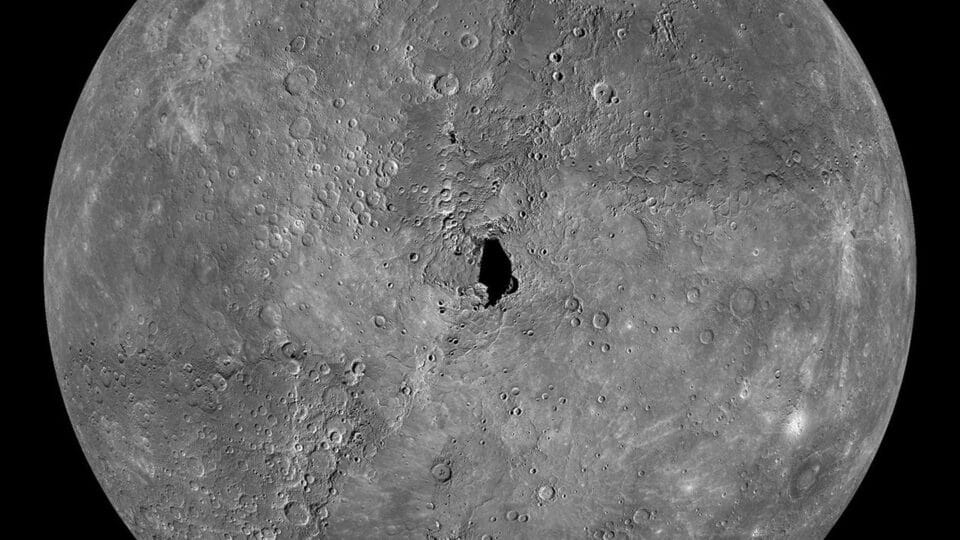
The US MESSENGER mission, which entered orbit in 2011 and ended operations in 2015, supplied essential data on surface topography and composition. Actual images of planets do not show “retrograde energy”; they show geology, materials and measurable results. NASA’s mosaic of Mercury’s north pole, provisionally used as the featured image, is an example of instrumental observation, not a photograph of the apparent direction-change effect.
BepiColombo will continue the research with two spacecraft able to investigate complementary regions and phenomena. This is why 2026 and 2027 are important years for scientific knowledge of Mercury, regardless of the attention given to horoscopes.
For other missions and fundamental concepts, read InfoBuz on planetary defence and the DART mission or what the Euclid telescope has discovered in the sky.
22. Five Mercury retrograde myths, checked one by one
| Popular claim | What actually happens | Conclusion |
|---|---|---|
| “Mercury physically moves backwards” | Its projected position from Earth’s perspective appears to reverse direction against the stars. | Literally false |
| “The planet stops for three weeks” | It does not stop in its orbit; only the variation of an apparent coordinate can temporarily become negative. | False |
| “Phones break because of retrograde” | No causal link has been demonstrated; errors have technical causes investigated independently. | Unproven |
| “Any contract signed now will go badly” | Good and bad contracts can occur at any point in the year; checking clauses is always useful. | Unproven |
| “Retrograde is a calculable astronomical event” | Yes. The apparent change in position against the stars can be predicted with ephemerides. | True |
The word “unproven” is deliberate: we are not claiming the philosophical impossibility of any influence whatsoever, but noting that concrete claims as they currently circulate lack credible, reproducible evidence. The standard for a claim about the physical world is not its number of social-media shares.
23. Why it is popular in 2026: a phenomenon that offers a story for random events
The phrase “Mercury retrograde” functions in everyday conversation as a shorthand explanation for a frustrating spell. A delayed train, a confusing message and an unresponsive app can be tied together in one story. That story may have value as humour, solidarity or personal reflection without being a validated scientific hypothesis.
Digital platforms favour memorable wording, especially wording that can apply to many people. When a calendar event is announced in advance, people may more readily notice situations compatible with the expectation. No study presented here quantifies exactly how much the phrase’s popularity rose in Romania in 2026; separate search and social-media data would be needed.
For people who use astrology as a personal language, a useful question is whether they choose to treat it as a metaphor or as a causal claim. The first may be a cultural convention without a claim to predict errors; the second requires evidence and may affect financial, legal or medical decisions if taken literally.
24. Should you delay contracts, travel or important decisions until 13 November?
There is no astronomical or scientific basis for recommending a general postponement of contracts, travel, hiring or purchases solely because of apparent retrograde motion. Sometimes delay is justified by missing information, excessive cost, real risk or an unfavourable contractual deadline. Those are verifiable reasons, independent of Mercury’s position.
If you are about to sign a contract, check the obligations, costs, deadlines, penalties and applicable withdrawal rights. If you are about to travel, check the timetable and weather conditions. If you work with important files, make sure you have a backup. These are sound recommendations on any day, including after 13 November.
A delay, for example, may be caused by traffic, weather or transport failures; concrete information sources exist for these. On InfoBuz, the guide to using live weather and traffic data offers more relevant tools for deciding whether to set out than an astrological calendar.
Do not use Mercury retrograde as a reason to postpone necessary medical care, compliance with a legal deadline or resolving a safety problem. Real risks must be assessed according to the specific circumstances.
25. How to follow the apparent motion in an astronomy app
The clearest public demonstration does not require looking towards the Sun. Use a digital planetarium that lets you set the date and time and display planets’ geocentric positions against the stars. Select Mercury and follow successive positions in October and November 2026, using the same reference time each day.
- Choose an observer’s viewpoint from Earth, rather than a camera following Mercury’s orbit from outside.
- Turn on the celestial or ecliptic coordinate grid and stellar background.
- Record the projected position on several days before and after 24 October.
- Continue until close to 13 November and observe the change in direction of movement.
- Compare it with a top-down view of the Solar System: the planet continues in the same orbital direction.
- Do not try to make observations with optical instruments near the Sun; a simulation is sufficient for a safe demonstration.
If the programme displays times that differ slightly from an astrological table, check the time zone, coordinate system and ephemeris version. Reproducible astronomy requires a precise definition of how we measure, not a single magical clock for “retrograde”.
26. The anatomy of an astrological claim: what makes it testable?
A claim such as “between 24 October and 13 November there will be 15% more email errors than in a comparable period” is, in principle, testable, if we rigorously define what an error is and who is included in the measurement. By contrast, “the energy of this period is confusing” offers no unit of measurement and can receive different interpretations after any result.
A fair test must also separate alternative causes. If a platform releases a faulty major update during the period examined, incident numbers may rise independently of a planet’s apparent movement. If the observer reports only unpleasant events, the data are already selected in one direction.
That does not mean science can directly answer the subjective question, “Was it useful for me to reflect during this period?” A symbolic practice can have personal meaning, but personal experience and the claim that a planet caused an external incident are different kinds of proposition.
27. When is the next Mercury retrograde after November 2026?
According to ephemerides available for 2027, the next episode begins around 9 February 2027 and ends around 3 March 2027. The dates can vary by a day in some sources depending on the time zone and the exact definition of apparent motion. Astrodienst and calendars calculated from ephemerides allow the periods to be checked.
There is no reason to reorganise the year around these dates unless you have a personal motivation independent of astrological causal claims. For actual observation of the planet, check elongations, sunrise and sunset times, and sky conditions, since these determine when Mercury can be observed safely.
Frequently asked questions about Mercury retrograde
When does Mercury retrograde start in October 2026?
On 24 October 2026, according to the apparent-motion calendars used for this phenomenon. It refers to a change in the direction of the projected geocentric position, not a reversal of the physical orbit.
When does Mercury retrograde end in autumn 2026?
On 13 November 2026. Some astrological calendars also mention a stage called post-shadow until around 30 November, which is not the same as the retrograde interval itself.
Does Mercury really move backwards around the Sun?
No. The planet travels in the same direction in its orbit. From Earth, its position relative to the stars temporarily appears to progress in the opposite direction.
How many times is Mercury retrograde in 2026?
Three times: 26 February–20 March, 29 June–23 July, and 24 October–13 November. The frequency results from the relative motion of the planets.
Why does it happen so often?
Mercury completes an orbit in about 88 days, and its synodic period relative to Earth is about 116 days. That is why the intervals occur around three or four times in a year.
What does Mercury retrograde in Scorpio mean?
It is an interpretation within tropical Western astrology, which uses symbolic zodiacal sectors. It is not evidence of a specific physical influence on people born under a particular sign.
Is Mercury retrograde a real astronomical phenomenon?
Yes. Apparent retrograde motion is real as a change in observed direction and can be calculated. Interpretations about effects on personal life are separate claims without robust scientific evidence.
Does Mercury retrograde break phones, computers or the internet?
There is no robust evidence for such causation. Faults have technical explanations, and some communications disruptions can be caused by real physical phenomena, such as solar activity, independently of retrograde motion.
Should I delay signing a contract?
Not solely because of Mercury retrograde. Examine the terms, deadlines, price and real risks. If there are concrete contractual reasons to delay, consider them separately.
What is the shadow period?
A term used by certain astrological schools for the intervals in which Mercury passes, before or after retrograde, through zodiacal degrees associated with the cycle. It is not a physical shadow or an eclipse-like event.
What is the inferior conjunction of 4 November 2026?
A configuration in which Mercury lies in the direction of the Sun, between Earth and the Sun. It should not be observed with binoculars or a telescope near the Sun without dedicated solar equipment.
Can retrograde motion be photographed?
It can be documented through successive apparent positions or simulated with ephemerides. For Mercury, its apparent proximity to the Sun makes direct observations difficult and requires caution; a planetarium app is more practical for a demonstration.
When does BepiColombo arrive at Mercury?
ESA schedules orbital insertion for 21 November 2026, followed by separation of the two orbiters in December and the start of scientific observations in April 2027, subject to operational adjustments.
When does the next Mercury retrograde begin in 2027?
Around 9 February 2027, ending around 3 March 2027, according to the ephemerides consulted. Always check the calendar’s time zone.
Checked sources: astronomy, history and assessment of astrological claims
- NASA – What does it mean for Mercury to be in retrograde?: explanation of apparent motion.
- The Planetary Society: the difference between apparent and actual movement.
- NASA – Mercury: Facts: orbital period, speed, dimensions and the name’s origin.
- National Astronomical Observatory of Japan: astronomical events in 2026, stations, conjunctions and elongations.
- NASA – Sky Events Calendar 2026: elongations and conjunctions.
- Astrodienst – Retrograde Motion: the apparent-motion calendar and astrological terms used.
- Sterngucker – Mercury retrograde 2026: calculations based on NASA DE421 ephemerides and an explanation of the conventions.
- OpenStax Astronomy – Astrology and Astronomy: historical roots and the difference between the disciplines.
- Internet Encyclopedia of Philosophy – Hellenistic Astrology: Babylon, the Hellenistic tradition and early horoscopes.
- Nature – Carlson, A double-blind test of astrology (1985): an empirical assessment of natal charts, distinct from testing technical problems during “Mercury retrograde”.
- ESA, update of 6 October 2026: the BepiColombo mission schedule and orbital insertion in November.
- NASA Photojournal – Mercury Globe: North Pole: a real mosaic made with MESSENGER instruments.
Image note: The real image of Mercury provisionally uploaded in WordPress belongs to NASA’s MESSENGER mission (credit: NASA/Johns Hopkins University Applied Physics Laboratory/Carnegie Institution of Washington). It is not an image of the retrograde phenomenon, which is a change in apparent position over time. The original premium InfoBuz image is a 16:9 artistic digital composition designed to explain visually the idea of perspective and orbits, not an astronomical diagram to scale.
Conclusion: the real Mercury retrograde is more interesting than the legend
Mercury retrograde is not a planet that changed its mind and began moving backwards. It is a phenomenon of astronomical perspective, resulting from how Earth and Mercury move around the Sun. It can be calculated, explained and checked. The period beginning on 24 October 2026 and ending on 13 November does not call for a technical warning for phones or a general suspension of important decisions.
Astrology has built a cultural language around this motion, concerning communication and change. Its history can be interesting, and personal reflection may have a place in someone’s life. But a symbolic interpretation and a testable prediction about the physical world are not the same thing.
A few days after the cycle ends, the BepiColombo mission is scheduled to reach a major stage in the exploration of the planet. Mercury’s real story in 2026 is not that it disrupts our messages, but that we can observe, calculate and explore it with a precision ancient astronomers could scarcely have imagined. The most appealing lesson of retrograde motion may be this: sometimes something only appears to be moving backwards because we have not yet changed our viewpoint.


Discuția cititorilor
Ai o opinie sau o întrebare despre acest articol? Spune-ne ce crezi.
Fii primul care deschide discuția.
Te rugăm să păstrezi un limbaj civilizat și să discuți la subiect. Comentariile spam sunt filtrate automat.