
Life by subscription often begins with an apparently routine choice: 29 lei for music, 39 lei for films, another amount for photos in the cloud, and perhaps a subscription to an app used heavily for two weeks. None seems expensive on its own. At the end of the month, however, you may find that you are paying for ten services, regularly using only four, and that if you stop paying, some of the things you thought of as “yours” become inaccessible.
We did not stop buying objects overnight. Gradually, we moved from paying to own a product to paying for continuous access to a service. Music moved from records and files to online libraries. Software installed on a computer became a periodically charged service. Photos, files, games, courses, workouts and features of some devices can now depend on an active account. In return, users receive updates, synchronisation, multi-device access and convenience—but also accept new forms of dependency.
What does this shift cost? What is the difference between buying a digital film and owning a DVD? Can a paid-for game disappear if its server closes? Is it legal to find that a subscription has renewed? And how can you check, in one evening, all the payments that repeat without your remembering them? This InfoBuz analysis addresses those questions using European data from 2026, Romanian legislation, an illustrative budget in lei, a spending-audit plan and a simple test: what remains yours if you stop paying tomorrow?
Editorial research: 23 October 2026. Main sources: Eurostat, the European Commission, Romania’s Legislative Portal, Your Europe and the European Citizens’ Initiative “Stop Destroying Videogames”. Prices used in the calculations are hypothetical, not verified rates charged by commercial platforms. The legal information is general; specific rights depend on the contract, the type of service and the circumstances of the transaction.
Life by subscription: the short answer
A subscription is not, in itself, a trap. Paying for two months of intensive use of costly software may be more convenient than buying a perpetual licence. A good service may include maintenance, security and up-to-date content. The problem arises when recurring charges become invisible, when you no longer use the service, when cancellation is difficult, or when you discover too late that the digital product you “bought” was only a conditional right of access.
For more on personal finance, see also “Buy now, pay later”: the new EU rules that will change online instalments from 20 November 2026, which provides related details on this subject.
The financial question is: how much do you pay each year for services you actually use? The legal question is: what right of use did you acquire, and what can the provider change? The practical question is: how do you retrieve your files and stop a recurring payment without losing something important? There is no single answer for every platform, subscription or digital product.
1. From shelves to logins: the rise of the access economy
Many products were once sold as individual objects: a CD, a game on disc, software installed from physical media or a film on DVD. That did not mean the user received all copyright in the music or software. Licences and restrictions could apply then, too. But as a rule, the physical medium remained in the buyer’s possession, and its use did not necessarily require maintaining a permanent account with the provider.
With fast internet and smartphones, services could provide access to vast libraries without distributing every file as an independent good. For companies, recurring revenue makes financial planning easier. For users, a low entry price can seem preferable to a major purchase. As the model expanded, however, payment ceased to be tied only to a new song or film and instead bought the right to keep entering the same library.
The model spread from entertainment to software, storage, news, education and mobility services. Not all of these involve a “loss of ownership”: a digital newspaper is primarily an ongoing editorial service; a storage platform provides infrastructure and synchronisation; a downloaded game may have a separate licence. Each contractual relationship must be assessed individually rather than given the same label.
2. How widespread are subscriptions? Eurostat’s 2026 figures
On 27 August 2026, Eurostat published 2025 data on paid digital subscriptions. Among EU internet users aged 16 to 74 who had been online during the three months before the survey, 32.7% paid for streaming services for films, series or sport, 23.0% for music, 7.2% for digital press and 6.1% for game-streaming services.
In Romania, about 21.37% of internet users paid for video streaming, according to an AGERPRES report based on Eurostat data. This was below the EU average but above the figures published for Hungary and Italy. It is not the share of all people living in Romania, nor is it the average number of subscriptions per household.
| Paid digital service | EU internet users, 2025 | What the statistic measures |
|---|---|---|
| Films, series or sport | 32.7% | People with a paid subscription in this category |
| Music | 23.0% | People with a paid music subscription |
| Online press | 7.2% | People with a subscription to digital publications |
| Game streaming | 6.1% | People paying for this type of service |
Source: Eurostat, release of 27 August 2026, reference year 2025. The percentages cannot be added to find the share of users with at least one subscription: the same person may use several services.
The data do not show how much a person in Romania spends each month, how many recurring payments each household has, or how many subscriptions are forgotten. Answering those questions requires bank statements or separate research, not mechanically multiplying Eurostat percentages. The financial context is also discussed in InfoBuz’s analysis of how experienced inflation differs among households in Romania.
3. Ownership, licence or access: what are you actually buying when you click “Pay”?
A physical object, a downloaded file, a digital licence and a platform subscription do not have the same legal structure. Ownership of the medium is not the same as copyright; a licence may permit use for a particular purpose, duration and set of devices; a subscription generally provides access while its contractual conditions are met.
| What you choose | What you have in practice | What to watch for |
|---|---|---|
| Physical disc or book | You own the material object, not all copyright in the work | Wear, compatibility and possible use restrictions |
| DRM-free digital file | You can keep a local digital copy, within the licence limits | Backups, compatibility, distribution and copying terms |
| Film or game “bought” online | Often an access licence defined by terms | Download availability, DRM, duration, region and server operation |
| Subscription streaming | Access to the available library for the duration of the subscription | Changing catalogue, renewal, device numbers and terms of use |
| Subscription cloud service | A storage and synchronisation service, not ownership of the servers | Data export, limits after expiry, retention periods and backups |
The label “Buy” cannot be interpreted separately from the contract and consumer-protection rules. Some digital offers are permanent under certain conditions, while others are temporary even when paid for once. Do not automatically assume that every digital product will disappear or that no electronic library can be retained.
The fundamental difference is control. Can you use what you acquired without internet access? Can you export files in a common format? Can you keep playing without logging in to a server? If the provider closes the service, will you receive a version that works offline? These questions are more useful than the vague promise that something is “yours for life”.
4. The financial example: ten small subscriptions become 5,268 lei a year
We have constructed a fully hypothetical budget, in lei, for one person using ten categories of services. The figures are not official rates for any brands, do not represent average spending in Romania, and do not include promotional prices or foreign-exchange fees. The purpose is to show the cumulative effect of payments that appear small.
| Subscription type | Hypothetical monthly example | Annual cost at the same rate |
|---|---|---|
| Films and series | 39 lei | 468 lei |
| Music | 25 lei | 300 lei |
| Cloud storage | 14 lei | 168 lei |
| Games | 59 lei | 708 lei |
| Work software | 79 lei | 948 lei |
| Digital fitness | 49 lei | 588 lei |
| Courses and education | 35 lei | 420 lei |
| Digital press | 19 lei | 228 lei |
| AI assistant | 95 lei | 1,140 lei |
| Delivery benefits | 25 lei | 300 lei |
| Total | 439 lei | 5,268 lei |
On the same assumptions, five years would amount to 26,340 lei, and ten years to 52,680 lei, with no price increases and without accounting for the time value of money. We do not claim that all of this is “wasted”: some services may save work, provide useful entertainment or generate income. Waste is the portion paid without sufficient benefit, not every leu spent on digital access.
With a hypothetical reduction of 132 lei a month—for instance, by giving up four services in the table that you no longer use—the saving would be 1,584 lei a year. Actual savings depend on real use, not the number of icons deleted from a phone. For further steps, read InfoBuz’s guide to monthly savings through changes in spending.
5. Why is it easy to ignore 19 lei but hard to notice 439 lei?
A cheap subscription can feel like a minor expense, especially when the service automatically charges a card and does not require a fresh decision every month. Not every company has to use manipulation for this effect to occur: automation and fragmented payments make the total less visible.
A month with multiple services does not always mean 30 days of predictable costs. Charges may fall on different dates, some in euros and others in lei; one plan may be annual and another monthly. Card fees, exchange rates or applicable taxes can make the final amount differ from the displayed price, depending on the offer and provider.
Do not treat all recurring payments as optional entertainment. A software service may be necessary for work, while an accessibility app may be essential to an individual. The right order is identification → assessment of usefulness → checking alternatives → decision, not the automatic cancellation of every subscription.
The issue is linked to the broader question of purchasing power: how much income remains after necessary and recurring costs? InfoBuz explains the difference between nominal growth and the real value of money in its analysis of salaries in five Romanian cities.
6. Streaming: choosing a library, not necessarily building a collection
Film and music subscriptions offer convenient access to extensive catalogues. You can discover new artists and productions without purchasing each title separately. In return, the available library can change over time, and saving content to a favourites list does not mean you have acquired a permanent copy of the work.
A title may leave a platform for licensing, territorial or commercial-strategy reasons. A download within a streaming app is often a technically protected temporary copy that may require periodic account verification and may become unusable after a subscription expires. Downloaded for offline viewing does not automatically mean owned without a time limit.
On the other hand, if you watch only two series a year, paying for two months at different times may be more efficient than permanently maintaining several services. If an entire family uses the same platform every day, the financial picture changes. Compare the cost per month used, not just the cost per month billed.
Romania also has legal free content and public or editorial services funded differently. Do not try to replace legal subscriptions with access through pirate sites or unknown apps: security risks and copyright infringement may outweigh the apparent saving.
7. Video games: what happens when a publisher shuts down a server?
A digitally purchased or licensed game may depend on online authentication or the publisher’s infrastructure. For a game designed exclusively around online servers, their closure can radically affect use. Other games have offline modes or may have lawful preservation solutions developed. Not all digitally bought games behave in the same way.
The subject has become an official European debate. The “Stop Destroying Videogames” citizens’ initiative collected 1,294,188 validated statements of support and was submitted to the European Commission on 26 January 2026. Its signatories asked that publishers should not be able permanently to disable games they had sold or licensed to EU consumers.
On 16 June 2026, the European Commission issued its official reply: at that stage, it did not propose a general obligation to keep games functional after commercial distribution ends. Instead, it announced a dialogue with industry and consumer representatives by the end of 2026, with a view to a code of conduct and clarification of applicable rights.
This is a concrete example of the difference between the price paid and the ability to continue using something. The fact that an initiative exceeded one million supporters does not automatically mean its request became law. For a wider view of the future of digital content, InfoBuz has also examined the growth of synthetic content on the internet.
8. Cloud storage: your photos are yours, but the space holding them is rented
Cloud storage is probably one of the subscriptions with the clearest practical use: it synchronises files across devices, creates additional copies and can help recover data after a phone is lost. But the hosting service is not the same as rights in personal photographs or possession of a functioning local copy.
The difficult question arises when an account exceeds its free-plan limit or the subscription expires. A provider may impose synchronisation, upload or access restrictions under its own terms. There is no universal rule that every service instantly deletes photographs on the day a payment is late, nor any guarantee that it will retain them forever.
Practical rule: keep an independent copy of important files. For memories, documents, projects and original photographs, use at least two separate copies, preferably on independent media or services. Periodically check that the backup can be restored and that export retains relevant formats and metadata.
The GDPR grants a right to data portability in certain circumstances. In addition, Emergency Ordinance No. 141/2021 contains separate rules for recovering, when a digital contract is lawfully terminated, certain non-personal content provided or created by the consumer, subject to the exceptions set out in the law. Not every item created in an app automatically falls under the same export right, and retaining your own copy remains the most robust practical safeguard.
9. Software and AI tools: are you paying for updates or dependency?
In software, subscriptions may have a strong advantage: users receive updates, security patches, synchronisation, new features and access to advanced tools without a very large up-front cost. For a professional who uses a program every day, the fee may be lower than the value of time saved.
The problem arises when a project depends on a proprietary format that cannot be opened or edited in another application. If the subscription ends, you may lose editing features even if you still have the files. It is not enough to check whether you can download a “document”: you must test whether you can continue opening and modifying it.
Before starting a long-term project, ask: can I export to PDF, DOCX, CSV or an open standard format? Are there export charges? What happens to automations and templates? A free or one-off-purchase service may suit some tasks, but it does not automatically offer every feature of a professional subscription.
InfoBuz has also examined how certain AI models can be used locally without a permanent connection. This is not a universal alternative to cloud services: functionality depends on the computer, the model, its licence and the task’s requirements.
10. Features of physical objects and subscriptions: when ownership becomes partly conditional
In some connected-product categories, access to software features, monitoring services, premium updates or remote control may depend on periodic payment. This creates an intuitive contrast: you bought the physical device, but not necessarily all the digital services it uses.
A security system may continue recording locally but require a subscription for cloud storage or advanced alerts. A smart appliance may work manually while its history and data analysis are offered as a service. The automotive sector also has connected functions and software-activated packages. Do not assume that all cars or cameras charge for essential functions; read the exact terms for the model and region.
Before purchasing, ask for a separate list: what works without a subscription, internet access or the manufacturer’s server? What happens once the service ends? Who provides security updates? For other trade-offs in the connected home, see InfoBuz’s analysis of what an increasingly automated home may look like.
11. What do you get in return? The legitimate case for subscriptions
It would not be fair to portray every subscription as deceptive. Recurring payment can support development teams, servers, security, content licences and customer service. It can provide temporary access to expensive software that you do not need to use permanently.
A freelancer who uses a video editor for only two months a year may prefer a flexible subscription, if it genuinely permits cancellation without penalties and without an annual commitment. A family may find value in a music service used daily. A professional may consider an AI subscription justified if it saves real working hours.
The benefit must be compared with the cost and the real extent of use. A 100-lei subscription that saves paid work may be better value than three 20-lei subscriptions that are barely used. There is no universal percentage of salary that automatically represents the “right limit” for every subscription.
12. “Free today only”: how subscription traps and dark patterns work
Some interfaces promote a free trial but place information about recurring payment where it is difficult to notice, selectively display the more expensive plan, or make cancellation much harder than enrolment. In the EU, such practices are discussed under the term dark patterns: interface designs that may manipulate or distort users’ decisions.
The European Commission has highlighted hidden recurring payments and said that the consumer-protection authorities’ network asked card operators to improve the information displayed before consumers enter into subscriptions.
In an enforcement check of 399 online shops, European authorities found 148 displaying at least one of the assessed categories of problematic interface, according to results published by the Commission. This is not a representative rate for all websites in the European Union; it is the finding from the inspected sample.
Pay particular attention to the difference between “7 days free” and “automatic payment of X lei after those 7 days”. Before activating a trial, capture the subsequent price, duration, cancellation method and renewal date. A fair offer should allow an informed decision before payment is confirmed.
13. The EU is preparing the Digital Fairness Act. Is it already law in 2026?
It should not be described as legislation already in force. As of the date of this analysis, the European Commission describes the Digital Fairness Act as an initiative in preparation following its assessment of existing legislation. Its subjects include manipulative interface practices, design that encourages compulsive use, misleading personalisation and issues in digital contracts.
The fact that the European Union is preparing new rules does not mean consumer protection begins only then. Legislation already exists on unfair commercial practices, contractual information, the right of withdrawal in its applicable conditions, and the conformity of digital services. Still, the practical application and remedies available depend on the facts of the case.
To avoid confusing legislative proposals and deadlines, follow institutional sources before assuming that an overnight, EU-wide mandatory universal button has appeared to cancel every subscription and refund all previous payments.
14. What rights apply to digital subscriptions in Romania? Emergency Ordinances 34/2014 and 141/2021
Emergency Ordinance No. 34/2014 regulates, among other things, the right to withdraw from certain distance contracts. The general rule is a 14-day period, subject to exceptions and conditions. For certain digital content not supplied on a physical medium, the statutory exception may apply if supply began with the consumer’s express consent and the consumer properly acknowledged losing the right of withdrawal. Official text: Emergency Ordinance 34/2014.
Cancelling a future renewal is not legally the same as withdrawing within 14 days of entering the contract. A six-month-old subscription does not automatically entitle you to reimbursement of every month paid simply because you did not use it. Equally, the existence of a contractual clause does not mean it may breach mandatory consumer-protection rules.
Emergency Ordinance No. 141/2021, which transposes the European framework on digital content and services, establishes conformity requirements, remedies where a service is not supplied or is non-conforming, and rules on justified contract termination. Articles 13–18 explain, among other matters, remedies, reimbursement in certain cases and obligations concerning content provided or created by the consumer.
A service that stops working during the period you paid for raises different questions from a functioning service that you forgot to use. Rights are assessed against contractual promises, commercial information and the applicable law. For other types of online cancellations, InfoBuz has a separate guide to the right of withdrawal and cancelling internet orders.
15. How to check and cancel a subscription without leaving your account exposed
Start with the provider actually billing you for the service. For some apps, payment is managed by the app store; for others, by the provider’s website or a partner. Check your bank statement and invoice or purchase confirmation. Do not assume deleting the icon cancels the payment.
- Identify the payment. Note the provider, amount, currency, frequency, next collection date and associated account.
- Check the terms. Is it a monthly subscription with no commitment, an annual contract paid in monthly instalments, or a promotional period with automatic renewal?
- Find the official channel. Usually the subscription or billing section of the provider’s account or the app store.
- Export important data. Before cancellation, download projects, invoices, photographs and other material you have a right to access and export.
- Confirm cancellation. Save the email, confirmation screen, effective date and information on any outstanding obligations.
- Monitor your statement. Check that payments stop after the confirmed date; if they do not, contact the provider through official channels and, where appropriate, the payment institution.
Do not rely solely on blocking a card to end a contractual obligation. Technically stopping payment and validly ending a contract are different matters. Also, do not disclose passwords, SMS codes or complete card details to anyone who contacts you claiming to “cancel subscriptions” for a fee.
16. Apple, Google or direct website payment: where should you look for cancellation?
A subscription bought through an app store is often managed through that store. A subscription started through a company’s webpage may be managed through the website account, even if the app is on your phone. Therefore, the same service may have different procedures depending on how you paid.
Do not uninstall the app before checking the account’s subscriptions section, payment history and the email address receiving invoices. If you have personal and work accounts or two email addresses, check them separately. Avoid paying twice for the same service through two channels.
If a service does not appear in the app store, look for the merchant’s name on the statement, not the name shown under the icon. If the debit is unknown and you suspect fraud, proceed differently from an ordinary cancellation: notify the bank and provider promptly. InfoBuz has published an intervention guide for suspicious or fraudulent payments.
17. Is an annual subscription always cheaper? Calculating the usage threshold
An annual-payment discount may be genuine, but it is not always the better choice if you will not use the service for all 12 months. A teaching example: a monthly subscription costs 39 lei, while the annual plan costs 399 lei, paid in full at the start. If you use it all year, monthly payment would cost 468 lei, so annual payment saves 69 lei, or roughly 14.7%.
But 399 ÷ 39 ≈ 10.23 months. At ten months of use, you would have paid 390 lei monthly—less than the annual amount. Only from the eleventh month, on these assumptions and with no difference in features, does the annual option become more advantageous in nominal cost. If cancelling an annual plan entails penalties or does not permit a pro-rata refund, the risk of a wrong decision rises.
The simple comparison formula is usage threshold = annual price ÷ monthly price. Also check whether the two plans include exactly the same features. An annual plan with additional options cannot be directly compared with a basic monthly plan.
18. What does each hour of use cost? A more useful calculation than the displayed price
You cannot assess every service solely by how often you log in: an app used once a month may solve an important problem. But for entertainment and regularly used programs, cost per hour used can expose subscriptions worth reconsidering.
If you pay 60 lei a month and use a service for 20 hours, the cost is 3 lei an hour. If you use it for only 30 minutes, the cost becomes 120 lei an hour. This is not a judgement on enjoyment or the service’s value, but a way to put use in perspective. For professional software, you can also calculate income or time saved thanks to the application.
An unused subscription may remain useful as a reserve in some situations. A critical backup or security tool, for example, has value that cannot be measured by access frequency. Separate such services from occasional-consumption services. InfoBuz’s guide to small habits that drain a monthly budget includes other situations in which payment frequency matters more than the individual amount.
19. Five questions before activating a new subscription
- Will I definitely use it in the next 30 days? If not, can I postpone paying without losing anything important?
- What exactly do I get compared with the free version? More space, no advertising, a commercial licence, access to specific content, or simply convenience?
- Can I cancel without penalty, and when? Is there a one-year commitment even if I pay monthly?
- What happens to my files or work? Can I export them in a common format without continuing to pay?
- What is the full cost? Does it include VAT, potential currency conversion, platform fees and price changes after the promotion?
These questions are useful even for a 10-lei subscription. They do not mean every small service requires an hour of analysis, but that the decision to allow money to be withdrawn automatically should be conscious.
20. A 20-minute subscription audit: a method you can use tonight
You do not need an app with another subscription to track your existing subscriptions. A simple spreadsheet, local file or even a sheet of paper may be enough. Check statements from the past 12–13 months, because some services bill annually and will not appear in a statement limited to 30 days.
| Inventory column | What to record | Why it matters |
|---|---|---|
| Provider name | Trading name and invoice issuer | You know where to cancel |
| Recurring cost | Amount, currency, monthly/annual | You can calculate the true total |
| Next payment | Exact date and any cancellation deadline | You do not miss renewal |
| Actual use | Daily, weekly, rarely, never | You separate usefulness from habit |
| Important data | Files, projects, photographs, invoices | You know what to export first |
| Decision | Keep, downgrade, pause, cancel | You turn the inventory into savings |
After taking stock, calculate the annual equivalent cost of each service. A plan costing 240 lei a year has an arithmetic average of 20 lei a month, even if the sum is withdrawn at once. A quarterly payment of 90 lei is equivalent to 30 lei a month. Use these figures only for comparison; do not confuse the monthly equivalent with the amount actually debited in a given month.
For broader personal-finance organisation, read the ten common financial mistakes explained by InfoBuz and its financial-literacy guide for a first salary.
21. What if a service changes its price or features after you sign up?
A price-rise notice, removal of a feature or a catalogue change can have different contractual consequences. There is no rule that every change to a digital product automatically gives you free lifetime access, or that every change is permitted simply because the provider published a new terms page.
Under Article 18 of Emergency Ordinance No. 141/2021, a change to digital content or a digital service supplied over time must be assessed against contractual conditions and legal requirements, including consumer notification and, in some circumstances, the right to terminate the contract. The specific right may depend on the significance of the change and whether the service can be retained without it.
Keep notification emails and screenshots of the offers you accepted. If a promised essential feature disappears, contact the trader in writing and ask for an explanation of the contractual and legal options. If this does not resolve the matter, check whether a complaint to the competent authority or an alternative dispute resolution route is available. Commercial dissatisfaction and legal non-conformity are not necessarily the same thing.
22. Can buying become attractive again? Offline, repairable and portable
The subscription economy is not the only possible direction. Software exists with contractually defined perpetual licences, as does open-source software, games that work offline, DRM-free media files, physical books and alternatives that permit data export. Not every option is free, but it can reduce dependence on a single provider.
In parallel, the European Union is seeking to extend the life of physical goods through repair rules. On 31 July 2026, the European Commission explained the application of the new right-to-repair framework for certain products. It is not, however, a law that automatically requires all digital services to provide permanent access. The connection is a matter of consumption philosophy: goods and services can be designed to remain usable, maintainable and transferable for longer.
InfoBuz explains the difference between purchase price and lifespan in its “Repair or buy new?” guide. For connected objects, also ask whether the device will work once its server is no longer available.
23. A seven-day plan to regain control of subscriptions
- Day 1 – Find the payments. Check bank statements, billing emails, app stores and digital wallets, without randomly downloading unfamiliar apps that request access to your bank account.
- Day 2 – Calculate the annual cost. Put monthly, quarterly and annual payments on a comparable basis. Check currency differences.
- Day 3 – Mark unused services. Separate essential programs from access you have not needed in recent months.
- Day 4 – Check your data. Download important projects and photographs in formats that can be reopened without the same service.
- Day 5 – Compare plans and alternatives. A lower-tier plan or paying only in the months used may suit you better than permanent cancellation.
- Day 6 – Cancel properly. Use the official channel, retain confirmations and check whether there are commitments or relevant contractual dates.
- Day 7 – Set reminders. Record renewal dates for services you keep and schedule a review in three months.
The aim is not to live without digital services, but to choose consciously what is worth paying for each month. Sometimes the outcome will be a saving; at other times, you will find that a subscription clearly justifies its price.
Frequently asked questions about life by subscription
What does “life by subscription” mean?
It is a pattern of consumption in which more services and features are accessed through recurring payments rather than outright purchases. It may include streaming, software, storage, games, apps and certain digital functions of connected products.
Is paying monthly cheaper than buying?
It depends on the period of use, the service, the licence and updates. A subscription may have a lower initial cost but a higher cumulative cost over time. To compare them, calculate the total cost for the period in which you need the product.
How much do ten subscriptions cost each month?
There is no universal average. In InfoBuz’s teaching scenario, ten services total 439 lei a month, or 5,268 lei a year. These are invented figures for the financial exercise, not market rates or a statistical average.
What happens to films and music when I stop paying?
Streaming access generally ends under the contract. Offline downloads in an app may be conditional on the subscription. The position for separately purchased DRM-free files is different.
Can I lose a digital game I paid for?
Some games depend on servers or continuing authorisation, and closing the service may affect access. Not all games have this dependency. In June 2026, the European Commission did not propose a general obligation to keep games functional after commercial distribution ends.
Can I cancel any online subscription within 14 days?
The general withdrawal rule for certain distance contracts is 14 days, but there are exceptions, including for certain digital content whose supply began under lawful consent conditions. Cancelling future renewal is not the same as initial withdrawal.
If I have not used a subscription for six months, do I get my money back?
Not automatically. The fact that you did not use the service does not by itself prove that it was not supplied in accordance with the contract. Check the terms and legal rights applicable to the specific situation.
Does deleting an app stop the monthly payment?
Not necessarily. You usually need to cancel the billing relationship in the app-store account or on the provider’s website. Keep the cancellation confirmation.
Can I move my data from a cloud service?
Export tools often exist, and the law may provide certain portability or content-recovery rights. Conditions differ according to the nature of the data and the contract; it is prudent to maintain your own backup.
Is automatic renewal legal?
Automatic renewal is not automatically unlawful, but information, consent, contractual terms and commercial practices must comply with applicable law. Hidden or misleadingly presented recurring payments may raise consumer-protection issues.
Is the Digital Fairness Act already applicable in Romania?
On 23 October 2026, the European Commission presented it as an initiative in preparation. Consumers already have other rights under European legislation and Romanian measures including Emergency Ordinances No. 34/2014 and No. 141/2021.
Which subscriptions are worth keeping?
Those that provide genuine, recurring benefits to you after you compare cost with use, alternatives and the data you could lose. There is no identical list for every household and profession.
Sources and official documents consulted
- Eurostat, 27 August 2026 – paid subscriptions to films, music, press and games in the EU, 2025 data.
- AGERPRES, 27 August 2026 – Romania’s share in Eurostat streaming data.
- European Commission, 16 June 2026 – response to “Stop Destroying Videogames”.
- European Commission – recurring-subscription traps and consumer protection.
- European Commission – results of checks on dark patterns in online commerce.
- European Commission – Digital Fairness Act, initiative in preparation.
- Your Europe – withdrawal rights and exceptions for digital content.
- Legislative Portal – Emergency Ordinance No. 34/2014 on consumer rights.
- Legislative Portal – Emergency Ordinance No. 141/2021 on digital content and services.
- EUR-Lex – Directive (EU) 2019/770 on the conformity of digital services.
- European Commission, 31 July 2026 – new rules on repairing certain physical goods.
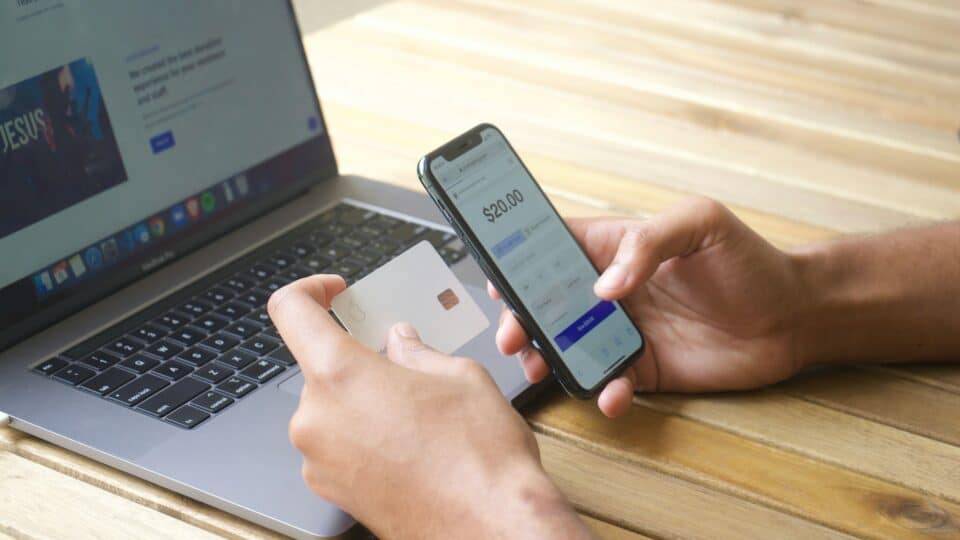
Backup photograph for the article page: Michael Lima / Unsplash, under the Unsplash License. The photograph illustrates a digital payment, not a specific subscription. The original InfoBuz image is a digitally created composition using generic icons and no commercial brands.
Conclusion: the problem is not paying monthly, but forgetting what we buy
Life by subscription does not automatically mean losing freedom of consumption. Digital services can make music, films, work and storage far more accessible. But where access depends on an account, licence, renewal and servers, the word “mine” needs to be used more carefully.
Eurostat shows how widespread streaming has become; the “Stop Destroying Videogames” debate shows that preserving digital access is a real issue for millions of Europeans; and legislation on digital content shows that rights exist, but not a universal promise of permanent ownership of every purchased service.
The best decision is to regain control: take stock of payments, compare annual cost with actual use, retain copies of important files and properly cancel services that no longer help you. If a subscription provides value, keep it without guilt. If it does not, do not let payment automation become the reason you continue paying. In an access economy, conscious choice is one of the few things truly worth keeping.









Discuția cititorilor
Ai o opinie sau o întrebare despre acest articol? Spune-ne ce crezi.
Fii primul care deschide discuția.
Te rugăm să păstrezi un limbaj civilizat și să discuți la subiect. Comentariile spam sunt filtrate automat.