
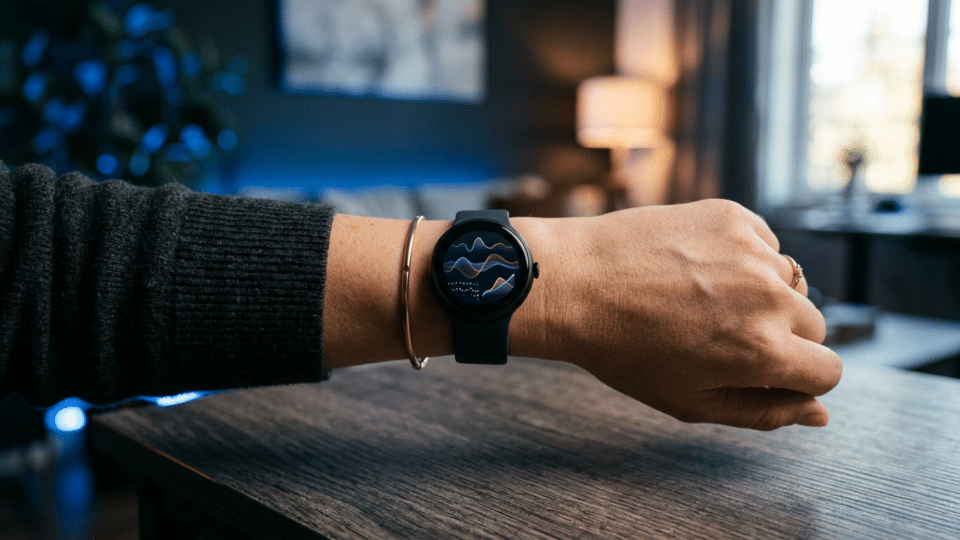
Continuous health monitoring is beginning to change people’s relationship with their own bodies. For almost all of medical history, doctors have seen the body in snapshots: a blood-pressure reading taken during an appointment, a morning blood test, a few seconds of ECG, or a question about how a patient has slept in recent weeks.
In 2026, that logic is starting to reverse. Watches, rings, patches and biosensors can generate thousands of measurements a day, while artificial intelligence can search them for patterns that an occasional consultation would never capture. Heart rate, heart-rate variability, temperature, activity, sleep, glucose and even ketones can become parts of a continuous stream of physiological data.
That is the promise of the “invisible doctor”: not a robot replacing a physician, but a layer of sensors and algorithms that continually observes the body and may flag a change before someone reaches a doctor’s office.
But this immediately raises a second question, perhaps just as important: if every heartbeat becomes digital information, who controls that information? The user? The watch manufacturer? The app? The hospital? The insurer? The legal answer is not straightforward and varies by device, service and country.
Continuous monitoring turns medicine from a “photograph” into a “film”
The difference between conventional medicine and wearable sensors is simple. A laboratory test is a photograph. A wearable is a film.
A single reading of 75 beats per minute says relatively little. A record spanning months may show that resting heart rate has gradually increased, heart-rate variability has changed, sleep has deteriorated, and nighttime temperature differs from a person’s usual pattern.
AI becomes useful precisely because this volume of data is too large to analyse manually. Models can compare each person not only with a population “average” but also with their own baseline. In many applications, a change from one’s own usual state may be more relevant than a comparison with someone else.
A 2026 review published in Biosensors describes the integration of AI with wearable sensors for cardiovascular monitoring, stress detection, physical activity, sweat biomarkers and other signals. Its authors also stress the gap between an impressive prototype and a clinically validated device.
For related information, see also Graphene and stroke: experimental sensors identified vulnerable brain tissue in real time in a mouse study.
FDA authorises first wearable to track glucose and ketones simultaneously
A particularly concrete example arrived on 25 August 2026. The FDA authorised the Libre Duo 10 Day Continuous Dual Glucose Ketone Monitoring System, the first wearable device in the United States to continuously monitor ketone levels and the first system in the world authorised to continuously monitor ketones and glucose simultaneously in one device.
For people with diabetes, the combination matters because rising ketones can precede diabetic ketoacidosis, a serious complication. Rather than measuring ketones separately only when they suspect a problem, users can have the sensor track the trend continuously.
This is the picture of continuous medicine: the system does not necessarily wait for a patient to feel something and decide to take a test. The data already exist.
From glucose to a continuous “metabolic stream”
Glucose is the most mature example of a continuously monitored biomarker. Continuous glucose monitors, or CGMs, have moved from a medical niche to widely used systems, and researchers are now trying to extend the same logic to lactate, hormones, inflammatory markers and other molecules.
A 2026 analysis of wearable and implantable biosensors describes this transition “beyond glucose”. Its authors argue that cardiometabolic disease cannot be explained by a single biomarker and that the next stage will depend on sensors’ ability to measure multiple metabolic and hormonal pathways simultaneously.
The problem is that a biomarker useful in a laboratory does not automatically become easy to measure continuously through the skin. Concentrations in sweat may not perfectly reflect blood levels; sensors degrade; temperature and movement create artefacts; and calibration can vary between people.
AI is beginning to learn from months of physiological data, not just one test
In January 2026, Nature published a foundation model for continuous glucose-monitoring data. The idea resembles language models: the system learns structures and patterns from very large amounts of time-series data, then can be adapted to several tasks.
That approach matters in medicine because bodily data are sequences. It is not just the current value that matters, but the pace, direction, time of day, response to food, sleep or activity, and relationship to previous days.
A model trained on such series may attempt to identify metabolic phenotypes, anticipate responses or compress thousands of readings into a more interpretable profile. But an AI score is not automatically a diagnosis and must be validated for the population and use to which it is applied.
The smartwatch becomes a very small but ever-present laboratory
Photoplethysmography — the green or infrared light used by many watches — makes it possible to estimate pulse and analyse the shape of the blood-volume wave. Combined with the single-lead ECG available on some devices, it can offer a much longer picture of heart rhythm than a consultation lasting a few minutes.
In July 2026, researchers published a smartwatch system that combines continuous PPG with intermittent ECG and AI correction to estimate atrial-fibrillation burden more accurately. The issue is relevant because fibrillation can be episodic: a person may have a normal ECG in a clinic and irregular episodes at other times of day.
Longitudinal monitoring does not replace a clinical 12-lead ECG, but it can change when a patient and doctor learn that there is a problem.
Apple brings AI directly into health-history interpretation
On 9 September 2026, Apple announced a new Health Sensing System for the Apple Watch Series 12 and Ultra 4, alongside a redesigned Health app with features based on Apple Intelligence.
The company says the new app will combine heart, sleep, fitness, vital-sign, readiness and other data to provide longitudinal insights and personalised recommendations. Apple is also introducing concepts including Health Age and longevity assessments, available depending on device and region.
These features should not be confused with a universal medical diagnosis. A readiness score or biological-age estimate is an interpretive tool, not the equivalent of a clinically validated result for every disease.
The “invisible doctor” is not yet a doctor
There is a fundamental difference between a wellness wearable and an authorised medical device. A watch may estimate sleep or activity trends without being authorised to diagnose a disease. A medical device must demonstrate performance for the specific intended use it claims.
In September 2026, the FDA reported more than 1,600 medical devices with AI components authorised for the US market. The list includes imaging systems, retinopathy tools, insulin algorithms and sensors that estimate the likelihood of cardiac events.
This growth shows that medical AI is no longer merely experimental software. But most systems are specialised. There is still no general-purpose “AI doctor” able to safely interpret every biological stream and autonomously treat every person.
The body produces data continuously, but not all data have equal medical value
One risk of the wearable era is confusing quantity with relevance. A device may generate millions of data points without every one of them being clinically useful.
An isolated higher pulse can result from exercise, coffee, fever, stress or a measurement error. A different nighttime temperature can have dozens of explanations. An algorithm must distinguish noise, normal variation and a relevant signal.
This is why continuous medicine will depend on longitudinal validation and context. A good system should not turn every deviation into an alarm.
Too many alerts can make the technology less useful
In a system that continuously tracks the body, the challenge is not only detecting an anomaly. It is deciding when it is worth interrupting the user and when information should be escalated to a doctor.
A highly sensitive algorithm may find almost anything, but it may also produce many false positives. If a person constantly receives alerts for meaningless fluctuations, “alarm fatigue” can set in: the user begins to ignore notifications.
At the same time, false negatives are dangerous. The balance between sensitivity and specificity must be defined for each clinical use, not through one universal threshold.
When your data become a “digital twin” of the body
With enough history, sensors can build a highly detailed profile: what a person’s normal sleeping pulse looks like, how glucose responds to particular meals, how temperature changes before illness, what stress does to HRV, and how long the body takes to recover after exertion.
This profile is sometimes described metaphorically as a “digital twin”. In practice, current models are far more limited than a complete biological duplicate. Still, the direction is clear: medicine is moving from the population towards an individual baseline.
If a system knows that someone’s resting rate is almost always 55–60 bpm and it suddenly remains at 75 for three days, that change may matter more than the fact that 75 still falls within a broadly defined normal range.
Who owns the data about your every heartbeat?
The question sounds simple, but legally the term “ownership” does not perfectly describe personal data. In many legal systems, the more relevant questions are who collects and controls the data, who can process or transfer them, and what rights the data subject has.
If a hospital collects data as part of medical care, strict healthcare rules apply. If a wellness app collects the same types of information directly from a consumer, the legal framework may be different.
In the United States, HIPAA applies primarily to covered healthcare entities and their business associates. The FTC explicitly explains that many health apps and connected devices outside HIPAA may be subject to the FTC Act and the Health Breach Notification Rule. Amendments made in 2024 clarified the rule’s application to many health apps and fitness trackers.
So the fact that an app contains pulse, sleep or menstrual-cycle data does not automatically mean all its data are protected by exactly the same rules as a hospital medical record.
Apple says users control access to HealthKit
Apple states that Health data are encrypted and that users decide which apps can access each category. The company also says apps using HealthKit cannot use the data for advertising or data mining.
For certain modern configurations with two-factor authentication and a device passcode, Apple says synchronised Health and Activity data are encrypted in a way that prevents the company from reading them.
At the same time, some optional features may send aggregated or processed data to Apple to improve features if the user enables those options. The distinction between what is stored locally, synchronised in encrypted form and voluntarily shared should be checked in the settings and policy of each service.
The most sensitive information is not today’s pulse, but an inference about tomorrow
Raw data are only the first level. AI can turn an apparently ordinary stream into an inference: a possible pregnancy, cardiovascular risk, stress, a change in sleep routine, a metabolic disorder or the likelihood of a future episode.
Such inferences can become more sensitive than the original measurement. A company may not have a medical diagnosis supplied by the user, but may infer a risk from a combination of heart rate, sleep, location, activity and other signals.
That is why the privacy debate should not be limited to “who sees the sensor data?” It must also ask what conclusions an algorithm can draw from them.
Insurers and employers turn privacy into an economic question
Wearables can be used in wellbeing programmes, activity incentives or chronic-disease management. Where participation is voluntary and the rules are clear, the benefits can be real.
But a difficult line emerges if biological data begin to affect access to services, pricing or an employee assessment. Even where a programme does not directly use diagnoses, a sufficiently rich set of data can enable sensitive inferences.
Rules vary sharply between countries and types of insurance, and a responsible article cannot state as a general rule that “your insurer will see your pulse”. The important principle is this: continuous data create new economic value, and access to them must be explicitly limited.
On-device processing could become the most important protection
One approach is for more analysis to take place locally, on a phone, watch or edge device. Rather than sending every heartbeat to the cloud, a system can calculate trends locally and transmit only the necessary result.
This model reduces the amount of exposed raw data, but does not eliminate all risks. The algorithm must be updated, the device can be compromised, and the results can remain sensitive.
Still, in an era of permanent monitoring, the principle of collecting only what is needed and processing it as close to the user as possible may become as important as sensor accuracy.
FDA begins preparing rules for medical AI that changes after launch
Medical AI raises a challenge that conventional devices did not face to the same extent: software can evolve after authorisation. Models can receive new data, be updated and change their performance.
In August 2026, the FDA launched a consultation on medical devices using generative artificial intelligence, seeking feedback on risk assessment, post-market monitoring and how changes should be managed.
Also in 2026, the agency continued developing the TEMPO programme for digital devices, aimed at gathering real-world evidence on outcomes for patients with chronic diseases.
These programmes show regulation shifting from the question, “Does the device work on the day it is approved?” to “How does it remain safe and useful after months and years of real-world use?”
Large medical AI models are not yet robust enough for full autonomy
Enthusiasm for AI can obscure its limits. A June 2026 Nature Medicine study assessed the robustness of frontier models in medical applications and found that performance can vary substantially when wording, context and test conditions change.
That matters enormously for a system analysing continuous data. An incorrect wellbeing recommendation is inconvenient; a wrong medical decision can be dangerous.
For that reason, AI’s realistic near-term role is more likely to be filtering, detection, prioritisation and decision support than the complete replacement of a clinician.
What a truly multimodal system could detect
A single sensor sees only one part of the body. A multimodal system can combine heart rate, ECG, movement, temperature, sleep, glucose, medication and user-entered data.
In theory, that combination can better distinguish causes. An elevated pulse alongside a raised temperature and reduced activity means something different from an elevated pulse after intensive training.
The more context a system has, the more it may reduce unnecessary alarms. But the more context it has, the more privacy-sensitive the resulting profile becomes.
Predictive medicine starts with a personal baseline, not predicting the future
The phrase “predictive medicine” can make it sound as if an algorithm could state exactly which disease a person will have in ten years. In 2026, that would be an exaggeration.
The realistic part is much more useful: detecting persistent departures from a person’s usual state and combining them with known risk factors.
A small but sustained change may trigger a recommendation for an additional measurement, a consultation or a test. The system does not need to “know the future”; it needs to notice earlier that the present is beginning to look different.
What we gain if the technology works
- Earlier detection: episodic abnormalities can be captured between appointments.
- Better chronic-disease management: data can show the real response to treatment in everyday life.
- Fewer unnecessary hospital admissions: home monitoring may allow some patients to be supervised without continuous hospitalisation.
- More personalised treatment: decisions can be based on an individual baseline rather than only population averages.
- Better data for doctors: patients no longer have to roughly recall when symptoms appeared.
What we risk if the technology is poorly designed
- Overdiagnosis and anxiety: normal variations may be interpreted as problems.
- False reassurance: a wearable that does not detect something does not guarantee that a person is healthy.
- Algorithmic discrimination: a model insufficiently trained on certain populations may perform less well for them.
- Data exposure: a continuous biological history may be more sensitive than many other categories of personal data.
- Platform dependence: if data are not portable, a personal medical history may remain locked into one ecosystem.
The future is not one device, but a personal network of sensors
A watch will not be able to measure everything. The future is more likely to combine several devices: a smartwatch for rhythm and activity, a ring for sleep, a metabolic patch, a connected blood-pressure monitor, a smart scale, hearing devices and potentially temporary or implantable sensors.
AI will become the layer that attempts to turn them into a single physiological story. The real innovation will not be the 15th sensor, but the ability to explain to the doctor and user what a change across those sensors means.
InfoBuz has also examined emerging technologies that could change life by 2030. Medical wearables and health AI are an example in which change may become almost invisible: the device sits on the wrist, but produces a biological picture that conventional medicine has never had.
Research into brain-computer interfaces for people with paralysis points towards the far end of the same trend: the body becomes both a source of biological signals and an interface for digital systems.
The decisive question is not whether we will collect the data, but who decides what happens to them
The technology is already mature enough for the question to be more than hypothetical. Continuous sensors are authorised for clinical uses, watches generate histories over years, and AI models are beginning to interpret complex physiological sequences.
The next battle will be over control: granular consent, interoperability, the ability to delete and export data, local processing, and clear limits on secondary uses.
If those safeguards are built properly, continuous monitoring could make medicine more preventive and more personal. If they are not, the same system that knows when someone sleeps poorly and when their pulse changes could become one of the most detailed databases of a person’s life.
The invisible doctor will probably be a partner, not a replacement
The most realistic future is not one in which a smartwatch diagnoses a person on its own and prescribes treatment. It is one in which sensors observe, AI filters and prioritises, and the doctor receives a far richer summary than a patient’s memory and a handful of isolated tests.
Rather than going to the doctor only when the body “shouts”, these systems may try to notice the moment when it begins to whisper.
But precisely because they will listen so closely, we need to decide who is allowed to hear.
Frequently asked questions about continuous health monitoring
Can a smartwatch diagnose diseases?
Some functions or devices have medical authorisations for specific uses, but most wellness data should not automatically be interpreted as a diagnosis.
What data can a wearable track?
Depending on the device: heart rate, ECG, HRV, activity, sleep, temperature, oxygen, glucose and, in some newer systems, ketones or other biomarkers.
Can AI predict a disease before symptoms appear?
In certain contexts, it can detect patterns associated with risk or early changes, but this ability depends on the disease, the device and clinical validation. There is no universal model that predicts every disease.
Who owns health data in an app?
There is no universal answer framed as “ownership”. Rights and obligations depend on the jurisdiction, contract, type of service, and whether the provider is covered by healthcare law such as HIPAA or by other consumer-protection rules.
Are Apple Health data sent to every app?
No. Apple says users control the HealthKit categories accessible to each app, and biometric and health data have additional encryption protections.
Is a doctor still needed if AI tracks data continuously?
Yes. An algorithm can detect and prioritise signals, but clinical interpretation, context, diagnosis and treatment remain medical responsibilities in most current uses.
Sources and transparency
- FDA – first wearable to continuously monitor glucose and ketones, 25 August 2026
- Nature – A foundation model for continuous glucose monitoring data, 14 January 2026
- Biosensors – Integrating Artificial Intelligence with Wearable Sensors for Advanced Health Monitoring and Diagnosis, 2026
- Advanced Science – AI-enhanced smartwatch for continuous atrial fibrillation burden assessment, 2026
- Apple – Health Sensing System and Apple Intelligence health features, 9 September 2026
- FDA – AI-enabled medical devices, updated 2026
- FDA – Medical Devices That Incorporate Sensor-based Digital Health Technology, 2026
- FTC – Health Breach Notification Rule and connected health apps
- Apple – Health privacy and HealthKit controls
- Nature Medicine – Robustness and readiness of frontier models in health AI, 26 June 2026









Discuția cititorilor
Ai o opinie sau o întrebare despre acest articol? Spune-ne ce crezi.
Fii primul care deschide discuția.
Te rugăm să păstrezi un limbaj civilizat și să discuți la subiect. Comentariile spam sunt filtrate automat.