
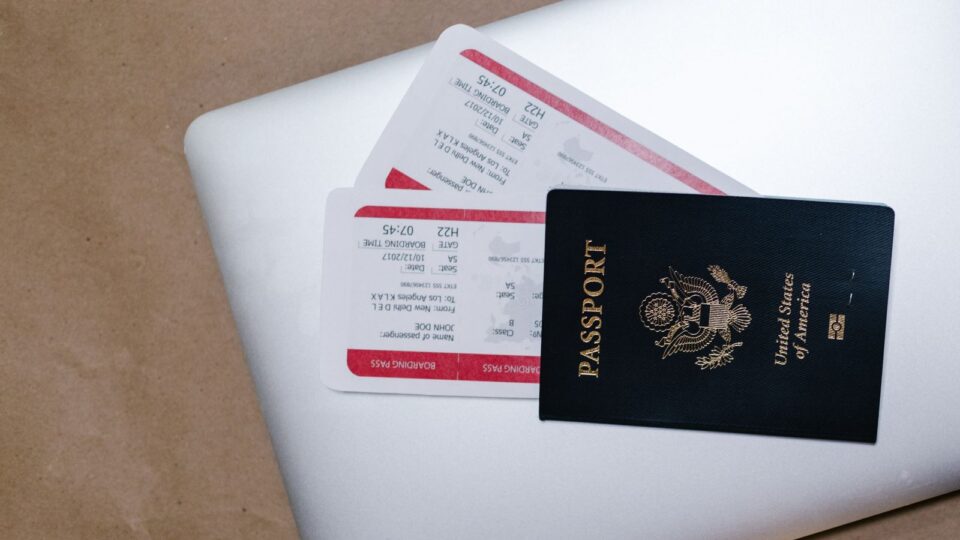
ETIAS is not yet operational in 2026, and the European Union is not currently accepting applications for the electronic travel authorisation. Yet unofficial websites are presenting the system as though registration or payment were already possible. The risk for travellers is twofold: they may pay unnecessarily for services and hand over passport copies, personal data or card information to operators whose practices they do not know.
For further context, see also Social Climate Fund: why it is not yet possible to name the localities left without support, an article that examines an aspect directly related to this subject.
Status checked on 24 October 2026: the official EU ETIAS page still states that the system is not operational and is not collecting applications. No precise launch date has been published. In addition, the reference to the “last quarter of 2026”, which appeared in earlier European materials, has been removed from the main page—a change publicly documented in August 2026. There is therefore no official reason for a traveller to pay an “application fee” for an ETIAS authorisation now.
This should not be confused with EES — the Entry/Exit System, another European system that was rolled out progressively in October 2025 and has been operational at participating external borders since 10 April 2026. ETIAS and EES are different systems, for different groups of travellers and with different procedures. The European Commission explained the distinction in April 2026.
Below, we explain who will need ETIAS, why Romanian citizens do not need to apply for it, what the future official fee of €20 is, how to identify pages imitating European institutions, and what to do if you have already paid or sent passport details to a suspicious website.
ETIAS in 2026: is it operational? What the European Union officially says
On its official “Not operational” page, the European Union confirms that ETIAS is not yet in operation and that no applications are currently being collected. The information is repeated in its questions and answers section, where European institutions say the public will be notified a few months before the system starts.
This detail changes how commercial offers should be read. A website promising an “ETIAS authorisation issued today”, an “official form now open”, or a “mandatory European fee payable immediately” is making a claim incompatible with the confirmed operational status. Before launch, nobody can actually submit an application through the official system and obtain a valid authorisation.
A pre-registration offer is not an ETIAS authorisation. A private operator may collect contact details for a potential future service or sell assistance, but that does not mean it has submitted an application through the official infrastructure. Applicants should understand exactly what they are buying, when the service can be delivered and how their data will be protected.
On its Smart Borders page, the European Commission explicitly notes the systems’ different status: EES is in operation, while ETIAS is awaiting launch and the announcement of a specific date.
What happened to the “last quarter of 2026” date — and why it should not be treated as certain
In March and April 2025, European institutions presented a revised timetable: EES was due to start in October 2025, while ETIAS was expected in the last quarter of 2026. Some information pages and older materials still refer to that timetable.
But information on European IT systems can change. In August 2026, The Independent documented the removal of the Q4 2026 target from the official main page. When this article was checked, the European portal no longer guaranteed a specific day, month or quarter for the launch.
Likewise, a possible postponement to 2027 reported in the press should not be presented as an official date unless the European Commission confirms it in a dedicated announcement. An updated article must distinguish between the previously expected timetable, reports of delays and the legal information actually applicable now.
For travellers, the consequence is straightforward: do not pay for a service presented as an official ETIAS application in October 2026. Follow the European portal; that is where the launch date and, with it, the authentic form will appear.
What is ETIAS, and why is it not a visa?
ETIAS stands for the European Travel Information and Authorisation System. It is a planned electronic authorisation for citizens of 59 visa-exempt countries and territories travelling for short visits to 30 European countries.
Through this system, eligible people will complete an online form with passport details and other information required by the procedure. Following assessment, the authorisation will be electronically linked to the travel document used in the application.
ETIAS is not a Schengen visa. A person who needs a visa on the basis of their nationality and circumstances does not become visa-exempt simply by attempting to obtain ETIAS. Nor does the authorisation automatically grant the right to work or live long-term in a European country.
According to the official portal, once issued, an authorisation will generally be valid for up to three years or until the passport expires, whichever comes first. It will not have to be obtained separately for every trip as long as it remains valid and the other entry conditions are met.
Who will need ETIAS: Americans, Britons, Canadians and other travellers
After launch and subject to the phased application rules, ETIAS will primarily apply to nationals of countries whose citizens do not need a short-stay visa for participating European states. Important examples include the United States, the United Kingdom, Canada, Australia, Japan, South Korea and New Zealand.
The official list also includes nationals of countries such as Moldova, Ukraine, Georgia, Serbia, Albania and Montenegro. For some nationalities, however, there are requirements relating to the type of passport, such as a biometric document. It would not be prudent to generalise that every type of document issued by those states automatically provides visa-free travel.
The list of 30 countries where ETIAS will be used includes Romania, Bulgaria, France, Germany, Italy, Spain, Greece, Austria, Poland, Croatia, Cyprus and other participating states, including Switzerland, Norway, Iceland and Liechtenstein. Ireland is not one of the 30 ETIAS countries.
Exact eligibility should be checked on the European overview page and in the official list of nationalities and participating countries, as exceptions may apply in connection with residence documents and family members of European citizens.
Do Romanians need ETIAS when travelling in Europe?
No. A Romanian national is a citizen of the European Union and is not required to apply for ETIAS to travel to participating European countries on the basis of their citizenship. This also applies to a Romanian living in the United States, Canada or the United Kingdom: living outside the EU does not cancel Romanian citizenship.
The issue deserves attention in cases of dual citizenship. For example, a person who holds Romanian and US citizenship does not need to pay for ETIAS as an American when entering participating countries using a valid Romanian document. The European portal states that nationals of a participating European country or Ireland are exempt from ETIAS and must use the relevant European travel document.
Do not confuse this rule with the entry requirements for an American, Canadian or British tourist visiting Romania. For those visitors, ETIAS will become relevant once the system begins and transitional arrangements apply, unless they fall under an exemption.
| Person / situation | Will ETIAS be needed once the rules apply? | What to check |
|---|---|---|
| Romanian citizen travelling with a valid Romanian document | No | Ordinary travel-document rules |
| Romanian-US dual national using a Romanian document | No | Validity of the European document and rules on presenting it |
| US tourist without EU citizenship, visiting Romania for a short stay | Yes, generally | Launch date, transition period and any exemptions |
| British tourist without exempt status, holidaying in France | Yes, generally | ETIAS, not the UK ETA |
| Moldovan tourist with an eligible biometric passport | Yes, generally | Passport-specific conditions and visa-free entry entitlement |
| Traveller from a country whose nationals require a Schengen visa | Not instead of a visa | The visa procedure applicable to their nationality |
| National of a visa-exempt country with an eligible EU residence permit | May be exempt | The precise permit type and legal conditions |
The table describes general situations, not an individual legal assessment. For dual citizenship, see also the EU’s official explanation. If documents have expired or a person has an unusual residence status, seek information from the consulate or competent authority.
ETIAS will cost €20, not €7: where the confusion comes from
Early ETIAS materials long referred to a €7 fee. The European Commission has since proposed and presented an increase to €20, citing operating costs and system updates. The official ETIAS portal now explicitly shows €20 as the application fee once the service opens.
The European announcement on the new fee explained the change from €7 to €20. Some older brochures and pages still show the earlier amount. Before launch, checking the official website directly is safer than relying on an old article shared on social media.
In October 2026, however, no official fee is payable for submitting an application because applications are not yet available. The €20 is the announced cost of the future procedure, not a deposit a traveller must pay now.
Who will be exempt from the €20 fee?
According to the official information for applicants, people under 18 or over 70 are exempt from the fee. There are also exemptions for certain family members of EU citizens who meet the legal conditions.
Exemption from the fee should not be confused with exemption from the authorisation where one will be required. For example, a child within the scope of ETIAS may need their own authorisation even though no fee is charged. A Romanian citizen, meanwhile, does not apply for ETIAS at all, rather than simply receiving a “free” authorisation.
For a family with two eligible adults and two children under 18, the future official cost could ordinarily be €40 in total for the two adults, not €80 for four people. This is a mathematical example based on the published fee and the children’s exemption, not a commercial offer or an amount payable now.
How unofficial websites exploit ETIAS confusion
In a warning about the emergence of unofficial websites, European authorities noted that dozens of pages use the ETIAS name, sometimes alongside EU symbols and language that may create the impression of an official channel. Some provide incorrect information or collect personal data.
The ETIAS portal’s page on abuse identifies several risks: falsely presenting oneself as an official authority, excessive surcharges, misuse of data and failure to provide the promised service.
One unfair conclusion should be avoided: not every unofficial website offering ETIAS advice is automatically fraudulent. The law allows an individual, travel agency or commercial intermediary to submit an application later on a traveller’s behalf, subject to legal conditions and a declaration of representation. The difference lies in transparency, consent, the operator’s identity and the actual service provided.
Still, no intermediary can currently obtain an ETIAS authorisation through a system that is not accepting applications. An honest operator should clearly state whether it is selling advice or a possible future service, rather than suggesting that payment speeds up the issuing of a European authorisation.
Eight warning signs to check before entering card details on an ETIAS website
- It says official applications are already open in October 2026. That claim contradicts the status published by the EU.
- It uses a domain that imitates “europa.eu”. A commercial address containing ETIAS, EU or Europe does not thereby become an official European website.
- It asks for money for “activation”, “reserving a place” or “priority”. There is currently no official application processing.
- It presents logos and the EU flag as proof of authorisation. Graphics can be copied; the website’s identity must be verified separately.
- It hides the company, privacy policy or full cost. An intermediary should explain who processes the data and what service it provides.
- It requests sensitive information before explaining why it is needed. Passport and card details should not be submitted to a page whose operator is unclear.
- It uses pressure based on an invented deadline. Messages such as “last day to avoid refusal at the border” are not credible while ETIAS is not operating.
- It guarantees approval. The future decision will be made through the European procedure, not by a private website charging a subscription.
These are risk indicators, not a list of criminal findings against specific companies. We do not publish unverified suspicious domains as examples because they can change quickly and because doing so could direct readers to pages collecting data.
How to check an authentic ETIAS link in 30 seconds
The official address is https://travel-europe.europa.eu/etias. It can also be reached through the public shortcut europa.eu/etias, as indicated by European institutions.
Check the actual domain, not merely the word ETIAS in a page name. In an address such as travel-europe.europa.eu, the official domain is europa.eu. In a hypothetical address such as europa.eu.example-commercial.com, the actual domain is example-commercial.com, not europa.eu. These are illustrative technical examples, not verified addresses of existing operators.
HTTPS and the padlock symbol do not guarantee that a website is official. They indicate an encrypted connection, but a fraudulent operator can use HTTPS too. Likewise, a paid search-engine result should not be mistaken for a recommendation or certification by the European Union.
The safest route is to type the official address manually or use a bookmark saved from a trusted institutional source. Avoid links in unsolicited messages, alarmist advertisements and posts promising discounts on an “ETIAS fee”.
For more general guidance on a page requesting banking information, read InfoBuz’s guide to recognising phishing messages and what to do after opening a suspicious link.
Why passport and card data matter more than €20
A small financial loss may appear to be the main risk. But an unofficial form may request far more sensitive data: full name, date and place of birth, home address, passport number, series or expiry date, and contact details. The official list of information that will be requested also includes details on occupation, education and certain criminal-history or travel circumstances.
Such a combination of information may be valuable for identity theft attempts, personalised phishing or other forms of abuse. It should not be assumed that every unofficial website will misuse data, but its protection depends on the operator and its safeguards, not automatically on the standards of European institutions.
For this reason, Frontex has publicly warned about unreliable intermediaries and pages that imitate official sites. A website asking for passport photographs before the system opens should be assessed with extra caution: why does it need the document now, how long will it retain it and who can access it?
Can a travel agent submit an ETIAS application for a client?
Yes, but only after the official system launches and under the applicable procedure. The European portal confirms that a friend, family member or commercial intermediary may be authorised to complete and submit an application on a person’s behalf.
Where there is representation, the applicant and representative must sign a declaration of representation. The intermediary will have to provide its own details, and the application will be submitted through the official infrastructure. That is not the same as an authorisation being “issued” by an agency.
In guidance published for travel agencies in July 2026, the EU said official forms cannot be completed before the system enters operation. Intermediaries may charge a separate assistance fee, but must be transparent about costs and use only the official channel for submission.
In practical terms, a traveller should ask for the total price, the company’s identity, what happens to their data and the cancellation policy. An agency should not present its own fee as a charge levied by the European Union.
ETIAS versus EES: why one is operating and the other is not
The confusion is understandable: both projects form part of the digitisation of Europe’s borders, and their names are similar. They address different issues, however.
| Feature | EES — Entry/Exit System | ETIAS — travel authorisation |
|---|---|---|
| Status on 24 October 2026 | Operational, following full implementation on 10 April 2026 | Not operational; not accepting applications |
| Purpose | Digital recording of entries and exits at the external border | Prior electronic authorisation for certain visa-exempt travellers |
| Who it generally applies to | Non-EU nationals travelling for short stays, subject to legal exemptions | Nationals of 59 visa-exempt countries and territories, subject to legal exemptions |
| Number of participating countries | 29 | 30, including Cyprus |
| What it involves | Border records, passport data and biometric data under the applicable rules | Future completion of an online form and an authorisation assessment |
| Fee discussed here | Not the €20 ETIAS fee | €20 for the future application, with specified exemptions |
| Romanian citizens | Not registered as third-country nationals in EES | Do not need ETIAS |
The Council of the European Union states that EES was launched on 12 October 2025 and became fully operational on 10 April 2026. Some border points may have temporary operational arrangements, but this does not alter the fact that EES is a separate system that has already been introduced.
For the practical implications at entry points and for people with two nationalities, read InfoBuz’s article EES at Romania’s borders: what changes for Romanians and dual nationals.
When will ETIAS launch, and will there be a transition period?
Yes. The European Commission explained that ETIAS’s launch will be followed by a transition period and a grace period, with a combined duration of at least 12 months under the regulatory framework.
During the first transition period of at least six months after the system becomes operational, affected travellers will be encouraged to apply for ETIAS, but lacking an authorisation will not normally result in refusal of entry on that ground alone if the other conditions are met.
During the subsequent grace period, also lasting at least six months, the rule becomes stricter. There is an exception for a traveller’s first entry after the transition period ends, provided the other conditions are met. The mechanism is explained in the European technical FAQ on transition and grace periods.
It is not correct to say that “everyone without ETIAS will automatically be refused on the first day of launch”, nor to invent a fixed date until which exemptions apply. The exact timetable can be calculated only after the actual launch date is announced.
What will the official application look like once ETIAS is operating?
According to European pages, the procedure will be available through the official website or official mobile application. Applicants will need an eligible passport, personal details, travel information and, if they are subject to the fee, a means of payment.
The form will include names, document details, nationality, address, contact information, education and occupation details, as well as certain declarations related to criminal history and travel, within the limits set by legislation. For children, the application must be submitted by the person with parental authority or by the legal guardian.
Applications will be individual: there will be no single family or group ETIAS authorisation. Fee exemptions will nevertheless apply individually, according to the legal criteria.
For most applications, the EU expects processing within minutes. Some may take up to four days; if additional documents or an interview are requested, the procedure may take longer, including up to 30 days in certain situations. The European portal explains the processing times.
Once the system is launched, an eligible traveller should therefore not leave the formalities until arriving at the airport. But neither should they pay an intermediary in 2026 for a “guarantee” that their future application will be approved immediately.
Will an ETIAS authorisation guarantee entry to Romania, France or Germany?
No. A valid authorisation allows an eligible traveller to present themselves for a short visit, but it does not remove border checks or the obligation to meet entry conditions. Authorities may ask for evidence of the purpose of travel, length of stay or other applicable requirements.
The usual short-stay limit is 90 days in any 180-day period in the relevant area. For Cyprus, the ETIAS portal explains that the length of stay is calculated separately from the other participating countries.
The authorisation is not a work permit and does not replace documents required for residence or long-term studies. A website claiming that ETIAS “guarantees entry and the right to work in all EU countries” is providing incorrect information.
Also, a replaced passport means a new authorisation, even if the previous approval had not yet reached three years. The authorisation is linked to the exact document used in the application.
ETIAS is neither UK ETA nor ESTA: how to distinguish the three procedures
Romanian tourists may come across similarly named authorisations when travelling abroad. UK ETA is a United Kingdom system relevant to certain journeys to Great Britain. ESTA is a United States system for eligible travel under the Visa Waiver Program. ETIAS will be a European system for visitors from visa-exempt countries.
They are not interchangeable permits and are not paid to the same institution. The fact that a Romanian may need an ETA for travel to the United Kingdom does not mean they also need ETIAS to return to Romania using their Romanian document.
InfoBuz has published a separate guide to the UK ETA in 2026: requirements, passports and applications for Romanians.
Already paid an unofficial ETIAS website? What to do in the first 30 minutes
The appropriate steps depend on the type of information provided. A payment to an intermediary that clearly presented a consultancy service is not automatically fraud. A website that misled the user, promised an authorisation it could not issue or collected data for other purposes, however, may raise serious concerns.
- Do not make any further payments. Do not pay “urgent processing fees”, “file-unblocking charges” or other sums until you have independently checked the operator and service.
- Contact your bank immediately. If you entered card details on a suspicious site, explain exactly what happened and request the appropriate protective measures, such as blocking the card or disputing the transaction, where applicable.
- Keep the evidence. Save the URL, payment confirmation, emails, service terms and messages. Avoid publicly sharing screenshots containing a full card number or passport details.
- Check account security. If you reused a password or supplied authentication codes, change the affected credentials through official websites and enable two-factor authentication where available.
- Ask the operator for an explanation and, where appropriate, deletion of your data. Under the GDPR, exercising rights depends on the operator’s identity, jurisdiction and legal basis for processing. A deletion request does not guarantee recovery of data already disclosed elsewhere.
- Report the suspicious attempt. You may consult the guidance of Romania’s National Cyber Security Directorate and, in cases of fraud or identity misuse, notify the competent authorities. For an ETIAS intermediary, the EU also has a page for reporting abusive practices, subject to the procedural limits stated there.
A bank is not guaranteed to recover money already paid, and the specific steps depend on the nature of the transaction and the payment provider’s rules. Acting quickly can nevertheless limit exposure of the card and help document the incident.
For information on challenging a payment and priorities after an incident, see InfoBuz’s article Sent money to an online scammer? What to do in the first 60 minutes.
Four ETIAS offer examples: how to interpret them correctly
The following scenarios are hypothetical and do not concern real companies or domains.
Scenario A: “Guaranteed ETIAS today, €89, delivered by email”
In October 2026, such a promise would be incompatible with the official status: the system is not accepting applications and is not issuing authorisations. The stated price also differs from the future €20 European fee. The safest step is not to pay and to check the information on the EU portal.
Scenario B: “Consultancy service for future ETIAS, €30”
A company may sell information services, but it must clearly state that it is not currently submitting an official application, what it actually offers, what data it collects and whether the sums are refundable. A consultancy price is not the EU fee.
Scenario C: “A child must immediately pay €20 for ETIAS”
Under the conditions published by the EU, applicants under 18 are exempt from the future official fee. Private-service charges may exist, but they cannot be presented as the mandatory European fee for a minor.
Scenario D: “EES is active, so you must pay for ETIAS at the airport”
This claim conflates two systems. EES is already active, while ETIAS was not accepting applications at the time of writing. Moreover, future ETIAS is designed as an online application before travel, not as an “EES activation” fee paid to an intermediary at boarding.
InfoBuz checklist: 12 checks before paying for a travel authorisation
- Have I checked whether the cited system is actually operational?
- Does the address end in the correct institutional domain, rather than a name imitating it?
- Have I opened the official ETIAS portal directly, rather than following an advertisement link?
- Do I know whether my nationality and document are within ETIAS’s scope?
- Have I checked possible exemptions related to dual nationality or residence?
- Does the price on the website match the official fee, or is it a private commission?
- Is the commercial operator identifiable and does it have clear terms?
- Am I being promised an impossible result before the system launches?
- Do I know what will happen to my passport copy or card data?
- Am I being asked to pay for a child even though a fee exemption may apply?
- Am I confusing ETIAS with EES, UK ETA or ESTA?
- Have I kept proof of payment and the information received from the intermediary?
Frequently asked questions about ETIAS in 2026
Is ETIAS mandatory in October 2026?
No. On 24 October 2026, the system was not operational and was not accepting applications. The precise launch date had not been officially announced. Transition and grace periods will follow the launch.
Can I apply for ETIAS now?
Not through the official system. The EU states that it is not currently collecting applications. A private form completed now is not equivalent to a submitted ETIAS application.
When will ETIAS start: in 2026 or 2027?
Earlier communications anticipated the last quarter of 2026, but that target was removed from the main portal. There have been reports of a delay, including possible scenarios for 2027, but no new date had been officially confirmed at the time of research.
What is the official ETIAS website?
The official address is travel-europe.europa.eu/etias, also accessible via europa.eu/etias. Commercial websites containing the word ETIAS in their domain do not automatically become EU institutions.
How much does ETIAS cost?
The announced fee for a future official application is €20, replacing the older €7 amount. No fee is currently payable to submit an application because the system is not open.
Do Romanians have to pay for ETIAS?
No. Romanian nationals are European Union citizens and do not need ETIAS to travel to participating states using valid European documents.
Does a Romanian with a US passport need ETIAS?
If that person is also a Romanian citizen, they do not need ETIAS on the basis of their European citizenship, but must use the relevant document issued by the European state under the official rules. If they are not an EU citizen and travel as an American, the rules may differ after launch.
Do children need an authorisation?
Once they fall within ETIAS’s scope, every traveller, including a child, will need their own authorisation. Applicants under 18 are exempt from the official fee, according to the European portal.
Is ETIAS a Schengen visa?
No. ETIAS is an electronic authorisation for people from certain visa-exempt countries, while a visa is a separate document. A person who needs a visa cannot replace the visa procedure with ETIAS.
Will ETIAS be valid for three years?
Yes, ordinarily for up to three years or until the travel document used in the application expires, if it expires first. Replacing a passport requires a new application.
Can I enter Europe automatically with an approved ETIAS?
No. The authorisation does not guarantee entry. Travellers must also meet the other border requirements, including those concerning the length and purpose of their stay.
Can ETIAS be obtained through a travel agency?
After launch, intermediaries will be able to submit applications for authorised clients, with a declaration of representation. They may charge a separate fee, but do not themselves issue the European authorisation.
What should I do if I paid a suspicious ETIAS website?
Check exactly which service was purchased and retain the evidence. If you suspect card misuse or misleading conduct, contact your bank and the relevant authorities immediately. Do not provide further data or pay additional sums for “unblocking”.
Official information matters more than any ETIAS “priority” promise
ETIAS was not yet operational in 2026, and an official application could not be submitted at this point. The announced European fee for the future procedure is €20, with exemptions for certain categories, but it should not be paid now as a “reservation”.
While EES is already used at the external borders of participating states, ETIAS awaits an officially communicated launch date. American, British, Canadian and other visa-exempt travellers will need to follow the rules once they actually take effect. Romanians do not need ETIAS on the basis of their European citizenship.
To avoid unnecessary charges and exposure of personal documents, always check the europa.eu/etias address before completing a form or entering card details. Do not mistake intermediary offers for an official channel, and do not pay for an authorisation which the European Union says cannot yet be requested.
Official sources and editorial methodology
- European Union — ETIAS portal, operational status and €20 fee.
- EU — “ETIAS is currently not in operation”, confirming that applications are not being collected.
- EU — ETIAS FAQ: who applies, timeframes, validity, intermediaries and dual citizenship.
- European Commission — Smart Borders, the differing status of EES and ETIAS.
- European Commission, 28 April 2026 — differences between EES and ETIAS.
- EU — announcement of the fee change from €7 to €20.
- EU — required documents and information, and fee exemptions.
- EU — guidance for people with dual citizenship.
- EU — warning about unofficial ETIAS websites.
- EU — abusive intermediary practices and reporting them.
- EU, July 2026 — guidance for travel agencies and submitting applications for travellers.
- European Commission — earlier timetable and transition periods after ETIAS begins.
- European portal — FAQ on transition and grace periods.
- Council of the European Union — EES status and full implementation from 10 April 2026.
- The Independent, 13 August 2026 — removal of the earlier launch target from the official website.
Editorial research date: 24 October 2026. This article reflects the official status checked on that date and the planned rules, which may be adjusted before launch. The offers described in the scenarios are fictional and intended as a preventive guide. We do not allege fraud by websites or individuals without individual evidence. General information does not replace consultation with authorities or legal advice for specific circumstances. Featured image: illustrative photograph by RDNE Stock project / Pexels, used under the platform’s licence; it does not depict a real ETIAS application.








Discuția cititorilor
Ai o opinie sau o întrebare despre acest articol? Spune-ne ce crezi.
Fii primul care deschide discuția.
Te rugăm să păstrezi un limbaj civilizat și să discuți la subiect. Comentariile spam sunt filtrate automat.