
Reheated food can be safe when it has been cooked, cooled, stored and reheated correctly. But putting a dish back on the heat does not, by itself, guarantee that every bacterium or toxin has disappeared. The greatest risk does not necessarily arise during a second reheating, but in the hours when food was left at room temperature or cooled too slowly in a large pot.
Rice and pasta deserve particular attention: some forms of the bacterium Bacillus cereus can survive cooking as spores, and unsuitable storage conditions can allow toxins to form that are not eliminated by ordinary reheating. Meat, sauces, soups and stews carry other risks, including the growth of Clostridium perfringens when dishes remain for too long at unsafe temperatures.
There is no blanket ban on reheating food. There are rules about time, temperature and storage. This InfoBuz guide, based on recommendations from FoodSafety.gov, the Food Standards Agency, Food Standards Australia New Zealand and the CDC, explains how to store rice, pasta, meat and dinner leftovers safely—without panic or unnecessary waste.
Reheated food: seven safety rules worth remembering
Rather than treating certain foods as “forbidden”, it is more useful to follow a consistent method. The key figures serve different purposes: some indicate when food should go into the fridge, others the temperature at which it should be kept, and others how a correctly stored portion should be reheated.
| Rule | Practical benchmark | Why it matters |
|---|---|---|
| Cooling and refrigeration | Within no more than 2 hours; within 1 hour if the ambient temperature exceeds 32°C | Limits the time bacteria can multiply in perishable dishes |
| Refrigerator | 4°C or below, under US recommendations | Significantly slows the multiplication of many microbes |
| Freezer | −18°C or colder | Stops multiplication during freezing, but does not sterilise food |
| Reheating leftovers | 74°C at the centre of the dish, according to FoodSafety.gov | Reduces the risk from heat-sensitive microorganisms in properly stored food |
| Ordinary refrigerated leftovers | 3–4 days in US guidance; 48 hours in general UK guidance | Institutions use different, cautious benchmarks; storage conditions are crucial |
| Cooked rice | Ideally cooled within one hour, refrigerated and eaten within 24 hours under FSA advice | Additional controls for the risk associated with B. cereus |
| Portioning | Heat only what you will eat and avoid repeated cycles | Reduces the cumulative time spent in temperature ranges favourable to bacteria |
Important: the 3–4-day period in US guidance is not a guarantee for every food under any conditions. UK household guidance generally recommends 48 hours for leftovers and a stricter limit for rice. For vulnerable people, improperly prepared food or products with specific instructions, the more cautious recommendation applies. These benchmarks should not be interpreted as exemptions from food-safety rules in Romania or from information on product labels.
Why can food become dangerous even after it has been properly cooked?
Cooking reduces or destroys many bacteria that can cause illness when the right temperature is reached. But food does not automatically become sterile. Some microorganisms can form heat-resistant spores, and dishes can later be contaminated through hands, utensils, cookware or contact with raw ingredients.
When food remains warm but not hot enough to prevent microbial growth, microorganisms that survived or were reintroduced can start to multiply. In US guidance, the approximate range between 4°C and 60°C is known as the “danger zone” for many foodborne pathogens.
The Food Standards Agency uses an operational range of 8–63°C in its UK reheating materials. The difference reflects different standards and control contexts; it does not mean bacteria abruptly stop growing at either boundary. At home, it is more important not to leave perishable food on the table for hours and to check the actual temperature of the fridge.
This is why a dish left at room temperature overnight should not be considered safe simply because it is reheated. Some toxins can remain active, and heating cannot retroactively restore a proper storage chain.
Reheated rice: why Bacillus cereus is the real issue
Raw rice can contain spores of Bacillus cereus, a bacterium found in the environment. Spores are resistant forms and can survive ordinary boiling. When cooked rice remains for a long time at a favourable temperature, some spores can germinate and the bacteria can multiply.
Some strains can produce a vomiting-causing toxin called cereulide. This toxin is highly heat-stable. In other words, frying rice in a hot pan may kill many bacterial cells, but it does not guarantee that a toxin already formed in improperly stored food will be neutralised.
A CDC report on an outbreak in Virginia in 1993 documented illnesses linked to chicken fried rice that had been cooked the previous evening and cooled at room temperature. This is a well-documented historical example, not a report of an outbreak in Romania in 2026.
The risk does not arise because rice was reheated once, but because it may have been stored at an unsuitable temperature before reheating. Rice that is cooled quickly and stored correctly can be eaten safely, subject to the time limits and rules below.
How to store rice after boiling: a cautious four-step method
- Take the rice out of the hot pot in small portions. Use clean, shallow containers; do not leave a large quantity in the cooking vessel overnight.
- Cool it quickly. The Food Standards Agency recommends cooling rice as quickly as possible, ideally within one hour. Placing a container in cold water or spreading it in a thin layer in a clean tray can speed up the process.
- Put it in the fridge. Keep it chilled and properly covered; do not wait for it to cool for hours on the kitchen counter.
- Eat it within 24 hours, in line with the FSA’s cautious advice. It can be eaten cold if it was cooled and stored correctly, or reheated once until it is evenly hot.
Source: Food Standards Agency – Home food fact checker, updated in 2026. This is a conservative UK benchmark useful for home safety, not a claim that every grain of rice automatically becomes toxic at exactly 24 hours.
With restaurant-bought or delivered rice, it is not always possible to know how it was cooked and stored before it reached you. That is why the FSA recommends extra caution: some restaurants may prepare rice in advance, and a delivered portion may already have been reheated once.
Reheated pasta: not inherently dangerous, but not risk-free
Cooked pasta contains water and starch. If left at room temperature for hours, it can provide conditions in which microorganisms, including Bacillus cereus, may multiply. Food Standards Australia New Zealand explicitly includes rice, pasta and other cereal-based dishes among foods associated with this risk.
Not all cooked pasta contains the bacterium, and the presence of spores does not automatically mean illness. Risk depends on contamination, composition, temperature and the length of time the food was kept outside temperature control.
A serving of pasta with tomato sauce, correctly stored in clean, shallow containers, can be reheated. A large pot of pasta left on the stove from evening until morning, by contrast, should not be “saved” by adding sauce or boiling it again.
Pasta with meat, fresh cheeses, cream or other perishable ingredients must be assessed as a whole dish. The higher-risk ingredient and storage conditions matter more than the fact that pasta is the base.
For make-ahead meals, a useful approach is to cook quantities close to what is realistically needed, cool them promptly, label containers and freeze portions that will not be eaten within the recommended storage period.
Chicken, pork and beef: why both initial cooking and storage matter
There are two distinct stages of safety for meat and meat dishes. The first is proper initial cooking, which depends on the type of meat and method of preparation. The second is cooling and storing leftovers after the meal. Undercooked chicken does not automatically become safe if it is refrigerated for a day and then merely warmed a little.
According to FoodSafety.gov, poultry must initially be cooked to at least 74°C internally. Initial cooking temperatures differ for other meats: for example, the US guidance gives 63°C followed by a three-minute rest for whole cuts of beef, pork, lamb or veal, and 71°C for ground meat.
These initial-cooking figures should not be confused with the recommendation for reheating leftovers, for which FoodSafety.gov specifies 74°C. If a serving of cooked chicken, roast meat or stew has been stored safely, reheat the entire serving adequately, not just its surface.
Meat cooked in large quantities should be portioned quickly. A whole chicken or a large roast can cool slowly at its centre. For storage, cut it into suitable portions and use containers that allow heat to transfer quickly.
Soups, stews and sauces: the risk of a large pot cooling too slowly
In a family kitchen, a large pot of soup or stew is a classic example of a dish that can remain too warm at its centre for too long. The outside of the pot cools, while the temperature in the middle may fall more slowly. If food remains in a range favourable to microbial growth, risk increases.
Clostridium perfringens is a bacterium associated, among other things, with meat, meat dishes, sauces and foods cooked in large quantities. The CDC says illness can cause diarrhoea and abdominal cramps, usually 6–24 hours after eating contaminated food.
Prevention means not leaving the pot on the stove “until it cools completely”. FoodSafety.gov recommends transferring food into small, shallow containers and refrigerating it promptly. Small, hot portions can go directly into the fridge; it is better, however, not to put in a huge pot, which cools slowly and can temporarily warm food around it.
When reheating, soups, sauces and liquid dishes can be heated on the stove until boiling, while stirring, in line with FoodSafety.gov recommendations. For a dense dish, check the internal temperature rather than assuming it is hot because the edges of the container are very hot.
How long can cooked food stay in the fridge? Why authorities give different time limits
Absolute claims circulate online, such as “all food lasts exactly four days” or “everything must be thrown away after 24 hours”. Both are oversimplifications. The recommended period depends on the dish, how quickly it was cooled, refrigerator temperature, contact with other foods and the advice of the authority consulted.
| Food type | Indicative guidance | Essential condition |
|---|---|---|
| Ordinary leftovers of meat, soups or stews | 3–4 days, under US FoodSafety.gov recommendations | Prompt cooling and a refrigerator at no more than 4°C |
| Home-prepared leftovers — general UK recommendation | 48 hours or freezing | Proper cooking and timely refrigeration |
| Cooked rice — FSA recommendation | 24 hours before eating or reheating | Rapid cooling, ideally within one hour, and chilled storage |
| Leftovers intended for vulnerable people | Extra caution; stricter recommendations may apply | Follow medical advice and specific guidance |
| Food with specific pack instructions | Follow the manufacturer’s instructions and the “use by” date | Intact packaging and proper storage conditions |
Sources: FoodSafety.gov – Cold Food Storage Chart, Food Standards Agency – Cooking your food and FSA – Home food fact checker.
How should these differences be applied in practice? For a conservative household rule, plan to eat most leftovers within the next 1–2 days and rice the following day, then freeze extra portions in time. This limits risk and avoids depending on the actual temperature of a fridge you have not measured.
Do not automatically extend the life of food that has already sat on the table for many hours. Refrigerated storage time starts with a dish that was handled correctly, not one that may have been compromised before it entered the fridge.
The myth that food must cool completely before it goes into the fridge
This is one of the most widespread pieces of advice to be applied incorrectly. If you wait several hours for a large pot to reach room temperature, food may remain far too long in a range favourable to microbial growth.
FoodSafety.gov says hot food may be put in the refrigerator provided that it is divided into suitable containers so that it cools quickly. Putting a very large quantity of hot food in a single pot, however, can delay cooling at the centre and raise the refrigerator’s internal temperature.
In practical terms, do not wait for food to cool completely on the counter. Transfer it to clean, shallow containers, use a cold-water or ice bath if necessary, and chill it promptly. Follow the appliance instructions, particularly for a small or heavily loaded fridge.
Microwave reheating: why a plate can be hot at the edges and cold in the middle
A microwave is convenient, but it can heat some dishes unevenly. A serving of lasagne may be hot on the outside and still cold in the centre, while a compact bowl of rice may have areas that have not reached the intended temperature.
For leftovers, FoodSafety.gov recommends heating to 74°C, stirring halfway through and observing the standing time specified in the appliance instructions or on the package. Standing time allows heat to distribute more evenly.
- Portion the food. A more even layer heats more predictably than a thick block of food.
- Use a microwave-safe container. Do not assume that every plastic container or delivery box is suitable for reheating.
- Cover it appropriately, without creating a dangerous seal. A compatible lid or microwave cover can reduce splashing and moisture loss.
- Stir or turn the food. Check the centre of the dish, not only the edges.
- Observe the standing time and check the temperature. A food thermometer is more useful than touching the surface with your hand.
There is no universal “two minutes in the microwave” that works for every dish. The time depends on the appliance’s power, quantity, shape, starting temperature and composition of the food.
Pan, oven or stovetop: which method is safer?
No method can correct improper storage. For food that has been refrigerated correctly, a frying pan, stovetop, oven and microwave can all be used safely if the dish is heated sufficiently and evenly.
In a frying pan: stir dishes such as vegetable rice or pasta with sauce. Do not rely solely on the fact that the pan is very hot and the surface is browning.
In the oven: dense dishes should be portioned and heated until their centres also reach the right temperature. A browned surface or crisp crust does not guarantee that the inside is hot.
On the stovetop: soups and sauces can be brought to a boil while stirring. In a thick stew, check the pieces of meat, not only the liquid bubbling at the surface.
In a slow cooker: FoodSafety.gov does not recommend slowly heating cold leftovers as a reheating method because food may remain at intermediate temperatures for too long. It can be used to keep food warm only under the right temperature conditions and instructions.
How many times can the same food be reheated?
As a simple household safety rule, the FSA recommends reheating only once. The reason is not that a second reheating automatically turns a dish into poison, but that every cycle of heating, cooling and handling creates further opportunities for contamination or bacterial growth.
Some US guidance allows a remaining serving to be reheated again if every stage is done correctly, but this is not a reason to repeatedly heat and cool an entire pot. The simplest approach remains portioning food before storage.
For example, if you have prepared four portions, put them in separate containers. Heat only one portion today, keep the others in the fridge or freezer, and do not bring the whole dish back to room temperature each time.
For rice, the FSA explicitly advises against reheating it more than once. If you are unsure how long it was kept warm beforehand, do not treat it as safe simply because this is its first—or second—reheating.
Freezing leftovers: reducing waste without artificially extending safety
Freezing is useful when you cook more than you can eat within the recommended refrigeration period. At around −18°C, microbial multiplication is effectively stopped while food is frozen, but most microorganisms are not automatically destroyed and any toxins already formed may remain problematic.
Food should be frozen while it is still safe, not after several days of improper storage. Put portions in suitable containers, leave room for expansion where necessary and label the contents with the date.
Defrost food in the refrigerator or by safe methods recommended for the particular food, including the appropriate microwave setting followed by immediate cooking or reheating. Do not leave meat and perishable dishes to thaw overnight on the kitchen counter.
For rice, FSA recommendations allow freezing if it was cooled promptly, ideally within one hour. It must later be thawed safely and reheated only once. In other guidance, freezer times are often presented as quality benchmarks—taste and texture—which do not replace safe handling before freezing.
InfoBuz has also published a guide to batch cooking and turning ten basic dishes into different meals. This article complements those recipes with the microbiological reasons for cooling and reheating correctly.
Five kitchen scenarios: keep, reheat or throw away?
These are hypothetical situations designed to illustrate the rules. They do not describe a real outbreak and do not provide a laboratory test of food.
Scenario 1: rice was left on the stove overnight
The rice was cooked at 20:00 and the pot was left at room temperature until 08:00. It does not smell bad the next morning. Recommendation: do not eat it. The storage period was unsuitable, and possible B. cereus-associated toxins cannot be ruled out by smell or reliably corrected by reheating.
Scenario 2: pasta with sauce was promptly refrigerated
The pasta was portioned after dinner and stored in shallow containers in a cold refrigerator. The next day, one serving is heated evenly and eaten. Recommendation: this is an ordinary way of handling leftovers, provided preparation and storage were correct and there are no other warning signs or risk information.
Scenario 3: stew sat for four hours in a large pot
After lunch, the pot was left on the stove until evening. The dish appears fine. Recommendation: if it was outside temperature control for more than the recommended two hours for perishable food, throw it away. Do not rely on boiling it again to undo the period of improper storage.
Scenario 4: roast meat was cooked and frozen promptly
The meat was cooked correctly, cooled and portioned, then frozen in suitable containers. After thawing in the refrigerator, one portion is reheated thoroughly. Recommendation: this procedure is appropriate, provided time limits and hygiene conditions are followed.
Scenario 5: you find an undated container forgotten in the fridge
You do not know how many days it has been there and cannot confirm how it was stored. Recommendation: do not taste it to check whether it is still good. Where the history of a perishable food is unknown, disposal is the cautious option. Date labels prevent such situations.
Can smell, colour and taste tell you whether food is still safe?
Some spoiled foods develop an unpleasant smell, mould or visible changes. But their absence does not guarantee microbiological safety. Pathogenic bacteria and some toxins do not necessarily produce an easily noticeable smell or colour.
FoodSafety.gov warns against tasting food to decide whether it is safe. The best preventive indicator is a verifiable history: when it was cooked, how quickly it was cooled, the temperature at which it was stored and how it was reheated.
It is also useful to distinguish package dates: a “use by” date is a safety-related instruction for products to which it applies, while a “best before” date mainly concerns quality. A smell test cannot override an applicable safety date on a perishable product.
Children, pregnant people and people with weakened immunity: when extra caution is needed
Food poisoning may cause mild symptoms in many people, but it can have serious consequences for young children, older people, pregnant people and people with weakened immune systems. Food Standards Australia New Zealand recommends extra caution for these groups and notes even more restrictive storage periods for leftovers in some situations.
For food prepared for babies and young children, the NHS recommends rapid cooling, keeping leftovers in the fridge for no more than two days and, for rice, cooling within one hour and eating it within 24 hours. Leftovers that a child has already left on their plate should not be kept for reuse, because they can become contaminated during the meal.
After reheating, food intended for a child should be allowed to reach a suitable serving temperature; a safely reheated portion can still cause burns if served too hot. Stir well, especially after microwaving, and check the temperature before serving.
People following medically prescribed special diets, including some people with severe immunosuppression, should follow the instructions of their medical team, which may be stricter than general household rules.
What symptoms may indicate food poisoning, and when should medical help be sought?
Possible symptoms include nausea, vomiting, diarrhoea, abdominal pain or cramps and sometimes fever. Symptoms may begin within hours or after several days, depending on the microorganism. It is not possible to identify a pathogen with certainty from the time elapsed after a meal alone.
For Bacillus cereus, FSANZ describes two common forms: one predominantly involving vomiting and another predominantly involving diarrhoea. Most cases are self-limiting, but risks are greater for vulnerable people.
The CDC recommends medical assessment for bloody diarrhoea, high fever, repeated vomiting that prevents keeping liquids down, signs of dehydration or prolonged diarrhoea. During pregnancy, fever or flu-like symptoms after possible food exposure warrant prompt discussion with a doctor.
For severe symptoms or signs of an emergency, seek medical help immediately. Hydration can be important, but it does not replace assessment when dehydration, worsening symptoms or a vulnerable person is involved. This article cannot determine the cause of any particular person’s symptoms.
How to reduce food waste without compromising safety
Storage rules should not be understood as an instruction to throw away all food the next day. On the contrary, portion planning, labelling and prompt freezing can reduce both risk and waste.
When preparing meals for several days, consider in advance what you will eat within the next 24–48 hours and what should be frozen. For a rice dish, the UK’s 24-hour recommendation may be a reason to freeze portions intended for later days immediately, rather than keep the entire pot in the fridge for almost a week.
In Romania, discussion of food waste is often reduced to a single figure. In a separate article, InfoBuz explained why food-waste statistics need to be interpreted carefully. In the kitchen, the useful principle is simpler: buy and cook realistically, store food correctly and do not try to recover food with an uncertain history.
For a recipe that makes responsible use of leftover vegetables, see also InfoBuz’s guide to leftover-vegetable frittata and the criteria for discarding unsafe leftovers.
Refrigerator checklist: 12 checks before storing cooked food
- Did I initially cook the food to the temperature appropriate for the dish?
- Did I wash my hands and use clean utensils after handling raw meat?
- Has less than two hours passed since preparation or serving, without controlled hot holding?
- If the ambient temperature exceeds 32°C, did I reduce that period to no more than one hour?
- Did I portion food into clean, shallow containers?
- Did I avoid leaving rice to cool for hours in the pot?
- Do I know that my refrigerator operates at no more than 4°C, checked with a thermometer?
- Did I separate raw meat from ready-to-eat food?
- Did I write the preparation date on containers kept for more than one day?
- Did I freeze in time the portions I will not eat soon?
- When reheating, am I using the right temperature, stirring and, where necessary, a food thermometer?
- If I do not know how long food was kept warm, do I avoid tasting it as a “test”?
Frequently asked questions about reheated food
Is it dangerous to reheat food the next day?
Not automatically. If the dish was cooked correctly, cooled quickly, refrigerated at the right temperature and then reheated evenly, a meal the next day can be safe.
Why do people say rice should not be reheated?
The advice stems from the risk associated with Bacillus cereus spores and toxins, particularly when cooked rice has been left at room temperature for too long. Correctly cooled rice can be reheated once, according to the FSA.
How many hours can cooked rice stay on the table?
The FSA recommends cooling it as quickly as possible, ideally within one hour. For perishable food generally, FoodSafety.gov recommends refrigeration within no more than two hours, or one hour where ambient temperatures exceed 32°C. The stricter rule is prudent for rice.
Can I eat cooked rice straight from the fridge without reheating it?
Yes, if it was cooked and cooled correctly, kept chilled and is within the recommended period. The FSA recommends eating refrigerated rice within 24 hours.
Does reheated pasta cause food poisoning?
Not necessarily. The problem arises under unsuitable storage conditions, when certain bacteria may multiply. Pasta that was promptly portioned and refrigerated can later be eaten safely, subject to storage and reheating rules.
What temperature should yesterday’s leftover meat be reheated to?
FoodSafety.gov recommends an internal temperature of 74°C for leftovers, including cooked meat. This differs from certain minimum temperatures for the initial cooking of some cuts of meat.
How long does cooked food last in the fridge?
US recommendations often specify 3–4 days for leftovers correctly stored at no more than 4°C. UK guidance generally recommends 48 hours, and 24 hours for rice. The time limits apply to correctly stored food, not food left on the table for many hours.
Must I let food cool completely before refrigerating it?
Do not leave it at room temperature for hours. To cool it quickly, divide it into small, shallow containers, use a cold-water bath where needed and refrigerate promptly.
Can I put food that is still hot in the fridge?
FoodSafety.gov permits hot food to be put in the fridge in small containers that cool quickly. Avoid huge pots, which can remain warm in the middle and warm the rest of the refrigerator.
Is it enough to boil rice again after it has been left out overnight?
No. Spores may survive, and some toxins may be heat-resistant. Perishable food stored improperly cannot be reliably “fixed” by additional boiling.
How many times can a stew be reheated?
As a conservative rule, reheat only the portion you will eat and avoid repeated cycles. The FSA recommends reheating once because every cycle can add risks if time and temperatures are not controlled.
Do microwaves kill all bacteria in leftovers?
There is no guarantee if food is heated unevenly, and heating does not neutralise all toxins already formed. Stir the dish and check the internal temperature; do not use a microwave to recover improperly stored food.
Can I freeze rice, pasta and cooked meat?
Yes, if they were cooked and cooled correctly, then promptly frozen in suitable containers. Freezing stops multiplication during storage, but does not necessarily destroy microorganisms or toxins that were already present.
How can I tell whether food is spoiled if it does not smell bad?
Smell is not a reliable test for pathogenic bacteria. Check its storage history, time and temperature. If you cannot establish how a perishable food was stored, do not taste it to decide.
Can children eat reheated food?
Yes, if it was stored and reheated correctly, then cooled to a safe serving temperature. NHS recommendations are more cautious for rice and food prepared for young children.
Conclusion: the danger is not “the next day” but a chain of wrong temperatures
Reheated food is not inherently dangerous. Its safety depends on what happened before reheating: initial cooking, hygiene, cooling, storage and time spent at room temperature.
Rice and pasta can involve the risk of Bacillus cereus spores, while meat dishes and sauces can favour other bacteria if they cool slowly. Proper reheating reduces ordinary risks associated with heat-sensitive microorganisms, but it cannot reliably eliminate every toxin formed in improperly stored food.
The rule worth keeping: cool quickly, refrigerate, heat only the portion you need, and do not try to save food left on the table overnight by boiling it. That approach can reduce both the risk of illness and food waste.
Official sources and editorial methodology
- FoodSafety.gov – four steps to food safety: cooling, temperatures, storage and reheating.
- FoodSafety.gov – minimum cooking temperatures and 74°C for reheating leftovers.
- FoodSafety.gov – indicative refrigerator and freezer storage times.
- Food Standards Agency – Home food fact checker, with instructions for rice; updated in 2026.
- Food Standards Agency – Cooking your food, cooling and reheating leftovers.
- Food Standards Australia New Zealand – Bacillus cereus in food, rice, pasta and toxins.
- CDC – documented historical outbreak involving fried rice and Bacillus cereus, Virginia, 1993.
- CDC – Clostridium perfringens and food-poisoning symptoms.
- CDC – signs of food poisoning and when to seek medical help.
- NHS – storing and reheating food for young children.
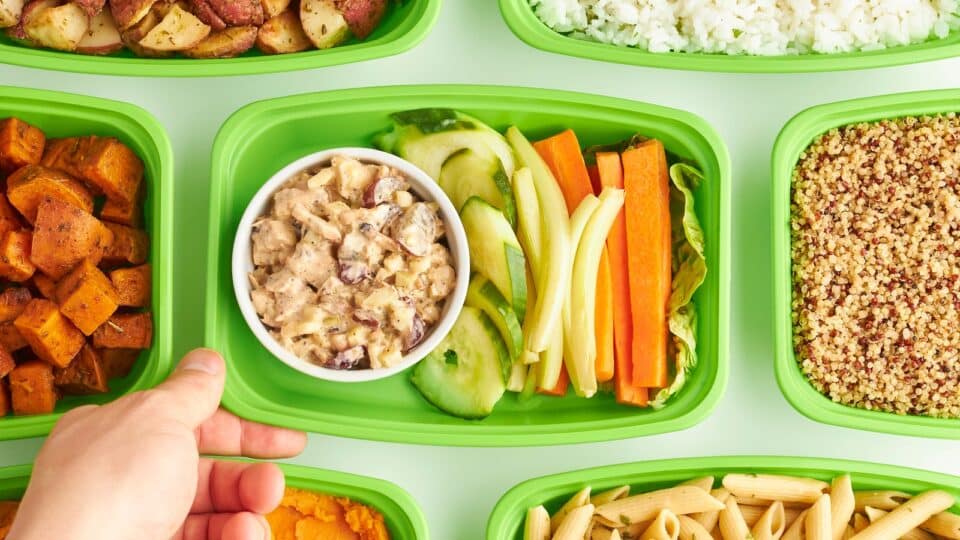
Research date: 24 October 2026. The information describes official household recommendations and differences between guidance from national authorities; it does not replace rules applicable to food businesses or an individual medical assessment. The kitchen examples are hypothetical. The featured image is an illustrative photograph by Justin Doherty / Pexels, used under the platform’s licence.





Discuția cititorilor
Ai o opinie sau o întrebare despre acest articol? Spune-ne ce crezi.
Fii primul care deschide discuția.
Te rugăm să păstrezi un limbaj civilizat și să discuți la subiect. Comentariile spam sunt filtrate automat.