
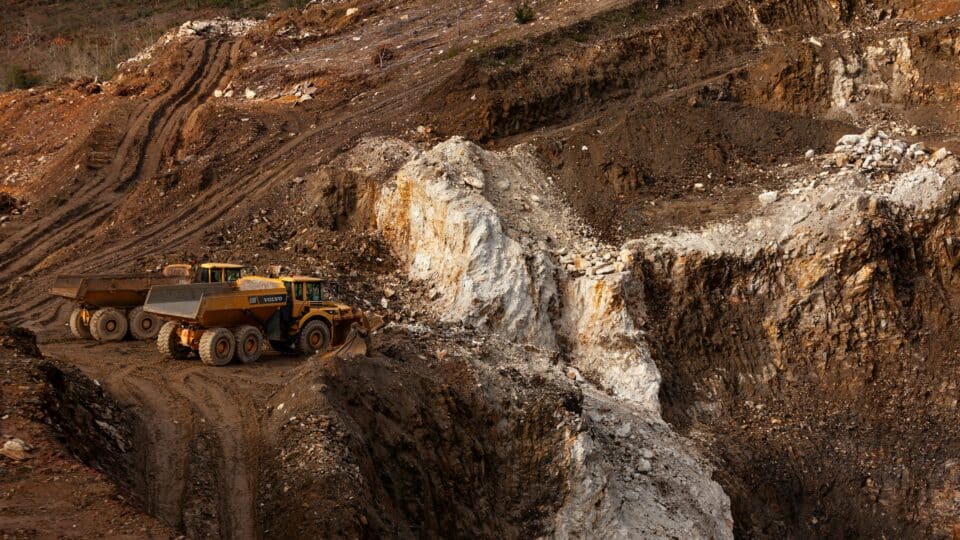
Are critical minerals the new oil? The metaphor is imperfect, but the strategic power behind it is real. Lithium, copper, graphite, nickel, cobalt, gallium, germanium and rare earths do not fuel combustion engines, yet it is difficult to build batteries, electricity grids, turbines, chips, radar systems, robots, data centres and parts of the defence industry without them.
The difference from oil matters: minerals are not all interchangeable, many can be recycled, and the vulnerability does not lie only at the mine. In some cases, the real economic power lies in refining, separation, chemical processing and component manufacturing. A country can have ore and still depend on someone else for industrially usable material.
This InfoBuz article was updated on 2 November 2026 and uses data from the International Energy Agency’s Global Critical Minerals Outlook 2026, the European Union’s Critical Raw Materials Act and the USGS Mineral Commodity Summaries 2026.
Are critical minerals the new oil? The short answer
| Mineral | Why it matters | Main risk |
|---|---|---|
| Copper | electricity grids, motors, transformers, data centres | slow development of new projects and a possible structural shortfall |
| Lithium | EV batteries and storage | very rapid demand growth and concentrated refining |
| Graphite | the dominant material for lithium-ion battery anodes | highly concentrated battery-grade processing |
| Rare earths | permanent magnets for motors, turbines, robotics and defence | geographically concentrated separation and magnet production |
| Nickel | batteries and specialised alloys | high concentration of production and processing in Indonesia |
| Cobalt | some battery chemistries and superalloys | heavy dependence on concentrated producers and export policies |
| Gallium / germanium | semiconductors, communications, optoelectronics | concentrated production and exports |
Why “critical” does not necessarily mean “rare”
A mineral becomes critical when it combines two factors: high economic importance and a high risk of supply disruption. It does not have to be exceptionally rare in the Earth’s crust.
Copper is a prime example. It is not an exotic element, but it is essential to electrification and very difficult to replace at scale without higher costs or performance losses. If mining projects do not expand quickly enough, a vast market can become vulnerable even where geological resources exist.
IEA: demand for critical minerals nearly doubles by 2040
In its Global Critical Minerals Outlook 2026, the IEA estimates that aggregate demand for the critical minerals it analyses will nearly double by 2040 under its current policies scenario.
Lithium records the fastest growth, with demand more than tripling by 2040. Nickel, graphite and rare earths rise by roughly 50–90%, while copper posts the largest increase in volume: about 7 million additional tonnes by 2040.
The main driver is electrification: electric vehicles, battery storage, grids, renewables, data centres and electrically powered industrial equipment.
Copper could become electrification’s major bottleneck
A battery can change its chemistry and reduce its use of cobalt or nickel. An electricity grid cannot dispense with copper as easily. Transformers, cables, motors, generators and power-transmission infrastructure require massive volumes of conductive material.
In its 2026 outlook, the IEA estimates that, based on announced projects, the copper supply shortfall in 2035 will remain around 25%, even though the outlook has improved from the previous year.
The issue is not only geological. Copper mines have long development timelines, high costs and complex permitting requirements, while ore grades are declining in many regions.
Lithium: the symbol of the battery age, but not the only mineral that matters
Lithium has become the public face of the energy transition because nearly all leading batteries for electric vehicles and stationary storage use lithium, whether they are LFP, NMC or other current commercial chemistries.
The USGS states in its Mineral Commodity Summaries 2026 that lithium supply security has become a priority for technology companies and carmakers in Asia, Europe and North America. New projects are being developed from Argentina and Chile to Australia, Canada, Africa and Europe.
In the short term, the market can go through periods of surplus and low prices. In the long term, the IEA again sees a risk of shortfall if projects fail to keep pace with demand.
Graphite: the mineral many overlook when discussing batteries
Most discussion of batteries focuses on lithium, nickel and cobalt. But the anode of a commercial lithium-ion battery usually uses natural graphite, synthetic graphite or a blend of the two.
Graphite matters precisely because battery-grade processing is much more concentrated than raw extraction. The IEA estimates that, in 2035, China could still supply about 80% of refined battery-grade graphite if current projects proceed as planned.
The USGS shows that China accounted for about 79% of global natural graphite production in 2023, making it one of the most concentrated major mineral markets analysed.
Rare earths: a few kilograms can hold up products worth billions
Rare earths are a group of elements used in high-performance permanent magnets, optics, electronics, lasers and advanced systems. Neodymium, praseodymium, dysprosium and terbium are particularly important for magnets.
A traction motor or actuator may use a relatively small quantity of these materials, but if they are unavailable, the finished product cannot be delivered. That leaves the supply chain vulnerable to export controls, even if the mineral’s value accounts for only a fraction of the final price of a car, robot or radar system.
The USGS notes that China produced about 68% of the world’s mined rare earths in 2023, while the IEA shows that its dominance is even greater in refining and separation.
The key is not the mine, but the entire supply chain
An economy can open new mines and still remain dependent. Extracted ore must be concentrated, refined, purified and converted into material meeting industrial specifications. Components then follow: cathodes, anodes, magnets, wafers, alloys or other intermediate products.
The IEA finds that diversification is progressing much more slowly in processing than in mining. In its 2026 outlook, extraction projects outside dominant suppliers are increasing, but refining and downstream production are not keeping pace.
For rare earths, the IEA estimates that by 2035 mining projects outside the dominant supplier could deliver almost 50 kt, but planned refining and separation capacity remains below 40 kt, while output of metals, alloys and magnets is lower still.
China dominates processing above all, not every mine in the world
This is one of the most important distinctions. China does not control every lithium, copper or nickel deposit. But across several supply chains, it dominates the stages at which raw materials become industrially usable.
The IEA reports that in 2025, excluding rare earths, the average refining share held by the largest supplier across the minerals analysed rose to about 72%. For rare earths, the largest refiner’s share fell from more than 90% in 2023 to around 85% in 2025, amid new projects in the United States and increased output in Malaysia.
In other words, diversification is beginning, but from an exceptionally high level of concentration.
Export controls: the risk is no longer theoretical
In recent years, critical minerals have moved directly into trade policy. The IEA says the number of mineral tariff codes subject to Chinese export controls has tripled since 2023.
China is not alone in using such instruments. The Democratic Republic of the Congo has introduced measures concerning cobalt, Zimbabwe has adopted restrictions on lithium, and Mozambique on graphite.
A market may appear adequately supplied globally, but if the dominant supplier cuts exports, the rest of the world can immediately face a shortfall.
The N-1 test: what happens if the biggest supplier disappears?
The IEA uses an exercise similar to one used in energy security: it removes the largest supplier and compares the remaining supply with the remaining demand.
In its analysis for 2035, the picture is severe. For graphite and rare earths, supply outside the largest supplier would cover only about 35–40% of remaining demand. For lithium and cobalt, coverage would be around 65%.
That is the practical definition of dependence: it is not enough to consider how much the world produces in total; the question is whether the market still functions when a major node goes down.
AI, chips and robotics add a new source of pressure
The energy transition is not the only force driving demand. Data centres require grids and transformers; semiconductors use gallium, germanium, indium and other specialised materials; and robotics needs motors, magnets and power electronics.
The IEA warns in its 2026 report that minerals such as gallium, germanium, indium, antimony, tungsten and yttrium are becoming increasingly important as AI, semiconductors, robotics, aerospace and defence expand.
Why copper also matters for AI data centres
A data centre is not merely a collection of servers. It requires power lines, transformers, busbars, cables, cooling, generators and grid connections. As electricity consumption rises, so does the physical infrastructure required.
That is why the AI boom is not only competing for chips and energy. Indirectly, it is also competing for copper, aluminium and electrical equipment.
The European Union is trying to turn dependence into industrial policy
The Critical Raw Materials Act sets targets for 2030. The EU aims for domestic capacity, overall, to cover at least 10% of extraction, 40% of processing and 25% of recycling for strategic raw materials.
It also aims to ensure that no more than 65% of the EU’s annual consumption of each strategic raw material, at any relevant stage of processing, comes from a single third country. The rules are explained on the European Commission’s Critical Raw Materials Act page.
The EU now has 106 strategic projects for critical raw materials
On 9 October 2026, the European Commission approved a second list of 46 strategic projects in 16 member states. Together with projects previously approved in the EU and in third countries, the total number of projects designated under the CRMA reached 106.
These projects cover extraction, processing, recycling and substitution for materials including lithium, graphite, copper, gallium, germanium, magnesium, rare earths and tungsten. The updated list is available on the European Commission portal for CRMA projects.
Romania is already on the EU’s strategic map
In the first CRMA round in 2025, two Romanian projects were designated strategic: Rovina, for copper, and SALROM Baia de Fier, for battery-grade graphite. The second selection, in October 2026, again includes Romania among the 16 member states with approved projects.
InfoBuz examined Romania’s domestic potential separately in the article Romania underground: strategic resources that could matter over the next 20 years.
Why recycling could change the game, but not quickly enough
Unlike oil, metals do not disappear after their first use. Copper can be reused, and batteries can provide lithium, nickel and cobalt for new production cycles.
This is one of the major weaknesses of the “new oil” metaphor. Minerals are reusable physical assets, not fuels consumed permanently.
Yet recycling cannot immediately meet the needs of a market growing very quickly. To recycle a battery, there first has to be a battery that has reached the end of its life. Demand for virgin materials will remain high over the next decade.
Low prices can create the next supply crisis
Mining has a paradox: when prices fall sharply, consumers benefit, but new projects become harder to finance. If investment is delayed for too long, the market can move into a severe shortfall several years later.
The IEA reports that investment in critical minerals fell by about 9% in 2025, after several years of growth. At the same time, prices recovered in 2025 and early 2026: copper reached record highs, while lithium and cobalt recovered strongly.
Why a new mine does not solve the problem immediately
A mining project can require years for exploration, studies, financing, permitting, construction and ramp-up. After extraction, processing, transport and customer-connection infrastructure must also be built.
That is why a supply crisis cannot simply be solved by “opening a mine”. Industrial capacity must be built before a shortfall becomes acute.
Can critical minerals become a geopolitical weapon?
They can become instruments of negotiation and pressure, especially in sectors with few suppliers and few alternatives. Export controls, licences, quotas and technology restrictions can quickly affect costs and availability.
But this power is not absolute. High prices encourage substitution, recycling, new mines and investment in other countries. Over the long term, excessive use of restrictions can accelerate the very diversification the dominant supplier would prefer to avoid.
Who will win over the next 20 years?
Not necessarily the country with the largest reserves. The winner may be the one that builds the full chain: geology, financing, permitting, low-cost energy, refining, chemistry, components, recycling and long-term contracts with industry.
Australia has resources, China has processing, Europe has a market and advanced industry, the United States has capital and technology, while Africa and Latin America have major projects under development. The competition will concern how these advantages are connected.
For more on China, see How Europe is trying to reduce its dependence on China for batteries and critical raw materials, which provides further details on the subject.
Why “total independence” is an unrealistic goal
No large economy can efficiently extract and process every material it needs. Some deposits are geologically concentrated, and some processes are more competitive in particular regions.
The realistic goal is diversification: enough suppliers, stockpiles, recycling, substitution and domestic capacity to ensure that the disruption of a single node does not paralyse industry.
Critical minerals are the new oil only in one precise sense
They will not replace oil as a single, homogeneous global market. They are not all consumed in the same way and do not share the same economic dynamics.
But they resemble oil in that secure access to them can determine industrial capacity, competitiveness, national security and geopolitical power. Without access to critical materials, a country may have factories, engineers and capital, but be unable to make the final product.
Frequently asked questions about critical minerals
What is the most important critical mineral?
There is no single one. Copper is essential to electrification, lithium to batteries, graphite to anodes and rare earths to magnets. Their importance depends on the technology and the potential for substitution.
Why is China so important?
Because it dominates not only the production of certain minerals but, above all, refining and processing across several critical supply chains, including graphite and rare earths.
Does Europe have critical minerals?
Yes. Europe has projects involving lithium, copper, graphite, rare earths and other materials, but domestic production and processing do not yet meet industrial demand.
Does Romania have strategic projects?
Yes. Rovina for copper and SALROM Baia de Fier for graphite received CRMA strategic-project status in the first European round, and Romania also features in the second round of October 2026.
Can recycling eliminate the need for mines?
Not in the short term. Recycling can reduce dependence on extraction and is becoming increasingly important, but demand is growing faster than the volume of material available for recycling.
Are rare earths actually rare?
Not all of them are exceptionally rare in geological terms. The challenge is finding deposits that are economically viable to exploit and separating the elements efficiently and competitively.
Conclusion: the future economy will depend on geology, but even more on industry
Critical minerals are the new oil only if the phrase is used as a metaphor for strategic power. Lithium, copper, graphite and rare earths are not a single fuel, but they are indispensable nodes without which the energy transition, digitalisation, AI and the defence industry cannot expand at the planned pace.
The central lesson of 2026 is that the question is no longer simply, “Do we have enough resources underground?” The real question is: who can extract, refine, process and turn the material into an industrial component when the market comes under pressure?
Over the next 20 years, the economic advantage will increasingly belong to countries and companies that control not only the mine, but the entire chain from rock to finished product.








Discuția cititorilor
Ai o opinie sau o întrebare despre acest articol? Spune-ne ce crezi.
Fii primul care deschide discuția.
Te rugăm să păstrezi un limbaj civilizat și să discuți la subiect. Comentariile spam sunt filtrate automat.