
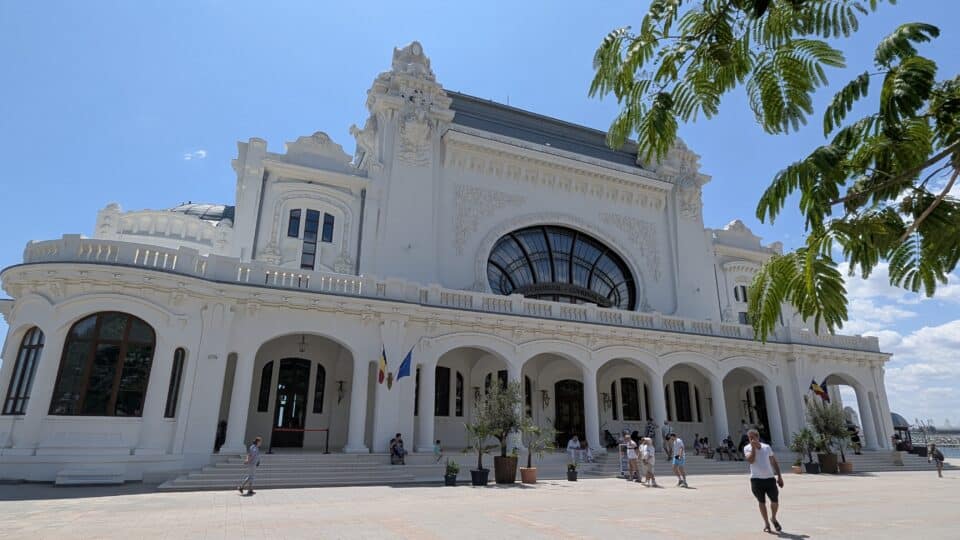
Constanța municipal bonds: the city has raised €110 million through its first euro-denominated municipal bond issue, in a transaction that drew investor orders worth approximately €310 million. It is the largest municipal bond issue completed in Romania to date, according to the local administration. Beyond the record, the operation changes the structure of the city’s debt and shifts a significant share of repayments to 2033–2036.
The most important point on cost is this: the interest rate is not 2.5%. The margin set through the bookbuilding process is 2.5 percentage points above six-month EURIBOR. For the first coupon period, with six-month EURIBOR at around 3%, the resulting annual rate is 5.5%.
Constanța municipal bonds: key issue figures
- 1,100,000 bonds were issued;
- the face value of each bond is €100;
- the total value of the issue is €110 million;
- investors submitted orders worth approximately €310 million;
- demand was approximately 2.82 times higher than the offer;
- the bonds have a 10-year maturity, to November 2036;
- the coupon is floating: six-month EURIBOR + 2.5 percentage points;
- for the first coupon period, the annual interest rate is approximately 5.5%;
- the issue’s stock-market symbol is CT36E and its ISIN code is ROAVOUKMGE04.
Where the €110 million will go
Most of the money is not financing entirely new projects. According to Constanța City Hall, approximately €99.79 million—more than 90% of the issue’s value—is intended to refinance three loans previously taken out by the municipality.
For additional information, see Dama Solar Romania: one of Europe’s largest solar parks, 1.3 GW and €728 million, an article that develops an aspect directly related to this subject.
The loans concerned were taken out from the European Bank for Reconstruction and Development, Banca Transilvania and Banca Comercială Română. They supported investment in public transport, energy efficiency, heating networks, mobility, electric transport, healthcare and several projects funded through the National Recovery and Resilience Plan (PNRR).
The remainder, approximately €10.21 million, will be used to co-finance six projects that also receive non-repayable funding.
Projects receiving co-financing
The local administration lists projects for:
- the rehabilitation and equipping of the “Oleg Danovski” National Opera and Ballet Theatre;
- the rehabilitation, modernisation and equipping of Azur Extended-Programme Kindergarten;
- the rehabilitation of Kindergarten No. 6;
- the rehabilitation of Kindergarten No. 57;
- urban-environment improvements in the Compozitori area;
- urban-environment improvements in the Delfinariu – Faleză Nord – Subzone 2 area.
The issue should therefore be viewed primarily as a debt-refinancing operation, complemented by a smaller component for investment co-financing.
Why €310 million in demand matters
The municipality offered bonds worth €110 million, while eligible investors submitted orders of approximately €310 million. This does not mean that City Hall will receive €310 million. The amount raised remains €110 million.
The 2.82-times oversubscription does, however, show that there was sufficient interest in the bonds issued by the municipality. Strong demand allowed the final margin to be set at the lower end of the range indicated to investors during the placement process.
One of the transaction’s major investors is the Black Sea Trade and Development Bank, an international financial institution that participated as an anchor investor.
The actual interest rate: why 2.5% is not the total cost
This is where the key difference emerges between the technical wording of the issue and the cost actually borne by the municipality.
The 2.5% margin is added to six-month EURIBOR. For the first coupon period, the six-month EURIBOR used in the calculation was approximately 3%, taking the annual rate to around 5.5%.
If EURIBOR falls, the future interest cost will fall. If EURIBOR rises, the interest paid by the municipality will rise as well. Constanța is therefore taking on floating-rate interest risk over the life of the issue.
At a 5.5% rate applied illustratively to the entire €110 million principal, interest would amount to approximately €6.05 million per year. This is only an estimate intended to show the scale involved: the actual cost will vary over time, and principal repayments will begin before final maturity.
When the €110 million must be repaid
The bonds mature in November 2036, but the principal will not be repaid in full on a single day. Repayment is scheduled in four annual instalments, beginning in 2033:
- 2033: 22% – approximately €24.2 million;
- 2034: 24% – approximately €26.4 million;
- 2035: 26% – approximately €28.6 million;
- 2036: 28% – approximately €30.8 million.
The municipality also has an early-redemption option in 2033, under the terms set out in the issue documentation.
What benefit refinancing may offer
Refinancing may pursue several objectives: extending debt maturity, reducing short-term pressure on the budget, changing the repayment structure and diversifying funding sources.
Constanța Mayor Vergil Chițac says the operation gives the municipality greater flexibility in managing its debt and creates the conditions for more efficient long-term investment planning.
However, determining whether the refinancing delivers net financial savings would require a full comparison of the interest and costs of the old loans with the cost of the new issue. The information published when the placement closed does not provide such a complete comparison.
Why the Fitch rating is relevant
According to data cited by the local administration, Constanța Municipality has a BBB- long-term credit rating with a negative outlook, and a A- Standalone Credit Profile.
The rating matters to investors because it provides an external assessment of an issuer’s ability to meet its financial obligations. In practice, perceptions of risk directly affect the interest rate investors demand to buy bonds.
CT36E bonds are set to reach the Bucharest Stock Exchange
The Bucharest Stock Exchange has already published information on the instrument bearing the CT36E symbol and ROAVOUKMGE04 ISIN code. Under the timetable communicated by the municipality, the bonds are scheduled to be admitted to trading around 15 December 2026, following completion of the legal and procedural steps.
BT Capital Partners is the issue’s intermediary, while VMB Partners is the financial adviser to Constanța Municipality.
What the operation means for Constanța residents
For a city resident, a bond issue may seem like a remote financial operation. Its implications are in fact direct: future interest and repayments will be paid from the municipal budget—the same budget that funds public services and local investment.
At the same time, restructuring the debt may free up budgetary space in the coming years and allow projects requiring local co-financing to continue.
What will matter is how the administration uses this period. If the investments made deliver better infrastructure, energy efficiency, effective public transport and services that reduce future costs, the debt may support development. If not, repayments in 2033–2036 will become additional pressure on the local budget.
Constanța enters the capital market
The €110 million issue marks Constanța Municipality’s debut in the municipal bond market and adds the capital market to the local administration’s funding sources.
The operation comes at a time when public investment, debt and financing costs are important issues for Romania’s economy. InfoBuz has also recently examined the economic recovery plan for 2027, as well as the 2026 budget rectification and pressures on public finances.
For Constanța, the real test of this issue will not be the €110 million record or the 2.82-times oversubscription, but how the new debt structure affects the city’s budget and investment through 2036.
Frequently asked questions
How much did Constanța Municipality borrow?
The municipality raised €110 million through an issue of 1.1 million municipal bonds, each with a face value of €100.
What is the interest rate on Constanța’s bonds?
The coupon is floating and is calculated as six-month EURIBOR plus a margin of 2.5 percentage points. For the first period, the annual rate is approximately 5.5%.
What will happen to the money?
Approximately €99.79 million will refinance three existing loans, while approximately €10.21 million is intended to co-finance six investment projects.
When must the loan be repaid?
The principal will be repaid in four instalments between 2033 and 2036, with final maturity in November 2036.
Will the bonds trade on the Bucharest Stock Exchange?
Yes. The instrument has the CT36E symbol, and admission to trading is envisaged for around 15 December 2026, after the necessary procedures have been completed.
Sources consulted: Constanța City Hall; Bucharest Stock Exchange – CT36E; AGERPRES.









Discuția cititorilor
Ai o opinie sau o întrebare despre acest articol? Spune-ne ce crezi.
Fii primul care deschide discuția.
Te rugăm să păstrezi un limbaj civilizat și să discuți la subiect. Comentariile spam sunt filtrate automat.