
Updated: 27 October 2026 la 00:12. Articolul a fost revizuit pentru a reflecta informațiile disponibile la această dată.
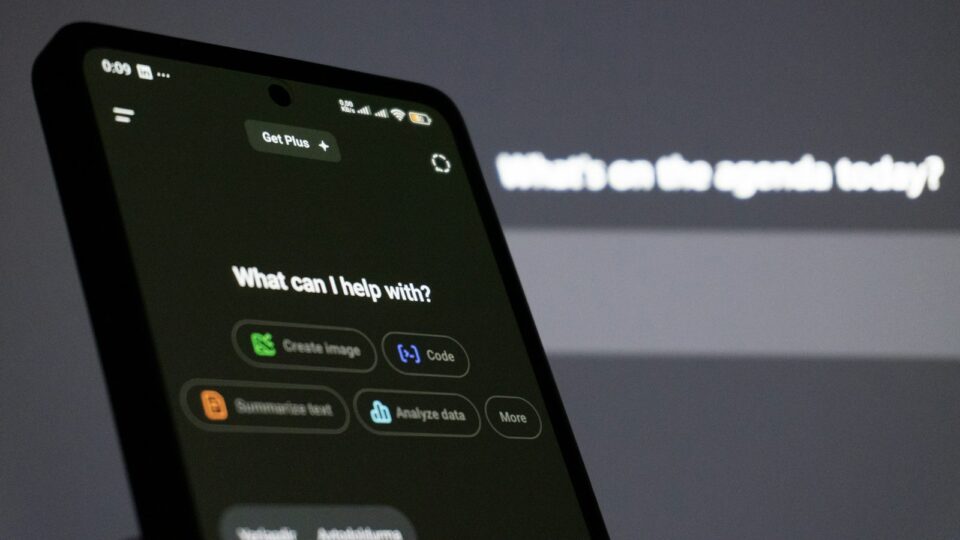
For nearly two decades, the smartphone has been a collection of apps: one for messages, another for transport, a third for the calendar, and dozens more for shopping, photos and documents. In 2026, the era of AI assistants is beginning to change that logic. Instead of opening each app manually, users can ask their phone to find information, prepare a reply or, in some situations, complete several steps in a task. The shift is real, but it remains far from the promise of a universal assistant that can do everything.
Google is testing Gemini automations for selected apps, while Apple has launched Siri AI features that can take personal context and on-screen content into account. Still, availability varies by region, language, phone and app. In Romania especially, a demonstration in the United States does not guarantee that the same feature can currently be used. This guide explains how these assistants are built, their practical benefits, their technical limits and three plausible scenarios through 2031.
For more on artificial intelligence, see AI-cloned voices: how to spot scams impersonating family, your bank or your boss, which offers complementary details on the subject.
InfoBuz research: 26 October 2026. The features and regions of availability described were publicly announced by this date. The 2027–2031 scenarios are analysis and possibilities, not confirmed launches.
How does the era of AI assistants on phones begin?
A conventional voice assistant often worked on a fixed logic: “set an alarm”, “call a contact” or “what is the weather?”. An assistant built on generative AI models can interpret a freely phrased instruction, summarise information, ask clarifying questions and use system functions. The decisive difference, however, is the move from answering to acting. A model that explains where to buy a ticket is useful; one that can compare options, fill in details and prepare a booking, without confirming payment on the user’s behalf, changes how people interact with a device.
These systems are sometimes called AI agents. The term does not mean unlimited autonomy. To complete a task, an agent must understand the goal, decide which tools it needs, receive the results and check whether it has achieved that goal. In practice, an app may limit an agent to a few specific functions. An agent that can order food is not automatically given access to every photo, bank account or installed app.
What is already possible in 2026: Gemini, Siri AI and app-connected agents
Android: automation in controlled windows, not universal access to a phone
On 25 February 2026, Google introduced a Gemini system for multi-step tasks, initially in beta for certain Pixel 10 and Galaxy S26 models in the United States and South Korea. Examples include ordering food or requesting a ride. According to Google’s official announcement, the assistant works in a secure virtual window for supported apps and lets the user monitor, intervene in or stop the task. It demonstrates the technological direction, rather than guaranteeing that every Android phone in Romania can perform these automations today.
In May 2026, Google also set out security principles for Android’s “agentic” direction: explicit control, data protection and operational transparency. Features may require separate activation, restrict access to permitted apps and ask for confirmation for transactions. These measures matter because the same technology that can save time can select the wrong destination for an action or misinterpret a message. The Android security documentation explains the design approach.
Apple: Siri AI understands context, but EU users face restrictions
Apple introduced a Siri AI version in 2026 with access to information in messages, emails and photos, an understanding of on-screen content, and actions in apps. The company announced the English-language beta release in September. There is, however, an essential condition for InfoBuz readers: Apple said that Siri AI is not initially available in the EU on iOS, iPadOS and watchOS, amid discussions around European regulation. Availability on macOS or visionOS, and Apple Intelligence’s general features, should not be confused with access to all Siri AI capabilities on an iPhone in Romania. See Apple’s September release and its clarification on the EU rollout.
This example shows why online comparisons need to be read carefully. A feature may exist technically but be unavailable for compatibility, language or rollout-policy reasons. Availability can also change in the following months; for precise information, users should check the manufacturer’s official lists, not only an event presentation.
Assistants that also work across online services
Part of this development is happening beyond the phone itself: when connected and authorised, AI assistant apps can use email services, calendars, files or web pages. For that reason, an AI assistant will not necessarily belong exclusively to the phone maker. A user could use the integrated system to control the device and another assistant for projects, documents or organising work. In practice, though, integration is constrained by permissions, service rules, subscriptions and the actions that are technically supported.
How an AI agent works: an explanation in five steps
| Stage | What the system does | What can go wrong |
|---|---|---|
| 1. Understanding the request | Turns a natural-language instruction into a goal | Misinterprets the date, person or intent |
| 2. Gathering context | Consults authorised information: calendar, email, on-screen content | Uses incomplete or outdated data |
| 3. Planning | Proposes the necessary steps and tools | Chooses an overly complicated route or unsuitable app |
| 4. Limited execution | Fills in forms, searches, composes or interacts with permitted apps | May select the wrong item or send unwanted data |
| 5. Verification | Compares the result with the goal and requests confirmation where necessary | May report success before the service has confirmed the action |
This chain also explains why an assistant cannot be judged solely by the quality of its conversation. If its answer is flawless but a reservation is made for the wrong day, the task has failed. A mature system needs genuine confirmations from the app carrying out the action, logs of important stages, and a clear option to cancel or correct the process.
Why on-device AI matters: privacy, speed and autonomy
Not every AI operation needs a remote server. On-device AI means that certain calculations are performed on the phone’s processor, graphics unit or dedicated accelerator (NPU). Potential benefits include shorter response times, the ability to use some features without internet access, and keeping some data on the device. But a local model is constrained by memory, power consumption, temperature and the task’s complexity. The most extensive requests may still require cloud processing.
On 7 October 2026, the Android team described AISeal, an architecture based on isolating sensitive AI operations in protected hardware environments. Its aim is to prevent personal information used by the assistant from becoming accessible to other system components without authorisation. This is a step towards securing the device, not a promise that every AI model will be immune to attack. Details are available in Google’s technical announcement on AISeal.
Hardware research shows that the issue is more complicated than simply adding a more powerful processor. A technical study published in July 2026 on language-model inference on mobile devices describes substantial differences between software frameworks and the use of CPUs, GPUs and NPUs. The important conclusion for buyers is that the “AI Phone” label alone does not say how quickly an assistant works, how much battery it uses or what it can do without a connection.
Six changes users could see by 2031
1. Fewer apps opened manually
One possible user flow might be: “Compare the three invitations for Saturday and add to my calendar the one I can attend without clashes.” The assistant could find the events, summarise the options and prepare a choice. Apps do not necessarily have to disappear; visual interfaces will probably remain, but routine interaction could shift towards a conversational layer.
2. One goal instead of ten commands
Today, a holiday can mean separate searches for transport, accommodation, weather and visiting hours for tourist attractions. In a more advanced scenario, a user could request a complete itinerary and then approve bookings separately. Actions involving money or identity data should retain explicit confirmations; saving time does not justify transactions completed without the user’s knowledge.
3. Photos, documents and messages understood in context
Searching for a photo could begin with a description rather than a date: “Show me the receipt from the car service last spring.” Similarly, an assistant could extract a due date from a document and propose a reminder. Optical-recognition quality, data accuracy and the protection of personal documents are essential here. If an amount, serial number or name is recognised incorrectly, the user must be able to correct it before the information is used.
4. Better support for people with accessibility needs
For people who have difficulty with vision, mobility or keyboard use, context-aware voice control can remove steps. Describing an image, reading a document, navigating large interface elements and assisted writing are concrete examples of usefulness. Such support must still be tested in real conditions and cannot automatically replace every established assistive technology.
5. Proactive services, but only with controlled permissions
A phone could warn that leaving for a meeting requires more time, or that a document is missing from a form. The line between help and surveillance lies in who decides what data are collected, how long they are retained and with whom they are shared. A proactive system that cannot be easily turned off may become more inconvenient than today’s manual features.
6. New competition between ecosystems
In the years ahead, choosing a phone may depend less on megapixel counts and more on what its assistant can do in the apps used every day. There is no evidence, however, that traditional hardware, battery life, update security and camera quality will become irrelevant. More likely, these qualities will remain decisive alongside AI capabilities.
Limits that could slow the shift: errors, fraud, costs and regulation
The first limit is reliability. Agents can confuse instructions, misinterpret text, fail when an app changes its interface, or claim to have completed a step without confirmation. For tasks such as sending a professional message, making a payment, booking a ticket or deleting a file, human review remains a requirement of responsible design.
The second limit is security. A malicious message, web page or document can contain instructions intended to divert an agent’s behaviour. This risk is known as prompt injection. OWASP recommends minimum permissions, validation of high-impact actions, and separation between information read from external sources and the user’s authorised instructions. NIST has likewise warned of the difficulty of securing systems able to use tools and carry out actions.
The third limit is economic. Some features may become paid services, require new devices or need an internet connection. The costs of cloud computing and security updates do not disappear. A “free” assistant may involve usage limits or other trade-offs, making it important to read the terms, not just the advertising.
The fourth limit concerns legislation and regional availability. The example of Siri AI in the European Union shows that a feature presented globally can have a different rollout schedule. In 2031, fragmentation across languages, markets and platforms could persist even if models become more capable.
How to choose a phone with AI features today without paying for promises
- Check which features are available in Romania, in the language and on the account you will use, rather than relying on a demo from another country.
- Look for compatibility with the exact model, including available memory, operating-system version and the duration of security updates.
- Test specific use cases: writing, summarising, photo search, translation and accessibility.
- Control permissions for email, photos, calendar, microphone and location data.
- Do not buy solely on promises about 2031; choose a phone that meets current needs even if advanced AI features never reach it.
- Personally confirm payments and irreversible actions, and retain the option to turn off automations.
For more on privacy risks on phones, read InfoBuz’s analysis of app permissions. For a comparison of home connections, see the guide to Wi-Fi 6, 6E and Wi-Fi 7.
Frequently asked questions about AI assistants
Will the smartphone disappear in the next five years?
There is no solid basis for saying that the smartphone will disappear by 2031. It is more plausible that the way people use apps will change, while the screen and operating system remain useful for checking, communicating and controlling activities.
Can AI assistants shop on their own?
Some systems can prepare the steps of an order in selected apps. Providers nevertheless implement restrictions and transaction-confirmation mechanisms. It should not be assumed that all purchases can be automated or that automation is available in every country.
Are AI features on phones completely private?
There is no universal guarantee. Some computations can run locally and others in the cloud; policies differ between products, features and regions. It is important to check what data are used, whether they are retained and how they can be deleted.
Do I need a new phone for AI?
It depends on the feature. Many AI apps run on existing phones using the cloud, while functions deeply integrated into the system and some local models may require newer processors and system versions.
Conclusion: the future is not a phone that talks, but one that acts correctly
Between 2026 and 2031, the most important change may be a reduction in the number of steps people take to reach a result. But a trustworthy AI assistant must be accurate, verifiable, constrained by permissions and easy to stop. Google and Apple have already shown the direction, though regional availability and the maturity of automation remain uneven. For readers in Romania, the best choice is not the model with the most eye-catching promises, but the device with clear, available and well-protected features.
Primary sources and studies consulted
- Google, 25 February 2026 – Gemini and multi-step tasks on Android.
- Google, 12 May 2026 – Gemini Intelligence security and permissions.
- Google, 7 October 2026 – the AISeal architecture.
- Apple, 14 September 2026 – Siri AI beta launch and availability.
- Apple – clarification on limitations in the European Union.
- Cai and colleagues, July 2026 – LLM inference efficiency on mobile devices, preprint.
- OWASP – AI Agent Security Cheat Sheet.









Discuția cititorilor
Ai o opinie sau o întrebare despre acest articol? Spune-ne ce crezi.
Fii primul care deschide discuția.
Te rugăm să păstrezi un limbaj civilizat și să discuți la subiect. Comentariile spam sunt filtrate automat.