
Updated: 11 October 2026 la 04:14. Articolul a fost revizuit pentru a reflecta informațiile disponibile la această dată.
West Nile virus in Romania caused 121 reported infections and eight deaths during the 2026 season, between 3 June and 7 October, according to data from the National Institute of Public Health (INSP). Of the cases, 108 were confirmed and 13 were considered probable. The figures were made public on 9 October 2026 and should be read as a tally for a defined period, not as a final total for the entire year.
For related information, see Heatwave in Romania: what to do to avoid ending up in hospital. Temperatures of up to 41°C expected in the coming period, an article examining an issue directly connected to this subject.
The geographical distribution shows that the highest numbers of cases were recorded in Bucharest (45), Ilfov County (12) and Giurgiu County (11). Constanța County appears in the reported statistics with two cases. INSP described the eight people who died as older people with underlying health conditions. This does not justify disregarding the risk for other groups, but it indicates why age and health can matter in severe outcomes.
West Nile in Romania: what the 121 cases in 2026 mean
The total combines two epidemiological surveillance categories: cases confirmed under laboratory criteria and probable cases assessed against specific criteria. It would be incorrect to present all 121 as confirmed cases. The distinction matters when comparing reports across weeks and years.
The surveillance period in the published data began on 3 June and ended on 7 October 2026. Other infections may be diagnosed or reclassified later. Reporting-system data can change as laboratory results are received and the probable place of exposure is verified.
The report cannot be used to calculate directly the likelihood that a person living in Bucharest will be infected. Such an assessment would require the number of people exposed, vector density, individual behaviour and the number of infections that are never tested.
Where infections were reported: Bucharest, Ilfov, Giurgiu and other counties
According to INSP’s distribution by territorial unit of exposure, the following cases were recorded: Bucharest 45, Ilfov 12, Giurgiu 11, Călărași 7, Ialomița 7 and Brăila 5. Other counties recorded were: Olt and Teleorman, four each; Galați and Prahova, three each; Argeș, Cluj, Constanța, Iași and Suceava, two each; and Bihor, Botoșani, Buzău, Dâmbovița, Dolj, Harghita, Mureș, Satu Mare, Vaslui and Vrancea, one each.
This is an indicator of the epidemiological location of exposure in reported cases, not an exact map of all infected mosquitoes. A county with no reported cases in the list cannot be described as biologically “free of West Nile”. A locality with a higher number of cases may also have a larger population, more accessible diagnostic services or a higher level of reporting.
Of the 121 cases, 76 were reported in urban areas and 70 involved men. These figures concern different characteristics and may overlap. They do not show that the virus circulates only in cities, nor that a person’s sex is enough to predict the course of infection.

How West Nile spreads and why mosquitoes matter
West Nile virus is a pathogen transmitted mainly through the bite of infected mosquitoes, especially those of the Culex genus. In the natural cycle, birds play an essential role as hosts, and mosquitoes can transmit the virus between birds and, occasionally, to humans or other mammals.
Humans are generally considered dead-end hosts in ordinary transmission because the level of virus in the blood does not usually support infection of other mosquitoes. It is not ordinarily transmitted from person to person through proximity, touch or sharing objects. There are, however, rare routes associated with certain medical procedures or mother-to-child transmission, which are managed through specific rules.
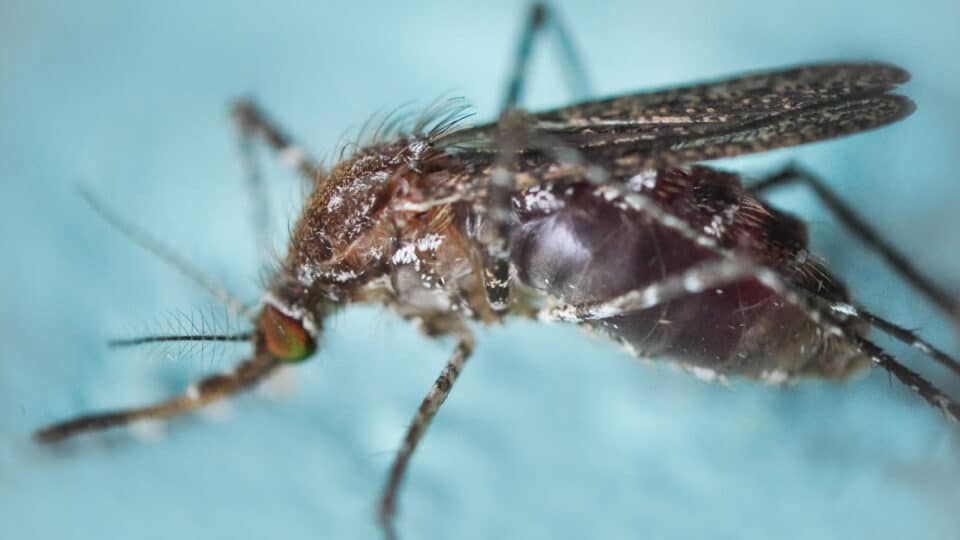
The presence of mosquitoes is not, in itself, evidence that the virus is circulating. Understanding the true distribution would require human diagnosis to be combined with surveillance of insects and bird populations, depending on authorities’ programmes. A photograph of a mosquito cannot establish whether it carries a particular virus.
Symptoms and why many infections go unnoticed
A significant share of West Nile infections produces no obvious symptoms. Some people may develop fever, headache, fatigue, muscle or joint pain and, sometimes, a rash. These symptoms are not specific and can resemble those of other infections, which is why diagnosis requires medical assessment and, where a doctor considers it appropriate, suitable tests.
Neuroinvasive disease is rarer but much more serious. It can involve meningitis, encephalitis or neurological impairment, with symptoms such as high fever, severe headache, neck stiffness, confusion, difficulty walking, muscle weakness or seizures. In such situations, urgent medical care is needed.
Not every mosquito bite followed by fever is West Nile. A doctor must consider other diagnoses and a person’s history, including travel and when symptoms began. Self-diagnosis based on a news report can delay necessary care for another condition.
Who is more vulnerable to severe disease
Older age and certain underlying conditions are relevant factors in the risk of neurological complications and severe outcomes. INSP therefore states that the deaths reported this season were among older people with comorbidities. Conditions that may influence the course of illness include some chronic diseases and immunosuppression, depending on the individual patient’s circumstances.
Younger people are not completely protected, and apparently good health does not guarantee that symptoms will not occur. Still, a public-health strategy must pay particular attention to people exposed to complications without creating the false impression that everyone infected will develop severe disease.
The eight deaths among 121 reported cases should not be used as a “virus mortality rate” applicable to all infections. Clinical surveillance reporting is affected by the preferential identification of symptomatic and severe cases, while mild or asymptomatic infections may not enter the records.
Why cases occur mainly in summer and autumn
Mosquito-borne transmission is influenced by temperature, rainfall, ecosystems and the abundance of breeding sites. Containers with standing water, canals, vegetated areas and some peri-urban spaces can create conditions for larvae to develop, depending on the species. There is, however, no single type of garden or neighbourhood that explains every case.
Warm weather can prolong mosquito activity and influence transmission dynamics. At the same time, a dry spell does not rule out risk if water remains in artificial containers or drainage systems. Prevention should therefore not be abandoned simply because the hottest weeks of summer have passed.
Data reported up to 7 October describe what has happened; they are not a weather model that can accurately predict how many cases will occur in the coming days. Any local warning should be supported by analysis from epidemiologists and public-health services.
What families can do to reduce exposure
INSP recommends preventing bites by wearing long-sleeved clothing and long trousers when there is a risk of exposure. Repellents used according to the label can reduce bites, while window screens help limit insects entering the home. For children, product choice and application must follow age and safety instructions.
At home, it is important to remove standing water from plant-pot saucers, buckets, tyres, gutters and other containers. Regular cleaning can interrupt larval development. Insecticides may be used in accordance with the law and instructions, but uncontrolled application can create risks for people, animals and the environment.
For communities, prevention requires coordination among authorities: monitoring risk areas, maintaining public spaces, providing information to residents and running justified vector-control programmes. A single spraying operation is not enough if mosquito breeding sources remain active.
Is there a vaccine or specific treatment for humans?
At the time of writing, there is no West Nile vaccine authorised for routine use in humans, nor is there a specific antiviral therapy proven for all patients. Care is supportive and depends on the severity of illness. Severe cases may require hospital admission, neurological monitoring, hydration and other interventions decided by the medical team.
It is essential not to confuse West Nile with other insect-borne diseases, which may have different vaccines or medical measures. Products marketed online as “natural cures for West Nile” cannot be validated on the basis of testimonials or the presence of extracts on a label alone.
Readers can also consult InfoBuz’s guide to protection against mosquitoes and symptoms that require a medical consultation. This article has a different purpose: it explains the reported epidemiological tally and distribution for the 2026 season.
What the two cases mean for Constanța
Constanța appears with two cases in the distribution communicated by INSP. This is a county-level surveillance figure, not a map of neighbourhoods or confirmation that specific beaches, towns or hotels are dangerous. Nor does the cited document establish exactly where the people were bitten or which mosquito species was involved in each case.
For residents of Dobruja, the practical recommendations remain the same: avoid unnecessary exposure, reduce sites with standing water and seek medical care when warning symptoms occur. It would be wrong for a low number of reported cases to lead either to abandoning prevention or, conversely, to panic without verified local grounds.
What data are missing for a complete picture
The available tally does not provide, for every case, exact age, clinical presentation, length of hospital stay or the detailed method used to establish each exposure. Without such appropriately aggregated and protected information, it is not possible to conclude which group has the highest infection rate or how much a particular underlying condition contributed to severe outcomes.
A sound comparison with previous years should examine the same surveillance period, confirmation criteria and any changes in testing. Otherwise, a higher number may reflect both increased circulation and improved diagnostic and reporting capacity.
Frequently asked questions
Were all 121 infections confirmed?
No. Of the total, 108 were confirmed and 13 were classified as probable.
Can West Nile spread by touching an infected person?
Not ordinarily. The usual route of transmission to humans is through bites from infected mosquitoes.
How many cases were reported in Bucharest and Ilfov?
There were 45 in Bucharest and 12 in Ilfov County, according to the distribution reported up to 7 October.
What should I do if confusion, high fever or neck stiffness develops?
Seek urgent medical assessment; the symptoms may indicate serious illness, regardless of the exact cause.
How to interpret the county map without stigmatising localities
The figures reported for Bucharest, Ilfov and the other counties describe cases identified through epidemiological surveillance, not the exact frequency of the virus in every neighbourhood. Comparing localities of different sizes would require figures adjusted for population and an assessment of how testing is carried out. A difference between two counties may reflect both transmission intensity and access to diagnosis, as well as the criteria doctors use when recommending tests.
A local administration can use the data to prioritise public information and control of standing-water sources, but should not declare an area safe or unsafe solely on the basis of a case list. Measures can include checking gutters, discarded containers and spaces where mosquitoes breed, in collaboration with public-health specialists.
What to watch for in the next INSP bulletin
When the situation is updated, readers should check the exact period covered, the number of confirmed and probable cases, and any reclassifications. It is also useful to monitor reporting of neuroinvasive cases and deaths, without calculating a general case-fatality rate from a sample that does not include all mild and asymptomatic infections. For families, the practical message remains unchanged: preventing bites is useful, and severe neurological symptoms require immediate assessment regardless of county statistics.
Sources and verification date
- News.ro — INSP’s announcement of the tally, 9 October 2026.
- Radio Romania — county-level distribution provided by INSP, 9 October 2026.
- ECDC — epidemiological information on West Nile virus.
- CDC — transmission, symptoms, prevention and care.
InfoBuz, 10 October 2026. Figures apply to the period from 3 June to 7 October 2026 and may be updated by authorities. Informational material, not a medical diagnosis. The mosquito photograph is not evidence of infection.









Discuția cititorilor
Ai o opinie sau o întrebare despre acest articol? Spune-ne ce crezi.
Fii primul care deschide discuția.
Te rugăm să păstrezi un limbaj civilizat și să discuți la subiect. Comentariile spam sunt filtrate automat.