
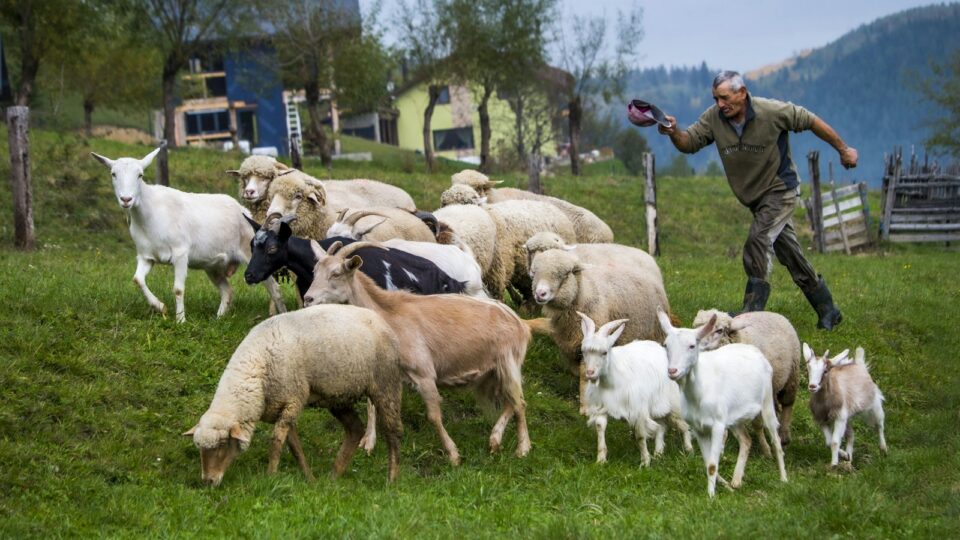
Vaccination of sheep and goats will begin on Sunday, 25 October 2026, in Constanța and Tulcea counties, one day earlier than the latest schedule announced by Romania’s National Sanitary Veterinary and Food Safety Authority (ANSVSA). The decision followed the early arrival of vaccines from the European Union’s strategic reserve. For livestock keepers in Dobruja, the start of the campaign means protection for their herds against two different diseases, but not the immediate lifting of restrictions on animal movements and exports.
Under a government decision approved on 23 October 2026, Romania accepted a donation of 1,100,000 doses, declared to be worth RON 1,312,135: 300,000 doses to combat peste des petits ruminants (PPR) and 800,000 doses against sheep and goat pox (SGP). These quantities are the European stock made available to launch the response, not the number of farms or animals already vaccinated.
Beyond the announced start date, there are practical questions: who will receive the vaccines, what flock owners need to do, who pays, how long restrictions will last, and what the situation could mean for live-animal exports. Official documents set out a regionally differentiated vaccination strategy and a process coordinated by veterinarians, based on livestock-holding records.
Status as of 24 October 2026: authorities confirmed that vaccination is due to begin on 25 October. There is not yet a tally of animals vaccinated in this new phase; figures for doses must not be confused with actual administrations. The information below is based on the ANSVSA statement of 24 October, the government briefing of 23 October and specialist European documents.
For more information about Constanța, see also Port of Constanța changes authentication from 19 October: what companies using the APMC Portal need to know, which provides related details on the subject.
Vaccination begins on 25 October in Constanța and Tulcea: what has changed
ANSVSA said on Saturday, 24 October, that the final vaccine consignments had arrived in Romania ahead of the initially estimated logistical deadline. The campaign in the priority areas is therefore scheduled to begin on Sunday morning, 25 October, in Constanța and Tulcea counties, rather than on Monday, 26 October.
According to the statement, ANSVSA president Alexandru Bociu and a team of specialists will oversee the start of the operation in Constanța before travelling to Tulcea. The authority stressed the speed of the response, as protecting livestock and creating the conditions for exports to resume are simultaneous objectives.
It is important to distinguish between launching the campaign and completing vaccination. The 24 October announcement does not specify how many animals will be immunised on the first day, the precise distribution by locality, or when each holding in the two counties will be visited. Those details must be confirmed by veterinary authorities as the operation progresses.
Another important distinction is that 25 October marks the start in the two priority counties; it does not confirm that all sheep and goats in Romania will be vaccinated on the same day.
1.1 million EU doses: which vaccines have arrived and what diseases they target
On 23 October, the government approved acceptance of a European Commission donation and its transfer to ANSVSA for administration. The official briefing names the products and gives the exact allocation by disease:
| Target disease | Vaccine | Doses in donation | Planned area of use under the strategy |
|---|---|---|---|
| Peste des petits ruminants (PPR) | Pestevac | 300,000 | Constanța and Tulcea, under the differentiated plan |
| Sheep and goat pox (SGP) | Jovivac | 800,000 | Nationwide, according to the official plan and phasing |
| Total | Two separate products | 1,100,000 | Stock for launching the emergency response |
The government valued the donation at RON 1,312,135. This is the value of the vaccines received, not the full budget for the campaign. Distribution, travel, veterinary labour and other operating costs are financed separately, according to ANSVSA.
A further misunderstanding should be avoided: 1.1 million doses do not automatically mean 1.1 million different animals vaccinated. In areas where both diseases are targeted, the same holding or eligible animal may be included in two separate immunisation programmes, in line with veterinary instructions and product information. The number of protected animals is established from recorded administrations, not by simply adding doses from the two categories.
The European Commission explained on 20 October that its strategic vaccine banks are designed to enable the start of an emergency response, not necessarily every round or the full longer-term need. The campaign may therefore require additional supply and planning, although no future quantity can be predicted with certainty from that statement.
Two distinct diseases: PPR and sheep and goat pox
Peste des petits ruminants: a viral infection affecting flocks
Peste des petits ruminants, internationally known as peste des petits ruminants (PPR), is a viral disease affecting mainly sheep and goats. According to the European Commission, symptoms can include fever, nasal and eye discharge, lesions of the mouth lining, respiratory problems and diarrhoea.
It can spread through close contact between animals, and an outbreak requires veterinary control measures and restrictions tailored to the epidemiological situation. Severity and mortality depend on circumstances, including a flock’s susceptibility; very high percentages reported in some outbreaks should not be presented as a prediction for every Romanian farm.
The World Organisation for Animal Health (WOAH) documented the first detection of the disease in Greece and Romania in 2024. This reference provides historical and epidemiological context; the 2024 figures are not a tally of outbreaks in October 2026.
Sheep and goat pox: a different virus, different lesions, the same need for control
Sheep and goat pox is caused by viruses in the Capripoxvirus group. Fever, nodules and skin or internal lesions, production losses, damage to wool and hides, and mortality in severe cases are possible. Beyond the disease itself, it brings biosecurity costs and trade restrictions.
The European Commission classifies both sheep and goat pox and PPR as Category A diseases, for which immediate eradication measures apply when detected under EU animal-health law.
Although both affect sheep and goats and may lead to trade restrictions, PPR and sheep and goat pox are not the same disease. This is why different vaccines, epidemiological criteria and geographically differentiated strategies are used. Neither disease should be confused with bluetongue, which InfoBuz has covered separately in a veterinary analysis.
Why Dobruja is planned to receive two vaccines while the rest of Romania has a different programme
In technical clarifications issued on 23 September, ANSVSA said PPR immunisation was planned exclusively in Constanța and Tulcea counties, regarded as a risk area, while vaccination against sheep and goat pox was planned nationwide.
In the two Dobruja counties, the plan provides protection against both diseases for eligible animals and in accordance with vaccine-product instructions. Elsewhere in Romania, the intervention described in the national strategy focuses on sheep and goat pox.
This distinction does not mean that every flock in the country faces the same risk, that every farm in Dobruja has already had cases, or that other counties are entirely outside epidemiological surveillance. The risk of an outbreak, an outbreak’s existence and prevention measures are different concepts.
Authorities aim to control the diseases while minimising disruption to commercial activity that can safely continue. For each farm, the schedule, batch, eligibility and timing of vaccination must be confirmed by the responsible veterinarian. It would not be correct to infer a revaccination interval or an individual dose without the exact product information and campaign instructions.
What farmers in Constanța and Tulcea need to do: the ANSVSA procedure
ANSVSA made one of the most important clarifications in its 22 October 2026 statement: the campaign is organised using livestock records in the National Database (BND), without a written or formal application from farmers.
Under the official explanation, veterinarians and authorised teams organise the intervention and validate the procedure. Owners must cooperate, provide access to the animals on their holdings and allow the operations to be carried out safely.
- Check holding records. Make sure livestock are correctly identified and registered. If there are discrepancies, speak to the veterinarian or the county veterinary and food-safety directorate (DSVSA).
- Follow communications from the responsible veterinarian. Vaccination is planned institutionally; there is no need to submit a written application on your own initiative for doses under this campaign.
- Prepare animals for safe handling. Suitable restraint facilities reduce the risk of injury to animals, farmers and veterinarians.
- Report any suspicious clinical signs immediately. Animals showing symptoms must be assessed by a veterinarian; vaccination is not a method of self-diagnosis and must not be administered independently.
- Check that the intervention is documented. ANSVSA said there will be a standardised report signed by the parties, while immunisation data will be entered into the national system.
- Do not move animals on the assumption that vaccination allows transport. Restrictions remain in force and may require separate conditions or authorisations.
If an owner in the target area is not contacted or has questions about animals listed in the records, the practical step is to speak to the responsible veterinarian and the county DSVSA. Animals should not be transported to another locality for vaccination without instructions.
Is vaccination free? What farmers pay and what the state covers
According to ANSVSA, vaccination is free for sheep and goat owners under this campaign. The doses come from EU emergency reserves and, according to the authority, the Romanian state covers logistical costs, veterinarians’ travel, labour and necessary equipment.
The RON 1,312,135 value of the donated vaccines should therefore not be confused with the cost of every stage of the campaign. The total budget may include additional items, and a cost per animal vaccinated cannot be calculated accurately by simply dividing the donation’s value by the number of doses.
Farmers should be cautious about any requests for money to “reserve” or “prioritise” vaccines under the official programme. Any unclear payment request should be checked directly with the responsible veterinarian and the DSVSA, rather than relying on a message from an unknown person. There is no information indicating a specific fraud linked to this campaign; this recommendation is strictly precautionary.
Movement restrictions remain: what can and cannot be assumed
In its 24 October statement, ANSVSA said that temporary restrictions on the movement of sheep and goats within Romania remain in force alongside the start of vaccination, to prevent the diseases spreading.
It is essential to understand that “movement restrictions” should not be turned into the undifferentiated claim that every transport is absolutely prohibited in all circumstances. The rules for a particular movement may depend on the locality, health zone, destination, veterinary documents, and any specific derogations or authorisations.
In practical terms, farmers should not arrange a move, a sale requiring transport or relocation of a flock simply because the animals have been vaccinated. They should first obtain confirmation from the DSVSA of the current rules and of the documents required for the relevant route and destination.
An immunisation campaign is one component of epidemiological control, alongside surveillance, identification of holdings, investigations, protection zones, movement controls and biosecurity measures. Restrictions are lifted through decisions by competent authorities and, for international movements, in accordance with the European framework and the rules of destination countries.
Live-animal exports: why 31 December 2026 is a reference date, not a promise
The government briefing on the extraordinary meeting of 23 October states that, under European Commission decisions in force at the time, movements of live sheep and goats to other EU member states and third countries are restricted until 31 December 2026.
That date is the end date of the restriction regime described in the statement. It is not evidence that exports will automatically resume on 1 January 2027, or as soon as the first dose is administered. Any early lifting or change to the regime depends on the epidemiological situation, checks by authorities and applicable legal decisions.
The authorities’ stated objective is to create the conditions required to reopen trade in live animals, particularly to markets outside the European Union. The European Commission and trading partners must nevertheless accept the applicable health conditions and certification. Vaccination is not an automatic export permit.
There is also a difference between live animals and products of animal origin. ANSVSA said the adopted vaccination scheme should not affect exports of sheep and goat carcasses or dairy products. That statement concerns the effect of the vaccination strategy; it does not remove the need to comply with veterinary controls, certification requirements and destination-market rules for each product.
InfoBuz previously examined the ban on exports of sheep and goats until 31 December 2026 and activities that can continue. The new campaign is a concrete step towards disease control, but it does not by itself change the entire trade regime.
Why a health restriction has an economic impact before farm losses emerge
Sheep and goat keepers can be affected economically on several levels. The first is herd health: disease can mean mortality, lower production, supportive treatment determined by a veterinarian and additional animal-care costs.
The second is commercial mobility. If an animal cannot be transported under normal conditions to a buyer, exporter or fair, additional maintenance costs and planning difficulties may arise. A flock still needs to be fed and managed while a sale is postponed.
The third is the confidence of external partners. Even where domestic requirements are met, an importer may seek extra evidence or limit purchases until health status is clarified. Markets operate under their own import criteria, certificates and commercial negotiations.
The fourth is the knock-on effect on transporters, intermediaries, veterinary services and other activities connected to the livestock sector. However, it would not be justified to invent a total figure for farm losses or a rise in lamb prices based only on the vaccine announcement. Such an estimate requires data on trade, costs, livestock numbers and the actual duration of restrictions.
The campaign’s economic value can be assessed through indicators observed later: the number of eligible and vaccinated animals, the evolution of outbreaks, the maintenance of epidemiological control and any decisions to resume exports.
Why the plan announced in September differs from the donation approved in October
In an ANSVSA statement of 11 September 2026, the authority presented a plan involving 1.3 million doses: one million for sheep and goat pox and 300,000 for PPR.
On 23 October 2026, the government decision referred to an actual donation of 1.1 million doses: 800,000 for sheep and goat pox and 300,000 for PPR. These are two distinct documentary stages — an earlier plan and a donation subsequently accepted — and should not be conflated.
The difference does not automatically support the conclusion that 200,000 doses were lost, cancelled or stolen. The documents describe different stages of supply, and the European Commission said the strategic reserve is intended to launch the response. For clarification of total needs and subsequent consignments, ANSVSA updates should be followed rather than deductions drawn from two separate figures.
From the request to Brussels to farm vaccination: the documented timeline
| Date | Confirmed stage | Significance |
|---|---|---|
| 11 September 2026 | ANSVSA presents the differentiated strategy and a supply plan | Defines risk areas and target diseases |
| 21 September 2026 | Official request to the European Commission | Activates support for emergency doses |
| 23 September 2026 | Plans submitted and ANSVSA public clarifications | Describes PPR vaccination in Dobruja and nationwide SGP vaccination |
| 8 October 2026 | European Commission activates strategic vaccine banks | Logistical and administrative stage of the support |
| 22 October 2026 | First 300,000 PPR doses arrive | Beginning of confirmed deliveries to Romania |
| 23 October 2026 | Government approves acceptance of the 1.1 million-dose donation | Legal basis for ANSVSA’s administration of the stock |
| 24 October 2026 | ANSVSA confirms early arrival of the final consignments | Campaign start brought forward by one day |
| 25 October 2026 | Scheduled start in Constanța and Tulcea | Emergency immunisation begins in the two priority counties |
A timetable of institutional stages should not be confused with evidence that all herds have been immunised. In the following days, the relevant indicators will be the number of recorded administrations and the evolution of veterinary measures.
Can these diseases spread to people? What consumers should know about meat and milk
The answer for the two diseases covered by this campaign matters in preventing alarm. WOAH states that PPR is not transmitted to humans. For sheep and goat pox, the organisation likewise states that the relevant Capripox viruses are not infectious to humans.
This does not mean that any product from a sick animal can be sold without controls. Food safety and the movement of products of animal origin are governed by separate veterinary rules, including requirements affecting the source animals and establishments. Sheep and goats may also have other diseases transmissible to humans, which should not be confused with PPR or sheep and goat pox.
In short, the campaign concerns two animal diseases, not a human epidemic. Consumers should continue to follow normal advice on food origin and safety, without automatically associating animal vaccination with a risk to the public.
Vaccination does not replace biosecurity: practical guidance for farms and households
Any vaccination campaign works better when accompanied by measures to prevent disease spread. Sheep and goats may come into contact with other herds while grazing or in transit, through visitors, and through equipment used on several holdings. The risks and appropriate measures should be assessed by a veterinarian.
- Limit non-essential entry of people and vehicles into animal areas, particularly where local health restrictions apply.
- Check the origin and documents of any newly introduced animals; every movement must comply with the current regime.
- Separate suspected animals in line with veterinary instructions and promptly report unusual symptoms. Do not diagnose the animals yourself or attempt to “treat” a possible outbreak by moving them.
- Follow cleaning and disinfection procedures recommended by authorities, including those for footwear, equipment and vehicles where relevant.
- Keep accurate records of animals, health events and administered treatments or vaccines.
- Do not assume immediate protection after vaccination: the onset of immunity and any subsequent schedule depend on the product and veterinary instructions.
These are general biosecurity reference points, not an individual protocol for a farm. In the event of an outbreak or suspected outbreak, instructions from the DSVSA and the responsible veterinarian take precedence.
Five indicators that will show whether the intervention succeeds
News of millions of doses is striking, but the campaign’s actual success cannot be assessed from the quantity of vaccine received alone. An honest assessment will require at least five categories of data.
- Actual coverage: the number of animals vaccinated and the share of the eligible population, distinguishing between PPR and sheep and goat pox.
- Territorial distribution: the number of holdings and localities covered in Constanța, Tulcea and subsequently across the rest of the country.
- Epidemiological developments: confirmed new outbreaks or their absence, surveillance results and observations from veterinary services.
- Logistical continuity: dose availability, the pace of field teams and any additional requirements to complete the campaign.
- Trade decisions: changes to restrictions through official acts and acceptance of health conditions by external markets.
Without these data, statements such as “all farms are protected” or “exports are reopening immediately” would be premature. A proper assessment must distinguish between planning, administration, epidemiological protection and the resumption of commercial activity.
Frequently asked questions about sheep and goat vaccination in 2026
When does sheep and goat vaccination begin in Constanța and Tulcea?
According to ANSVSA, the first operations in the emergency campaign are scheduled for Sunday, 25 October 2026, in the two counties. The announcement was made on 24 October after the doses arrived early.
Which diseases are targeted by vaccination?
Two different diseases are targeted: peste des petits ruminants (PPR) and sheep and goat pox (SGP). The plan is geographically differentiated, and administration is carried out under official instructions.
How many doses were approved from the European reserve?
The government accepted a donation of 1.1 million doses: 300,000 Pestevac doses for PPR and 800,000 Jovivac doses for sheep and goat pox, with a declared value of RON 1,312,135.
Is sheep and goat vaccination free for farmers?
Yes. ANSVSA said vaccination is free under the official campaign and that the state covers the costs of organisation, labour and logistics.
Is an application needed to receive the vaccine?
No, according to the ANSVSA statement of 22 October. The intervention is organised using the National Database livestock register. For questions about records or scheduling, owners are advised to contact their veterinarian or the DSVSA.
Are both vaccines being administered in every county?
No. The ANSVSA plan provides for PPR vaccination in Constanța and Tulcea and sheep and goat pox vaccination nationwide, depending on the applicable phasing and conditions.
Can sheep be transported immediately after vaccination?
This should not be assumed. ANSVSA confirmed that temporary movement restrictions remain in force. The conditions for any transport must be checked in advance with the DSVSA.
Will sheep exports reopen after 25 October?
Not automatically. Vaccination helps create the epidemiological conditions for possible changes to restrictions, but exports can resume only subject to official decisions and the conditions of destination markets.
Do the two diseases spread to humans?
No. According to the World Organisation for Animal Health, PPR and sheep and goat pox, as covered by the campaign, are not transmissible to humans. This does not remove normal food-safety and veterinary-control rules.
Do the European vaccines automatically cover all of Romania’s needs?
This has not been established by the published information. The European Commission said the strategic reserve serves to begin an emergency campaign, not necessarily every subsequent stage.
25 October marks the start of an intervention, not the end of the crisis
Sheep and goat vaccination begins in Constanța and Tulcea on 25 October 2026, following the early arrival of a 1.1 million-dose stock donated by the European Commission. It is an important animal-health and livestock-sector intervention, especially in the area where the strategy provides protection against both diseases.
For farmers, the practical messages are clear: vaccination under the official programme is free, organisation is based on official records and carried out through veterinarians, and flock movements remain subject to the restrictions in force. For the public, neither disease is transmissible to humans, while any effects on prices or exports must be documented separately rather than assumed.
The campaign’s outcome will be measured in animals immunised, outbreaks controlled and verified health decisions — not only in the number of vaccines arriving in Romania.
Official and background sources
- ANSVSA — official statement of 24 October 2026 on vaccination beginning on 25 October.
- Romanian Government — briefing on acceptance of the 1.1 million-dose donation, 23 October 2026.
- ANSVSA, 22 October — free vaccination, BND records and organisation of the intervention, as reported by AGERPRES.
- ANSVSA, 23 September — national strategy differentiated according to risk.
- European Commission, 20 October — activation of vaccine banks and the role of strategic stocks.
- European Commission — scientific and legal information on PPR.
- European Commission — scientific information on sheep and goat pox.
- WOAH — information on Capripoxvirus and its non-zoonotic nature.
- WOAH — first detection of PPR in Romania in 2024, epidemiological context.







Discuția cititorilor
Ai o opinie sau o întrebare despre acest articol? Spune-ne ce crezi.
Fii primul care deschide discuția.
Te rugăm să păstrezi un limbaj civilizat și să discuți la subiect. Comentariile spam sunt filtrate automat.