
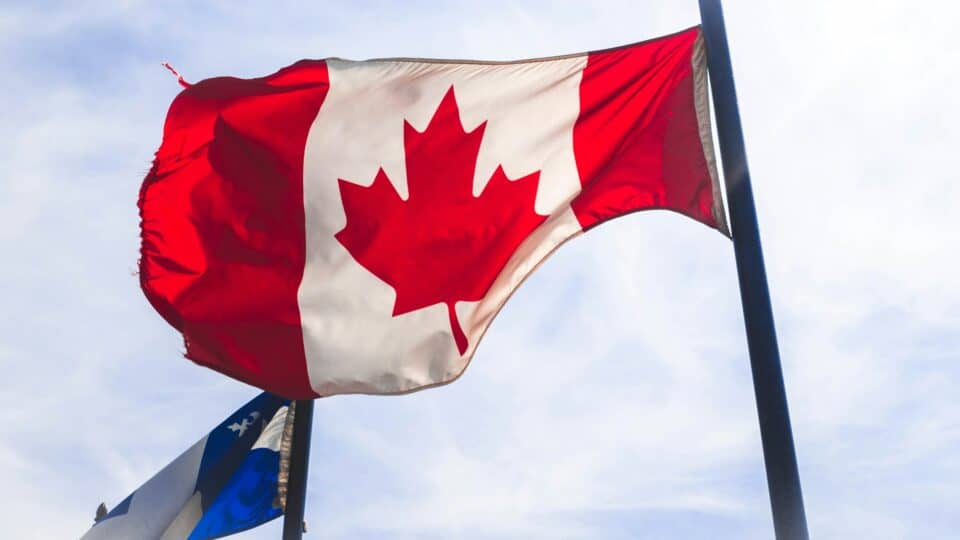
The EU and Canada are drawing closer at a pace rarely seen in recent transatlantic relations. At the Montréal summit of 29–30 October 2026, the two sides formally launched the “Alliance for the Future”, a framework intended to create a shared space of prosperity and economic security through much deeper cooperation in trade, technology, energy, critical raw materials, defence and research.
The shift is not merely diplomatic. Over the past year, Canada became the first country outside Europe to take part in the EU’s SAFE defence instrument; negotiations on an EU–Canada digital trade agreement were concluded; cooperation on artificial intelligence and high-performance computing expanded; and the two sides began linking energy and critical-raw-materials projects more closely.
For more on AI, see AI data centres enter the race for energy: who will be able to power the next generation of artificial intelligence?, which provides complementary background on the issue.
At the summit, the leaders went further still, agreeing to define by 2027 an even closer association between Canada and the European Union, short of full membership. It signals that the relationship is no longer being treated simply as a successful trade agreement, but as a strategic alliance for a world in which supply chains, technology and security are increasingly interdependent.
This InfoBuz article was updated on 2 November 2026, based on the official conclusions of the EU–Canada summit and data from the European Commission, the Council of the EU and the Government of Canada.
EU and Canada draw closer: what was agreed at the October 2026 summit
In Montréal, European Council President António Costa, European Commission President Ursula von der Leyen and Canadian Prime Minister Mark Carney launched the “Alliance for the Future”. The framework has six main strands:
- trade and regulatory cooperation;
- digital affairs, research and communications;
- critical raw materials and energy;
- services and financial markets;
- security and crisis preparedness;
- direct links among citizens, researchers, students and professionals.
The Council of the EU describes the alliance as a step towards a “common prosperity and economic security space”.
The official outcomes are published by the European Council – EU–Canada summit of 29–30 October 2026.
Why the EU–Canada relationship matters much more now
Europe and Canada have been close partners for decades, but the new global context is pushing them towards deeper integration. Both economies are seeking to reduce the risks created by excessive dependence on a single supplier or market.
For the EU, Canada provides access to energy, critical minerals, research, financing and defence industry. For Canada, the EU offers a market of more than 400 million consumers, capital, technology, advanced industry and a larger alternative to its structural dependence on the US market.
In a world where trade is becoming geopolitical again, diversifying partners is a form of economic insurance.
CETA laid the economic foundation: trade has risen by about 80%
The economic relationship already rests on a solid foundation: the CETA trade agreement, provisionally applied since 2017.
According to the European Commission, bilateral EU–Canada trade in goods and services reached about €130 billion in 2025, roughly 80% above its 2016 level.
- trade in goods: about €81.5 billion in 2025;
- trade in services: about €49 billion;
- EU goods exports to Canada: about €48.8 billion;
- EU services exports to Canada: more than €29.3 billion.
The EU is Canada’s second-largest trading partner after the United States. Updated figures are available on the European Commission’s EU–Canada trade page.
New digital trade agreement: negotiations concluded on 30 October 2026
One of the summit’s most concrete outcomes was the conclusion of negotiations on the EU–Canada Digital Trade Agreement. Talks began in March 2026 and were politically concluded in Montréal on 30 October.
The agreement seeks clearer rules for digital trade, fewer unjustified barriers, consumer protection and a more predictable framework for companies selling digital services or products across the Atlantic.
In 2025, EU–Canada trade in digitally delivered services reached about €19.8 billion: €11.2 billion in EU exports and €8.6 billion in imports.
The agreement has not yet been formally signed or ratified. The conclusion of negotiations will be followed by legal review, translations and institutional procedures. Details are in the European Commission’s statement of 30 October 2026.
AI: the EU and Canada seek to build a “trusted” technology area
Digital cooperation is not starting from scratch. The EU–Canada Digital Partnership has existed since 2023, and its first Digital Partnership Council took place in December 2025.
The shared agenda includes:
- artificial intelligence;
- digital identity and digital wallets;
- semiconductors;
- quantum technologies;
- cybersecurity;
- secure international connectivity;
- online safety and the protection of minors;
- research and high-performance computing.
At the October 2026 summit, the two sides agreed to advance cooperation on AI safety, AI governance, interoperability, data flows and AI factories.
Canada already participates in the European High Performance Computing Joint Undertaking, and the cooperation may provide access to European high-performance computing infrastructure and joint research projects.
Why Canada matters for European AI
Canada has a mature AI ecosystem, strong universities, fundamental research and technology companies able to take part in European projects. Montréal and Toronto are major centres for machine-learning research.
Europe, in turn, has a regulatory framework, supercomputers, research programmes such as Horizon Europe and a very large technology market.
Combining these strengths could create a transatlantic area for AI research and deployment in which safety and transparency standards are more closely aligned than in other markets.
Critical raw materials: one of the most logical areas for cooperation
Canada has reserves and projects involving nickel, cobalt, lithium, copper, graphite, rare earths and other strategic minerals. Europe needs these materials for batteries, grids, turbines, semiconductors and defence.
The EU–Canada critical raw materials partnership has operated since 2021 and aims to integrate value chains, support joint investment and research, and promote ESG standards.
At the 2026 summit, leaders decided to accelerate cooperation from extraction and processing through to refining, manufacturing and recycling. They also included the possibility of joint projects in third countries.
For context, see the InfoBuz analysis Are critical minerals the new oil?
Canada could help Europe reduce its dependence on China
In the InfoBuz article How Europe is trying to reduce dependence on China for batteries and critical raw materials, we explained that the EU’s objective is diversification, not replacing one dependency with another.
Canada fits that model closely. It has resources, stable institutions, predictable trade relations and investment capacity. It could become one of the core suppliers in a broader EU portfolio.
Energy: LNG, nuclear power, grids and storage
Canada is a net energy exporter with significant oil, natural-gas, hydropower, uranium and renewable-energy resources.
At the 2026 summit, the EU and Canada agreed to examine a joint feasibility study on LNG exports to Europe. In parallel, they will expand cooperation on grids, energy storage, infrastructure, and the physical and cyber protection of energy systems.
Nuclear cooperation is also important. Canada is one of the leading uranium producers and has its own nuclear industry, while the two sides will work to modernise the Canada–Euratom agreement.
Why Canadian LNG is not an instant solution for Europe
Canada has very large natural-gas resources, but its export infrastructure towards the Atlantic is limited compared with that of the United States. Pipelines, terminals and contracts must be developed before large volumes can reach Europe.
The study announced at the summit is therefore a long-term project, not a solution for the next winter.
Defence: Canada is the first non-European country to join SAFE
The defence relationship has changed substantially since 2025. The EU and Canada signed a Security and Defence Partnership at the June 2025 summit.
On 14 February 2026, the agreement enabling Canada’s participation in the Security Action for Europe – SAFE instrument was signed, and the Council of the EU formally concluded it on 15 June.
Canada is the first country outside Europe to participate in SAFE. This allows Canadian companies and products to take part in certain joint European defence procurements.
SAFE is part of Readiness 2030 and is designed for rapid, large-scale investment in European defence-industrial capacity. Details are available in the Council of the EU’s statement on the SAFE agreement with Canada.
What SAFE means for the defence industry
For Europe, Canada offers access to a NATO partner with aerospace, munitions, sensors, vehicles and defence technology industries.
For Canadian companies, SAFE offers more direct access to EU member states’ joint-procurement programmes. For European industry, the partnership could reduce the risk of capacity shortages when demand for equipment rises quickly.
Ukraine and European security remain a major shared concern
In Montréal, the EU and Canada reaffirmed their support for Ukraine, its institutional reforms and future reconstruction. They also agreed to increase pressure on Russia.
This alignment matters for defence cooperation: it is not only about trade in equipment, but also about a relatively close strategic view of European security and the transatlantic architecture.
The Arctic: the next shared strategic arena
Canada is an Arctic power, and the EU has growing interests in the region. Climate change is opening maritime routes, increasing interest in resources and changing the military and economic significance of the North.
At the 2026 summit, the EU and Canada agreed to develop a dedicated Arctic dialogue. Cooperation could cover security, infrastructure, communications, climate and the region’s economic development.
Submarine cables and the Europe–Canada–Asia connection
One of the more notable projects is cooperation on secure international connectivity through submarine cables.
The EU and Canada want to improve links between Europe, Canada and Asia, including via northern routes. In an economy built on cloud computing, AI and digital services, submarine cables are strategic infrastructure as important as pipelines and ports.
Galileo and IRIS²: Canada could become more deeply involved in European space infrastructure
The summit referred to discussions on Canadian access to certain Galileo services and cooperation within IRIS², Europe’s secure satellite-connectivity system.
If these discussions progress, the EU–Canada relationship will extend beyond trade and defence to shared strategic infrastructure in space and communications.
Financial markets: the next step is the movement of capital
The Alliance for the Future also includes financial services. The two sides want to facilitate transatlantic capital flows and investment in strategic projects.
At the summit, Canada and the European Investment Bank advanced a framework for investments in sectors such as critical minerals. In parallel, the EU and Canada are also exploring the connection of instant-payment systems.
Why Canadian capital matters to Europe
Canada has some of the world’s largest pension funds and institutional investors. These institutions invest over very long horizons and can fund infrastructure, energy, transport, property and technology.
Europe needs capital for the energy transition, defence and digitalisation. Deeper financial integration could turn the political relationship into concrete projects.
A “closer association, short of membership”: what it actually means
The summit’s most striking wording was the commitment to define by 2027 an “ever-closer association of Canada to the EU, short of full membership”.
This does not mean that Canada will become an EU member state. Nor is there currently a final legal model.
The political meaning is nevertheless clear: both sides want to determine how far they can integrate economic, technological, financial, defence and research cooperation without Canada entering the Union’s institutional structure.
Could Canada become a kind of EU “associate member”?
The term “associate member” was used politically in 2026, but it should not be confused with accession. As of 2 November 2026, no final legal status has been adopted.
The summit established only that the model must be defined by 2027. It could involve greater access to European programmes, mutual recognition, investment, research, defence and shared infrastructure.
Why the relationship matters for Romania as well
Romania benefits indirectly from EU–Canada integration through the single market and European programmes. Romanian companies may gain access to new supply chains, industrial projects, research and joint procurement.
In critical raw materials, cooperation with Canada could reduce risk for European battery, grid and defence projects. In digital affairs, shared standards could make it easier for Romanian companies and researchers to access transatlantic projects.
In defence, Canada’s participation in SAFE could increase the overall production capacity available to EU countries, including Romania.
What could prevent the alliance from becoming reality
- CETA has not yet been fully ratified by all EU member states;
- energy and mineral projects require years of investment;
- regulations and standards are not identical;
- the defence industry is governed by sensitive national rules;
- Canada remains economically highly dependent on the United States;
- future political changes could reduce current ambitions;
- some projects could become too expensive or encounter local opposition.
What the rapid conclusion of digital negotiations shows
Negotiations on the Digital Trade Agreement were launched in March 2026 and politically concluded in October. That is a rapid pace for a complex transatlantic agreement.
It suggests that, where sufficient political and technical convergence exists, the EU and Canada can move much faster than in some conventional trade negotiations.
EU–Canada in figures
| Indicator | Value / status |
|---|---|
| Trade in goods and services, 2025 | ~€130 billion |
| Growth since 2016 | ~80% |
| Trade in goods, 2025 | ~€81.5 billion |
| Trade in services, 2025 | ~€49 billion |
| Digitally delivered services, 2025 | ~€19.8 billion |
| Security partnership | signed in 2025 |
| Canada’s participation in SAFE | formalised in 2026 |
| Alliance for the Future | launched 30 October 2026 |
| New association concept | to be defined by the 2027 summit |
Frequently asked questions about the EU and Canada
Is Canada joining the European Union?
No. The EU and Canada agreed to define a closer association by 2027, explicitly “short of full membership”. There is no accession decision.
What is the Alliance for the Future?
It is the framework launched at the EU–Canada summit of 29–30 October 2026 for cooperation in trade, digital affairs, research, energy, raw materials, finance, security and links between people.
Does Canada participate in European defence programmes?
Yes. Canada is the first non-European country to participate in the SAFE instrument, following the agreement formally concluded in June 2026.
Why are critical raw materials so important?
Europe needs lithium, nickel, cobalt, graphite, copper and other materials for batteries, grids, semiconductors, industry and defence. Canada is a potentially important and stable supplier.
Will the EU and Canada cooperate on AI?
Yes. AI is one of the Digital Partnership’s priorities, and the 2026 summit expanded cooperation to AI safety, governance, high-performance computing, AI factories and interoperability.
Does CETA still matter?
Yes. It is the trade foundation of the relationship and has contributed to an approximately 80% increase in exchanges since 2016. The new Digital Trade Agreement will complement CETA once formal procedures are completed.
EU and Canada are building more than a trade agreement
The EU and Canada are drawing closer because their interests increasingly overlap across nearly every strategic sector: trade, energy, AI, critical minerals, defence, space, research and digital infrastructure.
CETA showed that the economic relationship could grow. The defence partnership and SAFE added security. The Digital Trade Agreement and AI cooperation add technology. The Alliance for the Future seeks to connect all these elements in a single architecture.
If this process continues through 2027, Canada could become the EU’s closest non-European partner in a model of expanded strategic integration. It would not be an EU member, but it would be far more than a conventional trading partner. That intermediate space is what the two sides’ leaders are now trying to define.








Discuția cititorilor
Ai o opinie sau o întrebare despre acest articol? Spune-ne ce crezi.
Fii primul care deschide discuția.
Te rugăm să păstrezi un limbaj civilizat și să discuți la subiect. Comentariile spam sunt filtrate automat.