
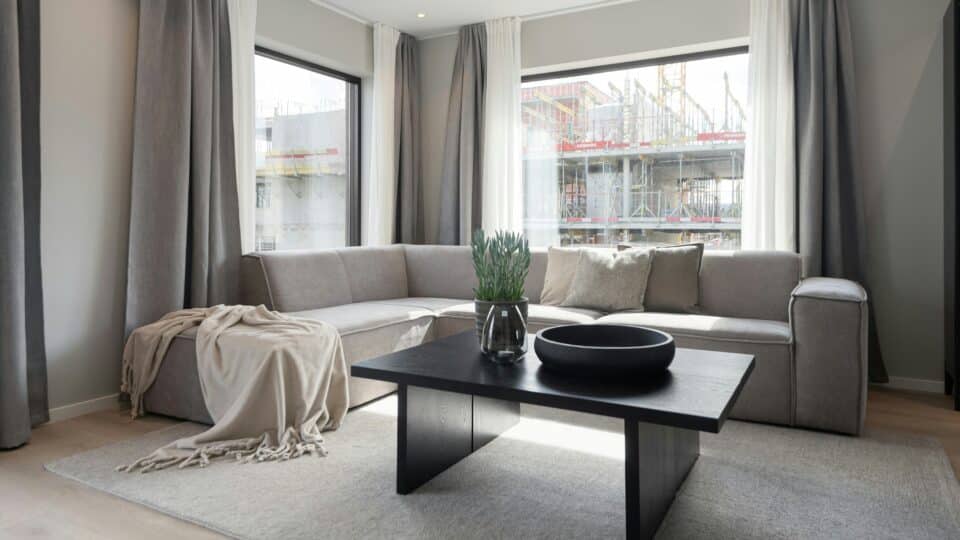
Can the air in your home make you feel tired? Yes. A poorly ventilated indoor environment, or one affected by humidity, mould, particles, volatile compounds or an unsuitable temperature, can contribute to fatigue, drowsiness, headaches, irritation and difficulty concentrating. But the cause is not always straightforward, and not everything should be blamed on CO₂.
In homes, carbon dioxide (CO₂) concentration is used chiefly as an indicator of ventilation when people’s breathing is the main source. A level that steadily rises in an occupied bedroom or office suggests that fresh air is entering too slowly. At the same time, excessive humidity encourages condensation and mould, while air that is too dry can irritate the mucous membranes.
This InfoBuz guide was updated on 2 November 2026 and uses information from the US EPA, CDC/NIOSH, HSE and recent medical studies. One important point: CO₂ and carbon monoxide (CO) are entirely different gases. CO can quickly become a medical emergency and is not detected by a basic CO₂ sensor.
Can the air in your home make you tired? The short answer
| Indicator | What it may suggest | What to do |
|---|---|---|
| CO₂ below about 800 ppm | Usually good ventilation in an occupied room | Maintain ventilation |
| CO₂ at 800–1,000 ppm | Reasonable ventilation in many situations | Monitor the trend and the number of people present |
| CO₂ repeatedly above 1,500 ppm | HSE considers this a sign of poor ventilation in an occupied space | Increase the supply of outdoor air |
| Humidity at 30–50% | The EPA-recommended range for many homes | Try to remain within this range |
| Humidity above 60% | Raises the risk of condensation and mould growth | Ventilate, dehumidify and remove the moisture source |
| Musty smell or visible patches | A moisture problem that needs to be addressed | Remove the water source and clean affected materials |
| Headache, dizziness and nausea in several people | May indicate, among other things, a risk of carbon monoxide exposure | Go into fresh air, check combustion sources and seek help if symptoms are significant |
Important: the CO₂ figures above are practical ventilation reference points, not universal toxicity thresholds. HSE stresses that CO₂ monitoring is a guide to ventilation quality and does not by itself prove that a level is “safe” or “unsafe”.
What “stale air” in a home actually means
When people refer to “stale air”, they usually mean a combination of factors: CO₂ built up through breathing, odours, vapours from cooking and cleaning, volatile organic compounds, particles, moisture, allergens and heat. CO₂ is easy to measure, making it a convenient ventilation indicator, but it cannot on its own show everything that is in the air.
The EPA recommends three basic approaches to indoor air quality: controlling pollution sources, providing adequate ventilation, and filtering or cleaning the air where necessary. See the current guidance on US EPA – Improving Indoor Air Quality.
CO₂ in the bedroom: where it comes from
In a home without particular CO₂ sources, people are the main source. We breathe in air and exhale carbon dioxide. In a small bedroom occupied by two people with tightly sealed windows, the concentration can rise quickly overnight if there is not enough incoming outdoor air.
The smaller the room, the more people in it and the lower the air exchange rate, the faster CO₂ tends to rise. A sensor can therefore be useful for comparing how a room behaves with the door closed, the door open, a window tilted open, or mechanical ventilation switched on.
What 1,000 ppm of CO₂ means—and why it is not a “toxic threshold”
In occupied spaces, 1,000 ppm is often used as an indicative ventilation benchmark. HSE says that, under certain conditions, around 1,000 ppm may correspond to a supply of about 10 litres of fresh air per second for each person. It also considers readings consistently above 1,500 ppm in an occupied room an indication of poor ventilation that warrants improvement.
The official guidance is available here: HSE – Using CO₂ monitors.
These figures should not be confused with occupational CO₂ exposure limits. HSE gives workplace limits of an 8-hour time-weighted average of 5,000 ppm and 15,000 ppm over 15 minutes. These are occupational protection limits, not comfort targets for a home.
Does CO₂ directly cause drowsiness and poorer concentration?
The scientific answer is more nuanced than many sensor advertisements suggest. Some older studies reported lower cognitive performance at concentrations of roughly 1,000–2,500 ppm. Other research did not find the same effect when pure CO₂ was increased separately from other indoor pollutants.
A critical review published in Indoor Air concluded that experimental-study findings are inconsistent and that reduced ventilation may allow several pollutants and human bioeffluents—not CO₂ alone—to accumulate at the same time.
More importantly, a large randomised study published in 2026 involving 398 healthy adults found no systematic adverse effects on cognitive function after short exposures to pure CO₂ at up to 4,200 ppm. This supports the view that in real life, CO₂ is often a marker of ventilation and the build-up of other human emissions, rather than the sole explanation for the sensation of heavy air.
Why you may feel better after opening a window
When you air out a room, you do not only reduce CO₂. You dilute accumulated odours, humidity, volatile compounds and aerosols, and may change the temperature. If a room was overly warm and stagnant, air movement alone can quickly improve comfort.
That is why feeling better after airing a room does not prove that CO₂ was the only cause. It shows that the indoor environment as a whole has improved.
Where to place a CO₂ sensor
Sensor position matters. HSE recommends measuring in the area where occupants breathe, but not immediately beside a person’s face, a door, a window or an air vent. Direct exhalation can artificially raise a reading, while an open window beside the sensor can make the room appear better ventilated than the rest of it is.
- Keep the sensor at roughly head height in the occupied area.
- Do not place it 10–20 cm from the person sleeping.
- Avoid windowsills and air vents.
- Do not draw conclusions from a single reading.
- Follow the curve over several hours and compare different ventilation conditions.
NDIR sensor or a cheap “eCO₂” sensor?
For an actual CO₂ measurement, look for an NDIR (non-dispersive infrared) sensor. Some very cheap devices do not measure CO₂ directly, but estimate “eCO₂” from other volatile compounds. This figure can be useful as a trend, but should not be confused with a direct measurement.
Also check how the device is calibrated. Some devices automatically assume that the room will at some point approach outdoor-air conditions. If a sensor remains permanently in an occupied space and never encounters fresh air, automatic calibration can drift.
Humidity: too much is a problem; too little can be uncomfortable
The EPA recommends a relative humidity of about 30–50% in homes and advises keeping it below 60%. High humidity promotes condensation, dust mites and mould growth. Very low humidity can worsen dryness of the skin and mucous membranes.
The EPA recommendation is available here: Care for Your Air – Indoor Air Quality.
Why “sweating” windows are a useful warning sign
Condensation occurs when humid air meets a surface that is cold enough. In winter, glazing or corners affected by thermal bridges can fall below the dew point, causing water vapour to condense.
A window covered in condensation in the morning does not automatically mean the home has mould. But it does point to a combination of humidity, temperature and cold surfaces that is worth investigating. If it happens repeatedly, ventilation and humidity control become important.
InfoBuz has addressed this issue separately in Mould in a new home: why it appears in a well-insulated property and how to find the cause.
Can mould contribute to fatigue?
The best-established link between damp or mouldy buildings and health concerns respiratory and allergic symptoms. The CDC says exposure to damp, mouldy environments may be associated with a stuffy nose, sore throat, coughing, wheezing, eye or skin irritation, and worsening asthma.
In October 2026, NIOSH reiterated that exposures in damp buildings are complex and associated with respiratory problems as well as other symptoms. However, fatigue on its own is not enough to diagnose “mould toxicity”. Where there are visible patches or a persistent musty smell, the appropriate response is to remove the moisture source and affected materials—not simply to seek an air test.
See the updated information from CDC/NIOSH on damp buildings and mould.
Mould is a water problem before it is a cleaning problem
If you clean a patch but do not eliminate the condensation, leak, leaking pipe or lack of ventilation, mould may return. The EPA recommends drying wet materials within approximately 24–48 hours and keeping humidity below 60%, ideally between 30% and 50%.
For a cause-focused diagnosis, see also Mould after replacement windows or renovation: how to find the cause before repairing the wall.
Ventilation: an open window or a heat-recovery system?
Both can work. An open window provides rapid air exchange, but this depends on wind, temperature difference, how long it is open and the layout of the home. A mechanical ventilation system can deliver controlled, consistent airflow and recover a significant proportion of the heat from extracted air.
In very airtight new homes, controlled ventilation is increasingly important. Insulation and airtightness reduce energy losses, but also reduce accidental air leakage. Without a ventilation strategy, CO₂, humidity and indoor pollutants can increase.
For more on this, see the InfoBuz analysis Heat-recovery ventilation: when it is worth considering in a new home.
How long should you air out a room in winter?
There is no universal number of minutes. A small room with two opposing windows can exchange its air very quickly; a large room with one window and no cross-draught may need more time.
A better method than a rigid “10-minute” rule is to monitor a CO₂ and humidity sensor. If CO₂ drops sharply after airing and then rises slowly again, you can learn how quickly the space becomes loaded under your real conditions.
Bedroom with the door closed: why CO₂ can rise quickly overnight
Two people can produce several hundred litres of CO₂ over the course of a night. If the bedroom is small and very airtight, the concentration rises even when the temperature is comfortable and there is no obvious odour.
The solutions can be simple: leave the door slightly open if the rest of the home is ventilated, install a transfer grille, use properly designed trickle ventilation, or install a mechanical system. The right choice depends on the building, as well as noise, temperature and outdoor air quality.
Does an air purifier reduce CO₂?
No: an ordinary HEPA air purifier does not reduce CO₂. It can reduce particles, dust, pollen and some aerosols, but carbon dioxide is a gas and passes through a HEPA filter.
This is one of the most common misunderstandings: air purification and ventilation are not the same thing. A good purifier can improve one aspect of air quality, but if high CO₂ from breathing is the issue, you need air exchange with outdoors.
Can houseplants replace ventilation?
Not under normal living conditions. Plants may have aesthetic and psychological benefits and take part in gas exchange, but the number needed to replace real ventilation in an occupied room would be impractical.
For controlling CO₂ and indoor pollutants, the effective approach remains outdoor-air supply, source control and, where needed, particle filtration.
CO₂ is not carbon monoxide: a difference that can save lives
CO₂ is carbon dioxide. CO is carbon monoxide, a toxic gas produced by incomplete combustion. A CO₂ sensor does not automatically detect CO, and vice versa.
If several people in a home with a boiler, stove, fireplace, water heater or other fuel-burning appliance suddenly experience headache, dizziness, nausea, drowsiness or confusion, carbon monoxide poisoning must be considered. The EPA recommends urgent assessment in such a situation.
To complement the information above, see A smart home without huge investment: 15 useful automations for comfort, security and savings, an article that explores an aspect directly related to this subject.
If you suspect CO, move into fresh air and call emergency services if symptoms are significant. In Romania, the single emergency number is 112. Do not re-enter a potentially dangerous space before the source has been checked.
Which sensors are worthwhile in a home?
| Sensor | What it measures | What it helps with |
|---|---|---|
| NDIR CO₂ | Carbon dioxide | A practical ventilation indicator |
| Hygrometer | Relative humidity | Risk of condensation, mould or very dry air |
| PM2.5 | Fine particles | Smoke, cooking and infiltrating outdoor pollution |
| Certified CO detector | Carbon monoxide | Safety around combustion appliances |
| VOC/TVOC | Volatile organic compounds, as an indication | Trends after painting, new furniture or cleaning products |
| Radon | Radioactive gas | Requires a dedicated detector or test; it is not measured by a CO₂ sensor |
A simple diagnostic plan for a room where you feel tired
- Measure CO₂ and humidity for 24–48 hours, not just a single value.
- Note how many people are in the room and when readings rise.
- Compare the door closed with the door open and with ventilation active.
- Check for condensation, patches, a musty smell or leaks.
- Notice whether symptoms occur only in that room and ease when you leave it.
- Check that you have a CO detector and that it works if you have fuel-burning appliances.
- If symptoms persist or are severe, speak to a doctor; do not automatically assume the home is the only cause.
What you can do without major investment
- Air rooms briefly and effectively when outdoor air quality is good.
- Use a cooker hood vented outdoors while cooking.
- Run the bathroom fan during and after showering.
- Dry laundry with sufficient ventilation.
- Deal with leaks promptly.
- Clean filters and ventilation grilles.
- Keep humidity at roughly 30–50% where possible.
- Avoid smoking indoors.
- Use a HEPA purifier for particles if dust, pollen or PM2.5 is the problem.
For the balance between temperature, energy use and humidity, see the InfoBuz article The best temperature at home in winter: 18, 20 or 22°C?.
Common mistakes when interpreting indoor air
“My CO₂ is 1,100 ppm, so I am being poisoned.”
That is not the correct interpretation. A reading of 1,100 ppm suggests that ventilation may be improved, but it is not equivalent to acute poisoning. For comfort and air quality, try to reduce the build-up.
“My purifier solves stale air.”
Only partly. HEPA reduces particles, but it does not remove CO₂ or replace outdoor air.
“Mould is solved by spraying it with bleach.”
Surface cleaning does not resolve the source of moisture. If condensation, a leak or a thermal bridge remains, the problem returns.
“If it does not smell bad, the air is good.”
No. CO₂ and CO are odourless, and many pollutants cannot be properly assessed by smell.
Frequently asked questions about CO₂, humidity and indoor air
At what CO₂ reading should I open the window?
There is no universal threshold for every home, but if readings frequently exceed 1,000–1,500 ppm in an occupied room, it is worth improving ventilation. HSE regards readings consistently above 1,500 ppm as an indication of poor ventilation.
What is a good humidity level at home?
The EPA generally recommends 30–50% and keeping humidity below 60% to reduce the risk of condensation and biological growth.
Does an air purifier reduce CO₂?
No, not an ordinary HEPA purifier. To reduce CO₂, increase air exchange with outdoors.
Why does CO₂ rise overnight in the bedroom?
People exhale CO₂, and in a small, airtight room its concentration rises if ventilation does not keep pace with occupancy.
Does mould need to be tested to know whether it is dangerous?
If mould is visible or there is a persistent odour, the CDC and EPA emphasise removing the moisture source and cleaning the area. Air testing does not replace solving the water problem.
Does high CO₂ automatically mean a lack of oxygen?
Not at the concentrations normally found in a home. CO₂ is used mainly as a ventilation indicator. Extremely high concentrations in enclosed or industrial spaces are a different matter and can become dangerous.
There is no single “magic number” for healthy indoor air
The air in your home can make you feel tired, but there is rarely one explanation. High CO₂ can signal inadequate ventilation, high humidity can promote condensation and mould, while particles and volatile compounds can add irritation and discomfort.
The most useful approach is to measure a few simple things—CO₂, humidity and, where relevant, PM2.5—and relate the readings to occupancy and ventilation. If you have fuel-burning appliances, a carbon monoxide detector is a separate safety measure and must not be replaced by a CO₂ sensor.
For a healthy home, the aim is not to obsessively track every ppm, but to maintain enough fresh air, controlled humidity, dry surfaces and fewer pollution sources.





Discuția cititorilor
Ai o opinie sau o întrebare despre acest articol? Spune-ne ce crezi.
Fii primul care deschide discuția.
Te rugăm să păstrezi un limbaj civilizat și să discuți la subiect. Comentariile spam sunt filtrate automat.