
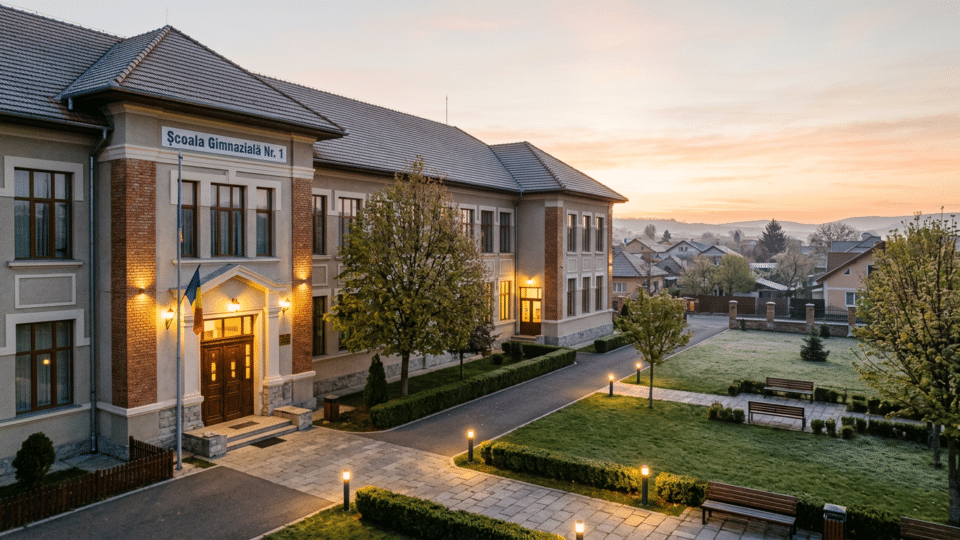
After a violent incident or serious risk at a school, the first response is not filling in a form but protecting the child. Where there is immediate danger, injury, a credible threat, a weapon or another dangerous object, calling 112 should not be delayed for administrative discussions. Once the danger has been stopped, a second process begins: the school leadership records and manages the case, while the police, child-protection services, the school inspectorate and the school counsellor may become involved, depending on the circumstances.
Public discussions on 22–23 October 2026 again put pupil safety in the spotlight. In a 23 October statement, Romania’s Ministry of Internal Affairs said it would strengthen existing measures, promote closer cooperation between institutions and examine legislative changes concerning prohibited objects. The statement does not, however, identify a new piece of legislation already in force that has replaced the current procedure.
In brief: two distinct considerations matter to families: intervention must be immediate when there is a present risk; administrative, disciplinary, child-protection or criminal proceedings may take longer, and there is no single deadline that applies to every case.
School safety has two clocks: the emergency and the formal process
The first clock runs in minutes. A teacher or any other staff member who learns of an incident must seek to stop the risk and protect the people involved. In an active situation, staff are not expected to investigate on their own or determine fault. The priority is safe separation, seeking medical help where necessary and calling emergency services.
The second clock starts after the situation has been stabilised. It includes informing school management, recording the report, assessing the case, contacting parents under the applicable conditions and, where appropriate, notifying the police, the public social-assistance service or the County Directorate-General for Social Assistance and Child Protection (DGASPC). The case-management procedure approved by Order No. 6,235/2023 covers not only conflicts between pupils, but also violence by staff against pupils, violence by pupils against staff, suspected substance use, carrying or using dangerous objects, and other potential offences.
The legal instruments consulted contain no general promise that every case will be resolved within 24 or 48 hours. The rules use terms such as “immediately” for protective intervention; fact-finding, educational measures and any checks by the police or DGASPC proceed at different speeds.
Who intervenes and when
| Moment or situation | Main response | Authorities that may be notified |
|---|---|---|
| Immediate danger, an ongoing assault, injury, a serious threat or a dangerous object | Protect those involved and call 112 | Police, ambulance/SMURD emergency service, as appropriate |
| Violence against a child, or suspected abuse or neglect | Child protection and risk assessment | 119, DGASPC, police where an offence is suspected |
| A conflict or assault with no current danger but which requires management | Report it to the school, record it and apply the procedure | Headteacher, the relevant school committee, school counsellor; police/DGASPC if required |
| Repeated incidents, harassment or school-related cyberbullying | Document the pattern and provide support/protective measures | School, counsellor, police or DGASPC depending on the facts |
This table is a guide, not a legal classification. An incident initially described as a “conflict” may require a broader response if it is repeated, involves threats, a power imbalance, images shared online, a child’s vulnerability or indications of an offence.
112: for danger requiring an operational response
112 is the emergency number. It is appropriate when there is a current threat to life, health or physical integrity, an ongoing assault, an urgent medical need or a situation requiring a rapid police response. A family does not need to wait for confirmation from the headteacher before seeking help in an emergency.
A call to 112 does not replace reporting the matter to the school. If the incident occurred in connection with school activity, it is helpful to inform the headteacher as soon as possible so that the institution can activate its own protection and documentation process.
119 and DGASPC: when child protection is at issue
Pre-University Education Law No. 198/2023 requires notification of the 119 service in cases of violence against a child, and notification of the police where an offence is suspected. The two processes can run in parallel; they do not automatically exclude each other.
119 is the national channel for reporting child-protection situations. DGASPC can assess the child-protection situation and work with the family, school and other services. Its role differs from that of the police: DGASPC does not establish criminal liability, and the police do not replace an assessment of the child’s protection and support needs.
What the school must do after a report
The law and the national procedure do not reduce a school’s responsibility to a phone call to a parent. The school must have reporting mechanisms, and pupils and parents must be able to report an incident to any member of staff. Through the competent internal bodies, the headteacher coordinates the application of the procedure and the measures required in the case.
In practice, a complete process involves recording the information received, an initial assessment, safety and support measures for the affected person, communication with the family, and any necessary external referrals. Order No. 6,235/2023 sets the management framework, while the National Plan to Combat School Violence, approved by Government Decision No. 1,065/2024, emphasises cooperation between schools, police, social services, counsellors and local authorities.
The school counsellor can play an important part in assessing support needs and in prevention or monitoring activities. They cannot replace emergency intervention, the police, a doctor or DGASPC, and should not be presented as solely responsible for a serious case.
The school inspectorate has a coordination and monitoring role in relation to schools. The framework regulations for the organisation and operation of pre-university education institutions, approved by Order No. 5,726/2024, include recording and reporting cases of violence to the inspectorate, planning preventive measures and cooperating with relevant institutions.
What a family can request in writing
A clear report is more useful than a general request to “do something”. A family can email the headteacher or file a written request with the school registry. To create a verifiable record, it is reasonable to ask for a registration number or confirmation of receipt.
- a description of the known facts: the date, approximate time, place, people involved and any witnesses;
- immediate protective measures for the child where there is a risk of recurrence or unwanted contact;
- confirmation that the report has been recorded and is being reviewed under the applicable procedure;
- information about measures that directly concern the victim: support, counselling, how the school will communicate with the family and safety measures;
- confirmation that the case has been referred to the police, 119/DGASPC or other institutions, if the situation required such a referral;
- a procedural explanation if the family believes the incident is being handled improperly or minimised.
It is useful to keep copies of emails, requests, photographs of injuries or damaged property, medical certificates, screenshots of messages and any response received. For online content, screenshots should, as far as possible, retain the account, date and context, without unnecessarily sharing images of minors.
A family cannot require a school to impose a particular sanction, the police to reach a particular criminal conclusion, or DGASPC to take a specific child-protection measure. It can, however, ask institutions to meet their obligations, communicate measures affecting the safety of its own child, and explain the procedural framework followed.
Why a family does not receive the other child’s full file
Data protection and the best interests of minors limit the information that may be shared. The parent of a victim has a legitimate interest in knowing what safety and support measures concern their own child and whether their report has entered the appropriate institutional process. That does not automatically mean access to the full statements of other minors, medical data, the alleged perpetrator’s family circumstances, or documents from a possible criminal investigation.
Proper communication by a school should distinguish between these limits and administrative silence. “We cannot provide data about another pupil” does not, by itself, answer whether protective measures have been taken for the child who reported the incident.
For related information, see also When PIAS goes offline: what patients can ask for and who is responsible for continuity of care, an article that examines an aspect directly connected to this subject.
Anonymous reporting can open the door, but does not replace an emergency response
Order No. 4,200/2025 approved a mechanism for anonymously reporting acts of violence, suspected drug use and other breaches of standards of conduct. It can help pupils who fear reprisals or do not feel safe identifying themselves.
The limitation is clear: an anonymous report may contain too little information for rapid clarification, and the institution cannot always contact its author. Especially in an emergency, it is not a substitute for 112. Where a child is at risk, reporting to 119 should not be delayed simply to use the anonymous channel first.
What is new in the October 2026 announcements, and what remains in force
The Interior Ministry’s recent announcements need to be read carefully. The ministry refers to more integrated actions, training, early identification of risks and closer cooperation. These directions are consistent with the logic of the 2024 National Plan, which already calls for rapid intervention and inter-institutional cooperation.
The verifiable conclusion is therefore narrower than the phrase “new rules”. At the time of reporting, the public information consulted supports the view that an existing mechanism is being intensified and that possible legislative measures are being examined. It does not, on its own, show that the procedure under Order No. 6,235/2023 has been replaced, or that every school has the same capacity to respond.
This distinction matters. The number of training sessions or actions announced by an institution does not in itself show whether every victim received protection, counselling and monitoring. For a family, the concrete evidence remains the case pathway: intervention where needed, a recorded report, explained measures and communication that respects both the child’s safety and the confidentiality of other minors.
Frequently asked questions
How quickly must a school act after a violent incident?
Protective measures in the face of a current danger must be taken immediately. There is no single national deadline applicable to every case for documentation, assessment, disciplinary measures, support and any external checks.
When should someone call 112 and when should they call 119?
112 is for emergencies requiring a rapid response by the police, ambulance service or other services. 119 is the channel for reporting violence against a child and child-protection situations. In a serious case, both processes may be needed in parallel.
Can a parent ask a school to sanction another pupil?
A parent can request that a report be recorded, safety measures and support for their own child, as well as procedural explanations. They cannot impose a specific sanction, because this depends on the school’s procedure, the facts and the rights of all minors involved.
What documents should be kept after reporting an incident to the school?
Keep the request or email sent, proof of filing or the registration number, the school’s replies, and any relevant evidence: screenshots, medical records or photographs taken lawfully and not unnecessarily shared.
Sources consulted
- School safety, a shared responsibility: the Ministry of Internal Affairs continues measures to prevent harm to and protect pupils
- Pre-University Education Law No. 198/2023 – Legislative Portal
- Order No. 6,235/2023 approving the case-management procedure for violence
- National Plan to Combat School Violence, approved by Government Decision No. 1,065/2024
- Order No. 4,200/2025 on the anonymous reporting mechanism









Discuția cititorilor
Ai o opinie sau o întrebare despre acest articol? Spune-ne ce crezi.
Fii primul care deschide discuția.
Te rugăm să păstrezi un limbaj civilizat și să discuți la subiect. Comentariile spam sunt filtrate automat.