
Updated: 10 October 2026 la 22:48. Articolul a fost revizuit pentru a reflecta informațiile disponibile la această dată.
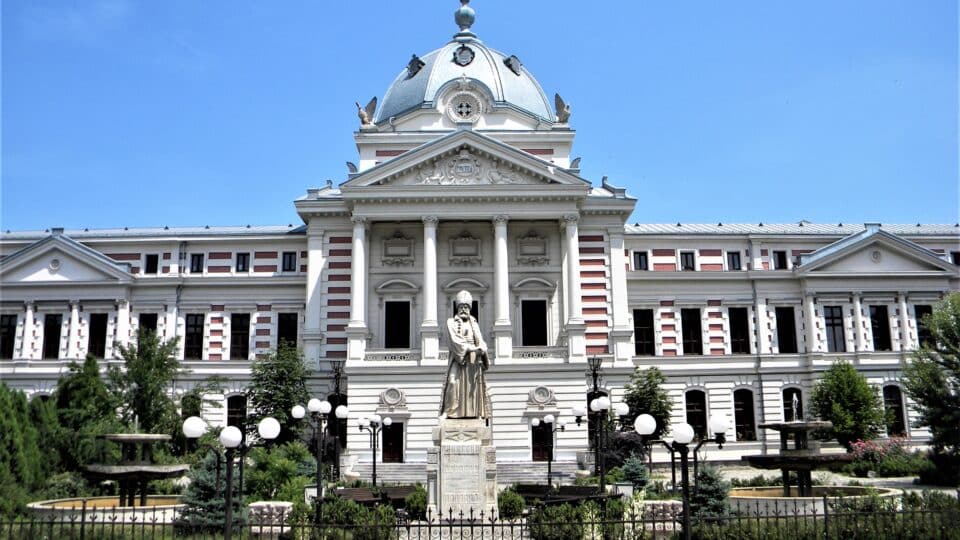
Romania’s regional emergency hospitals in Iași, Cluj and Craiova have been given new completion deadlines: December 2029 for Iași and Cluj, and May 2029 for Craiova. The government approved the change at its meeting on 9 October 2026, through an amendment to the financing contracts with the European Investment Bank (EIB). The officially stated reason is delays in procurement procedures and construction works. This is an administrative explanation, not an independent assessment establishing responsibility for each delay.
Beyond the revised timetable, government figures show that Romania has contracted three EIB loans totalling €923 million, but had drawn down only €184.6 million by the date of the announcement. What do these amounts mean, what has already been financed, and what cannot be inferred about the physical progress of the worksites? InfoBuz compared the government decision and official information published on 9 October, without presenting a site inspection as on-the-ground reporting.
Regional hospitals: what the government decided on 9 October 2026
The government approved Amendment No. 1 agreed with the EIB for the contracts covering the three hospitals, following correspondence signed in Luxembourg on 3 September and in Bucharest on 8 September 2026. The measure changes the implementation deadlines and certain financing conditions. The official wording matters: the authorities extended the completion deadlines; they did not announce the cancellation of the projects, the abandonment of the loans, or the completion of buildings that are already operational. In a healthcare investment, the contractual deadline and the date on which a hospital actually begins receiving patients can be separate milestones, as commissioning requires equipment, authorisations, staffing and testing.
The new dates differ by project. Craiova is scheduled for May 2029, while Iași and Cluj are scheduled for December 2029. The difference does not automatically demonstrate that one worksite is progressing faster than another: schedules depend on contracts, work packages, installations and the meaning of each milestone. A responsible comparison would require the contractors’ updated schedules, progress reports and work statements, rather than simply comparing the months listed in the government announcement.
€923 million: how the loans are divided
The government document lists €250 million for Iași, €305 million for Cluj and €368 million for Craiova, for a total of €923 million. This is the value of the EIB loans contracted, not evidence that it represents the full cost of the three hospitals. The projects may also include non-repayable European funding, budget allocations, or other eligible and ineligible expenditure. Conflating funding sources with the total budget can produce striking but inaccurate figures.
A contracted loan provides access to funds under agreed conditions; it does not automatically mean that all sums have been transferred into accounts or spent on construction. It is therefore necessary to distinguish between the loan contract value, the drawdowns made, certified payments to contractors and the actual level of physical completion. These concepts are often confused in discussions of major public investments.

How much EIB financing has actually been drawn down
By the time of the announcement, Romania had drawn down €50 million for Iași, €61 million for Cluj and €73.6 million for Craiova, or €184.6 million in total. That amounts to around 20% of the combined value of the three loans. The proportion is calculated using the EIB figures communicated by the government and describes only the use of the credit line, not the exact percentage of the buildings that has been constructed.
The percentage of financing used may lag behind work completed or, under certain contractual conditions, may develop differently from physical progress. To answer the question, “how much has been built?”, accepted work statements, supervision reports, dated photographs and official records would be needed. It would not be accurate to say that the projects are 20% complete merely because that share has been drawn from one particular lending source.
Why the extensions were needed
The official explanation cites delays in procurement procedures and in the delivery of construction works. Procuring a regional hospital involves more than selecting a builder. It may include design, works contracts, installations, medical equipment, construction supervision and other services. Tenders can require clarifications, bid evaluations and the resolution of challenges; authorisation and installation-inspection stages follow later.
These are general mechanisms that may explain delays in complex projects, but the statement reviewed does not assign each hospital a precise number of months lost to each cause, nor does it identify individuals responsible. A full journalistic investigation would require tender files, a timeline of challenges, contract addenda, any penalties and responses from beneficiaries and contractors. This article explicitly marks that documentary limitation.
What changes in the relationship with the European Investment Bank
The government said the amendment also aims to make drawdowns more flexible, by removing certain conditions associated with access to the funds. Contractual definitions and contact persons for technical and financial reporting are being updated. The measures may help manage the financing, but their effectiveness will need to be demonstrated by future drawdowns and the projects’ physical progress. Changing clauses does not automatically amount to an acceleration of work on site.
One point worth noting is that, according to the government, the changes are being made without increasing Romania’s financial obligations to the EIB. This statement concerns the obligations associated with the amendment presented. It does not guarantee that all construction and equipment costs will remain unchanged until 2029. Such conclusions would require updated investment budgets and a review of all contracts.
Iași: what to watch until December 2029
For the Iași project, the government lists an EIB loan of €250 million, of which €50 million had been drawn down. The new completion deadline is December 2029. The public interest is clear for patients in Moldova, Romania’s north-eastern historical region, who need access to highly complex interventions and emergency services. But a financed timetable does not automatically amount to a timetable for recruiting doctors and nurses.
Specific questions include whether works and installations are progressing against a public schedule, which packages remain to be contracted, and when the actual fitting-out with medical equipment will begin. Road access, links with ambulance services, integration into the regional network and the transfer of activities from existing facilities will also need clarification. Without this information, 2029 remains a project milestone rather than a verified commitment on the first patient admission.
Cluj: a new timetable, the same questions about equipment
For the regional hospital in Cluj, the announced EIB loan is €305 million and drawdowns had reached €61 million. The revised deadline is December 2029. Such infrastructure cannot be reduced to the number of planned beds: clinical pathways, operating theatres, laboratories, imaging, emergency access and the safety of essential installations all matter.
A detailed analysis of the project should periodically examine equipment contracts, structural and installation works, external networks and the schedule for formal handovers. In hospitals, a finished building without calibrated equipment or staff does not yet provide healthcare services. The existence of a new contractual deadline does not show that these stages have already been completed; they are presented here as milestones to monitor.
Craiova: why its deadline differs
For Craiova, the government lists an EIB loan of €368 million and drawdowns of €73.6 million, with a completion deadline in May 2029. It is the largest of the three loans, but this does not support a conclusion that the hospital will be larger, more expensive per bed or more difficult to build: differences in project design, phasing and eligibility need to be checked against the technical budgets.
For more information about the European Investment Bank, see also Dama Solar Romania: one of Europe’s largest solar parks, 1.3 GW and €728 million, which provides complementary details on the subject.
For patients in Oltenia, south-western Romania, a delay may mean continued pressure on existing infrastructure. However, quantifying the precise effect on waiting times or mortality would require medical and access data, not extrapolation from the construction schedule. Physical progress, staff preparation and the actual availability of services at opening will be relevant.
What “completed” means for an emergency hospital
In construction, the completion of works and formal handover are technical and legal milestones. A hospital also requires health authorisation, fire-safety authorisation where applicable, equipment commissioning, installation checks, staff training and the organisation of clinical pathways. These activities do not necessarily share the same date. If the media describe a building as an “open hospital” simply because its façade has been completed, the public may be misled.
For that reason, the three investments should separately publish the projected date for completion of construction, the date of formal handover, the deadline for equipment installation and the realistic date on which the first patients can be treated. The government communicated deadlines for the financed projects; the document reviewed does not separately certify all of these operational milestones.
What is the cost of the delay for citizens?
The delay carries an opportunity cost: new healthcare services do not become available at the initially anticipated time, while ageing infrastructure remains under pressure. There may also be effects on material prices or staff availability, but such consequences should not be converted into monetary values without data. The government communication does not provide an independent calculation of the economic cost of the extensions.
A responsible approach would track revised budgets, addenda to works contracts, compensation claims, penalties and additional administrative expenses. It is essential to distinguish between a possible cost, a cost that has been claimed and one that has actually been paid. Without the relevant documents, no quantified loss or fraud can be attributed to people involved in the investments.
What authorities should publish for transparency
In a publicly financed project, citizens should be able to consult an updated timetable, physical progress by work package, actual payments, contracts and their amendments, any disputes and the justification for revised deadlines. Regular, comparable and dated photographs can complement documents, but cannot replace them. An exclusively optimistic presentation, without showing deviations from the original schedule, would be insufficient.
For journalists, questions to beneficiaries and contractors need to be specific: which critical operation is delayed, who holds the contractual obligation, which interim deadline is confirmed, what resources have been mobilised and what external checks have been carried out? If answers are not available, it is proper to report their absence without inventing reasons.
How to compare the loan, grants and the total cost
EIB financing works differently from a non-repayable EU grant: the loan creates repayment obligations under contractual terms, while a grant is awarded under eligibility and verification rules. The total investment budgets for the three hospitals may include different sources. Presenting €923 million as either the sole funding source or the full cost would be an inaccurate simplification.
Nor can this total be directly compared with money earmarked for other hospitals under Romania’s National Recovery and Resilience Plan (PNRR) without identifying the projects and funding sources. InfoBuz separately analysed PNRR payments in healthcare, where the correct method is the same: contracts, payments, completion percentage and outcomes for patients are distinct indicators.
What patients can check in their own county
For people living in Moldova, Transylvania or Oltenia, news about the regional hospitals matters, but it does not yet provide an appointment timetable or a new emergency reception point. Until they are commissioned, patients must use the existing care network and follow current medical advice. An investment under construction should not be presented as an alternative to a service that is already operational.
It is worth monitoring communications from health authorities and the development agencies managing the projects, with particular attention to formal handover and authorisation. A useful current-affairs article helps readers ask the right questions; it does not confuse a promised deadline with a hospital’s actual opening.
What is known and what remains unclear as of 10 October 2026
We know that the government approved new deadlines for the three projects, that it justified the decision with procurement and construction delays, that EIB loans total €923 million and that the reported drawdowns amount to €184.6 million. These claims are supported by the official document. We do not know, from this source alone, the precise physical completion percentage of each hospital, the updated total cost of all works, or individual contractual responsibility for the delays.
Calling this an “investigation” without site inspections and additional documentation would be overstating the case. This is a documentary analysis, with open questions for future checks. Between 2027 and 2029, real progress should be tracked through new documents, rather than by repeating figures from October 2026.
Sources and methodology
- Romanian Government — information on the normative acts of 9 October 2026
- AGERPRES — revised deadlines for the three regional hospitals
- European Investment Bank — general information on financing healthcare investments
InfoBuz research as of 10 October 2026. The figures are those officially communicated; we do not claim to have carried out an on-site investigation or identified those at fault.








Discuția cititorilor
Ai o opinie sau o întrebare despre acest articol? Spune-ne ce crezi.
Fii primul care deschide discuția.
Te rugăm să păstrezi un limbaj civilizat și să discuți la subiect. Comentariile spam sunt filtrate automat.