
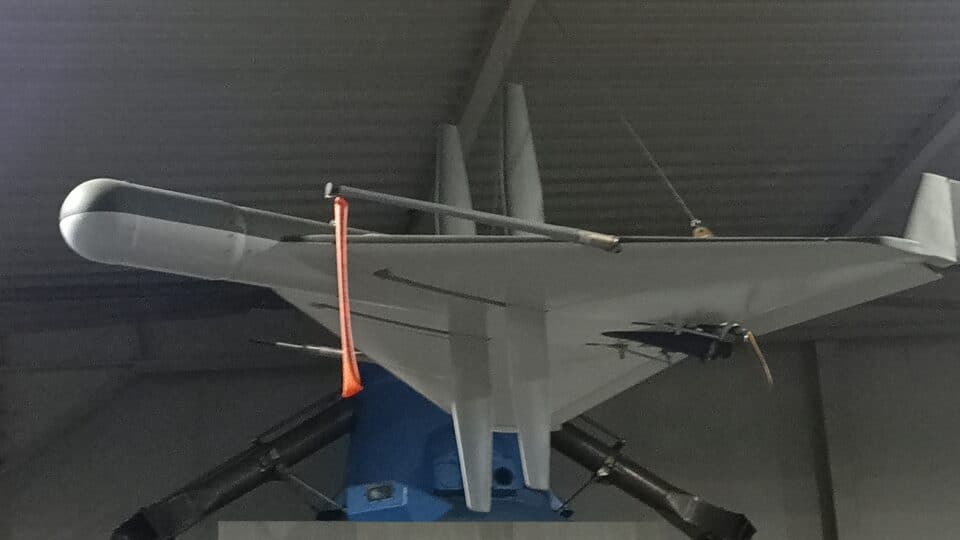
Modern warfare is changing faster than traditional military doctrines. Cheap drones, autonomous systems, artificial intelligence and electronic warfare have become central elements of the battlefield, while counter-drone defence is moving from a niche technology to a core capability.
In 2026, NATO, the European Union and member states are accelerating investment in drones, sensors, command and control, data fusion and C-UAS systems. The main lesson is straightforward: the advantage no longer necessarily belongs to the side with the most expensive platform, but to the one that can detect, decide, adapt and produce faster.
At a glance: the seven shifts defining modern warfare
- Cheap drones enable surveillance and strikes at far lower cost than conventional platforms.
- AI is increasingly used for data fusion, target classification and faster decision-making.
- Electronic warfare can disrupt the communications, navigation and data links of uncrewed systems.
- Counter-drone defence is becoming layered, combining sensors, command and control, jamming, interception and other effectors.
- Interoperability is becoming as important as the performance of an individual weapon.
- Production at scale and cost per effect matter increasingly.
- The innovation cycle is shortening: what works today may be countered within months.
1. Why drones have fundamentally changed the battlefield
Drones are no longer merely reconnaissance platforms. They can provide real-time imagery, adjust fire, carry sensors, conduct strike missions and force an adversary to devote disproportionately large resources to defence.
NATO explicitly states that drones have fundamentally altered the character of modern warfare and have become a decisive factor on the battlefield. The experience of the war in Ukraine has accelerated that conclusion, but the shift is broader: militaries around the world are revising their structures, procurement and methods for integrating uncrewed systems into operations.
The principal advantage of drones lies in their combination of relatively low cost, wide availability and capacity for rapid adaptation. In many cases, an inexpensive platform can provide the information needed to put a high-value system at risk.
2. “Cost per effect” becomes a strategic issue
One of the most significant changes is economic. If a threat worth a few thousand or tens of thousands of euros forces defenders to expend a far more expensive solution, that ratio can become unsustainable over time.
This is why states are investing increasingly in cost-controlled counter-drone solutions: distributed sensors, electronic warfare, specialised interceptors and systems that can automatically prioritise threats. The aim is not simply to bring down a drone, but to neutralise it with a response proportionate to the threat’s value.
3. Counter-drone defence no longer means a single weapon
Effective defence against drones is generally layered. No individual sensor or interceptor can cover every scenario on its own.
| Layer | Main role |
|---|---|
| Detection | Identifying objects through radar, RF sensors, cameras, acoustic sensors or other sources |
| Data fusion | Combining signals from multiple sensors into a coherent picture |
| Classification | Distinguishing drones from birds, civilian aircraft or other objects |
| Command and control | Assessing the threat and assigning the response |
| Neutralisation | Electronic or physical measures, depending on the situation and rules of engagement |
NATO is testing precisely this approach. Its Layered Counter-UAS Initiative links sensors, command-and-control nodes and different effectors so they can operate together, including across systems from multiple countries and manufacturers.
4. Artificial intelligence shifts the focus from “seeing” to “understanding”
A modern battlefield produces vast volumes of data. The problem is no longer only a lack of information, but the speed at which it can be filtered and turned into a useful decision.
In September 2026, NATO launched a competition focused on using AI to combine data from radar, radio-frequency detectors, cameras and acoustic sensors. The objective is to create a unified air picture and identify small drones more quickly.
AI can help recognise patterns, reduce false alarms and prioritise threats. Its use, however, does not remove the need for rules, verification and human control, especially when a decision may have lethal consequences.
5. Autonomy is not the same as artificial intelligence
The terms are often confused. An autonomous system can perform certain functions without constant instruction from an operator, while AI describes processing and decision-making methods that may be incorporated into such a system.
In practice, levels of autonomy can vary widely. Some systems merely stabilise flight or follow a pre-set route. Others can adjust their course, detect obstacles, coordinate sensors or cooperate with other platforms.
For militaries, the advantage is resilience: a system able to continue part of its mission even when its link to the operator is disrupted is harder to neutralise simply by cutting communications.
6. Electronic warfare becomes an essential “invisible weapon”
Drones often depend on communications, navigation and data exchange. This is where electronic warfare comes in. Rather than physically destroying every platform, it may be possible to disrupt its command link, navigation or ability to transmit information.
This competition creates a continual cycle of adaptation: jamming methods emerge, followed by more resilient systems; countermeasures appear, followed by new modes of navigation and communication. NATO explicitly included electronic-warfare solutions in its 2026 drone and counter-UAS trials.
The essential shift: a drone’s survival no longer depends only on speed or altitude, but also on its ability to operate in a contested electromagnetic environment.
7. Interoperability becomes a weapon in its own right
In November 2026, NATO released details of one of the largest recent operational experimentation events: nearly 400 drones, more than 30 countries and around 100 industry partners tested the connection of sensors, networks, decision systems and response capabilities in Latvia.
The message is significant. One country may have an excellent radar, another an effective interceptor and another strong command-and-control software. If those systems cannot exchange data quickly and securely, their individual advantages are lost.
The future, therefore, is not only about the “best drone”, but about the network connecting the sensor, the decision-maker and the effect.
8. NATO moves from testing to accelerated procurement
On 5 November 2026, NATO launched a marketplace for Counter-UAS solutions as part of the Drone Edge initiative. Sixteen solutions from five companies were selected, and the mechanism is designed to enable faster procurement of technologies that have already been assessed.
The move matters because it signals a change of model. In technological fields that evolve very quickly, traditional procurement cycles lasting many years may become incompatible with the pace of the threat.
NATO also announced that Allies intend to invest more than $40 billion in counter-drone capabilities over the next five years and train five times as many drone operators by the end of 2027.
9. The European Union also treats drones as an internal-security issue
The threat is not confined to the front line. Drones can affect airports, critical infrastructure, borders, public events and sensitive sites.
In February 2026, the European Commission presented an action plan on drone and counter-drone security, focusing on preparedness, detection, response coordination and European industrial capacity.
In October 2026, the Commission announced a further €130 million for drone and counter-drone capabilities for border security, in addition to funding already allocated. The total available through home-affairs funds exceeded half a billion euros.
10. Why drone swarms present a different challenge
A single drone and a large number of drones appearing simultaneously are entirely different problems. In a saturation attack, defence systems must manage multiple tracks, set priorities and avoid rapidly exhausting their resources.
This is where automation, sensor fusion and coordination among multiple defence systems become important. NATO is testing scenarios involving multiple drones and the connection of multiple C-UAS cells specifically to determine how the response can be scaled.
11. What drones and AI still cannot do
Technological enthusiasm can create the impression that uncrewed platforms will quickly replace all conventional systems. The reality is more complex.
- Small drones have limited endurance and payload.
- Weather, terrain and the electromagnetic environment can affect performance.
- AI systems can produce classification errors and require relevant data.
- Communications links can be disrupted.
- A capable autonomous system can rapidly become less effective if an adversary finds a countermeasure.
- Decisions with lethal consequences raise legal, ethical and accountability issues.
12. The lesson of Ukraine: speed of adaptation may matter more than perfection
The war in Ukraine has shown how quickly a technology’s effectiveness can change. A solution that delivers good results at one stage may later be countered through electronic warfare, tactical changes or new interception systems.
This is pushing industry and militaries towards shorter testing, production and upgrade cycles. NATO has also created innovation programmes with Ukraine and dedicated ranges for rapid testing of uncrewed and counter-drone systems.
13. What this shift means for Romania
For Romania, the relevance is direct because of its position on NATO’s eastern flank and its proximity to the Black Sea. Developing counter-drone defence is not only about protecting military units, but also critical infrastructure, airports, ports and energy facilities.
A modern architecture must be able to integrate different sensors, communicate with Allied networks and allow a response proportionate to the type of threat. In this field, NATO interoperability is essential.
14. What the battlefield could look like in 2030
If current trends continue, the end of the decade is likely to see far more distributed uncrewed platforms across every domain: air, land, maritime and underwater.
- distributed sensors with permanent connectivity;
- drones used as communications and reconnaissance nodes;
- AI for sorting and correlating data;
- more mobile, low-cost counter-drone systems;
- electronic warfare integrated with air defence;
- autonomous platforms able to continue limited functions under degraded communications conditions;
- much faster procurement and upgrade processes.
15. Frequently asked questions
Will drones replace aircraft and artillery?
Not in the near future. They complement conventional systems and change how they are used, but do not eliminate the need for air power, artillery, air defence or ground forces.
Can AI fully control a weapon without an operator?
Technically, there are very different levels of autonomy, but the use of systems in missions with lethal effects is subject to legal, doctrinal and political constraints. “AI” does not automatically mean full autonomy.
Why is it so difficult to stop small drones?
They can have small signatures, fly at low altitude, appear in large numbers and be adapted rapidly. Detection and classification are often as difficult as neutralisation.
What is the most important counter-drone technology?
There is no single universal solution. The NATO and EU trend is towards layered systems combining detection, data fusion, command and control, and several response options.
Conclusion: military advantage is becoming a competition in adaptation
Drones, AI and electronic warfare do not eliminate the old rules of war, but they change the speed at which those rules apply. Military power increasingly depends on the ability to integrate technologies, produce at scale, connect different systems and rapidly modify solutions when an adversary adapts.
In 2026, the direction is already clear: NATO and the EU no longer treat counter-drone capabilities as an experimental project. They are turning them into a core capability, backed by investment, procurement marketplaces, testing centres and dedicated training programmes. For Europe, including Romania, this will be one of the most important security transformations of the coming years.
For more information on NATO, see also US Elections 2026: Democrats Take Congress. What Changes for Trump, Europe and Romania, which provides complementary details on this subject.
Sources
- NATO – NATO’s Drone Edge
- NATO – Counter-UAS marketplace, 5 November 2026
- NCIA – AI Data Challenge for counter-drone systems
- NATO ACT – Layered Counter-UAS Initiative
- European Commission – Action Plan on Drone and Counter-Drone Security
- European Commission – Additional funding for drone and counter-drone capabilities, October 2026
Public-information and analysis material, updated on 7 November 2026. This article does not contain operational instructions for using or building weapons systems.








Discuția cititorilor
Ai o opinie sau o întrebare despre acest articol? Spune-ne ce crezi.
Fii primul care deschide discuția.
Te rugăm să păstrezi un limbaj civilizat și să discuți la subiect. Comentariile spam sunt filtrate automat.