
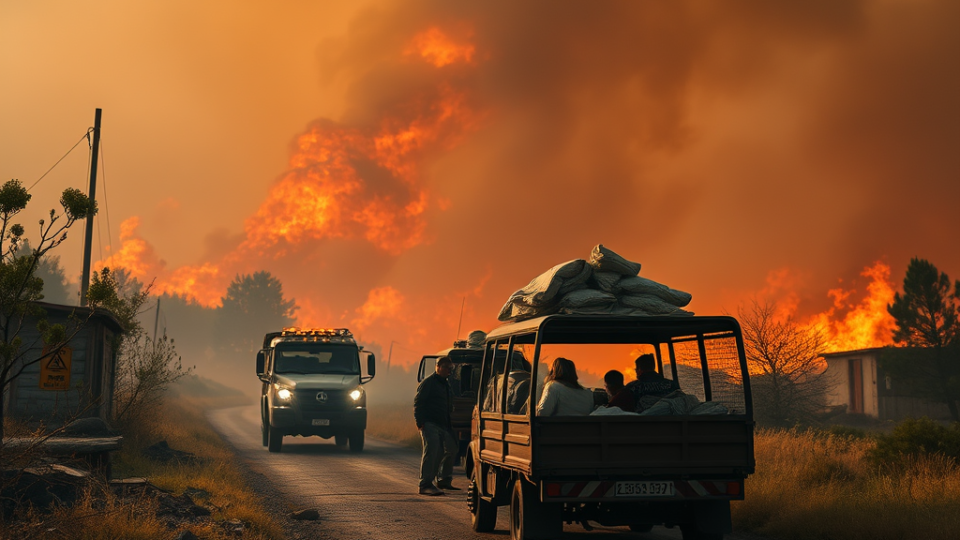
The summer of 2025 once again brought a tragedy of enormous proportions to Greece: wildfires that consumed thousands of hectares, destroyed picturesque communities, severely affected tourism and called into question the authorities’ ability to manage such disasters. This detailed article examines the causes; the economic, social and environmental effects; residents’ accounts; and the lessons that can be drawn from these dramatic events.
A new wave of fire: where and how Greece’s 2025 wildfires broke out
The fires began in late June 2025, fuelled by extreme temperatures, strong winds and a prolonged drought. The worst-affected regions were:
- The island of Evia (Euboea), which had already been hit by devastating fires in 2021 and 2023;
- the Attica peninsula, particularly the suburban area of Athens;
- the Peloponnese, where several traditional villages were evacuated;
- the island of Rhodes, a major tourist destination.
Within just a few days, satellite imagery showed vast plumes of smoke covering entire parts of the country, while authorities issued alert messages for dozens of localities.
Climate change, drought and the human factor
Experts stress that the 2025 Greece wildfires were not simply an inevitable natural disaster, but the result of a combination of factors:
- Record temperatures: readings above 44°C were frequently recorded in July.
- Prolonged drought, which turned vegetation into ideal fuel.
- Hot winds from Africa, which intensified the flames.
- Human negligence: barbecues lit in high-risk areas, uncontrolled burning of plant debris and even suspicions of deliberate arson.
This devastating combination made the fire virtually impossible to control in the first days.
Massive firefighting efforts and international solidarity
The following were mobilised to fight the flames:
- More than 7,000 Greek firefighters;
- firefighting aircraft and helicopters sent from France, Italy, Romania and Poland;
- thousands of local volunteers.
Romania, for example, sent two Spartan aircraft configured for firefighting and an 80-firefighter detachment that operated in the Rhodes area. International solidarity was impressive, but the intensity and scale of the fires at times exceeded the response capacity.
Evacuated communities and destroyed villages
The evacuations were among the most dramatic moments:
- In Evia, more than 15,000 people were forced to leave their homes;
- on Rhodes, entire hotels were evacuated and tourists were taken to safety by boat;
- in Attica, historic communities such as Nea Makri suffered significant damage.
Many wooden houses were consumed within hours, while residents watched helplessly as a lifetime’s possessions were reduced to ashes.

Devastating impact on tourism
Tourism, a mainstay of Greece’s economy, was severely affected:
- Bookings for August and September fell by up to 40% in affected areas;
- losses were estimated at more than €1 billion in the summer season alone;
- the country’s image, damaged by repeated fires, frightened off tourists from Germany, the United Kingdom and other traditional markets.
Beyond the direct losses, the effects are also being felt in related industries: transport, restaurants and small local businesses.
Nature built over decades, lost in days
Environmentalists estimate that more than 90,000 hectares of forest, grassland and olive groves burned in the 2025 Greece wildfires. The consequences include:
- Destruction of habitats for rare species, including vultures, turtles and wild goats;
- future landslides and flooding caused by the loss of vegetation;
- additional CO2 emissions, which worsen global warming.
Restoring the ecosystems will take decades, and some local species risk disappearing permanently.
Moving testimonies: “We lost everything”
Reports by Greek and international television stations captured local residents’ anguish:
“We saved only one suitcase of clothes; our home burned down in minutes.”
“The fire came down from the hill like a beast. No one could stop it.”
“Now we have neither olive trees nor vines left. Our entire village depended on them.”
These testimonies show the profound ordeal endured by thousands of families.
Structural causes: lack of prevention and clear plans
Analysts point to chronic problems:
- Failure to clear dry vegetation from forests;
- unplanned construction in high-risk areas;
- evacuation plans that have not been sufficiently tested;
- a lack of effective forest-road networks for rapid response.
Without decisive measures, the risk of similar tragedies will remain very high.
What could be done differently in the future?
Experts propose:
- Creating firebreaks around communities;
- automated early-detection systems using satellites and drones;
- training the public on how to act in the event of a fire;
- strong campaigns against illegal arson;
- investment in modern firefighting equipment.
Some even advocate reforestation with more fire-resistant species adapted to climate change.
The link to climate change: a vicious circle
Greece is not alone in this fight: similar fires also devastated southern Italy, Spain and Turkey in the summer of 2025. Climate change is producing longer, hotter and drier summers, while large-scale fires accelerate warming by releasing CO2. It is a vicious circle threatening the entire Mediterranean basin.
For more information on climate change, see Extreme heatwave paralyses Europe: temperatures above 40°C, red alerts and fires, which provides complementary details on this subject.
Analysis: what will future summers look like?
Meteorologists forecast increasingly extreme summers in Greece:
- More days of extreme heat;
- stronger winds from Africa;
- more frequent droughts.
Authorities must prepare for scenarios regarded as “exceptional” until now, but which may become normal.
Painful but necessary lessons
Beyond the tragedy, Greece’s 2025 wildfires should serve as a wake-up call:
- For authorities: invest in prevention, not only in response.
- For communities: understand the real risks and adopt self-protection measures.
- For tourists: respect rules and temporary restrictions on access to forests.
Only through collective awareness can the scale of such disasters be reduced in the future.
A message for tourists and lovers of Greece
Greece remains a wonderful destination, with unique landscapes and welcoming people. But respect for nature and individual responsibility are becoming more important than ever. Through simple actions, everyone can help protect this spectacular country.
The 2025 Greece wildfires exposed deep vulnerabilities, but also remarkable solidarity. It is time for a new beginning based on prevention, technology and education. Only then can we hope that, in the future, flames will no longer consume so many lives, forests and entire villages.
Accra Tourist Information Centre (ATIC), which hosts the famous Rockstone’s Waakye and National Film Authority, gutted by fire in the early hours of Monday, August 4. #GraphicOnline pic.twitter.com/ux6W4Kra7y
— DailyGraphic GraphicOnline (@Graphicgh), August 4, 2025





Discuția cititorilor
Ai o opinie sau o întrebare despre acest articol? Spune-ne ce crezi.
Fii primul care deschide discuția.
Te rugăm să păstrezi un limbaj civilizat și să discuți la subiect. Comentariile spam sunt filtrate automat.