
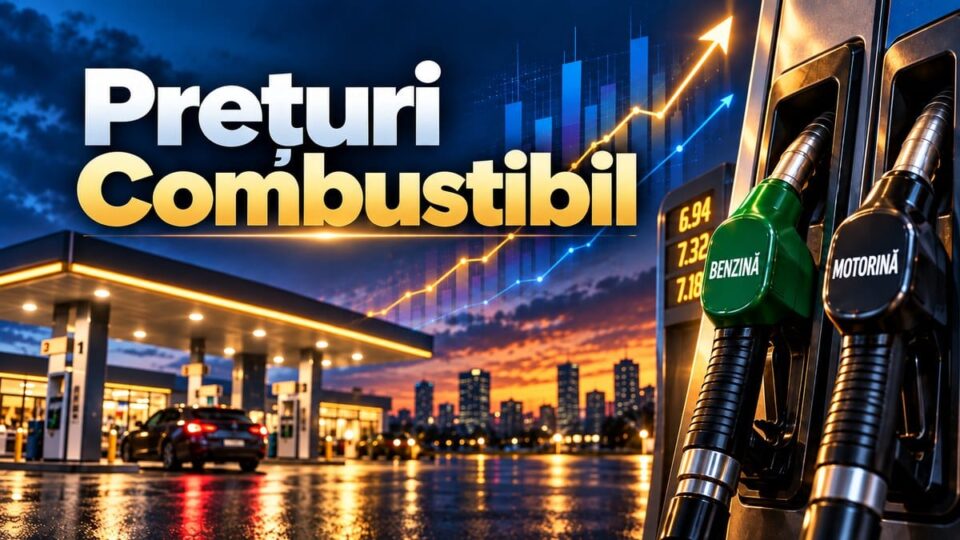
Diesel will remain under the special crisis regime until February 1, 2027. The Romanian government has extended by three months the measures applying to the crude oil and petroleum-products market, including the mechanism for temporarily reducing the excise duty on standard diesel.
According to figures presented by the government, at a 25% reduction level, the excise-duty cut amounts to about 0.85 lei per litre, including VAT. At an average price of 10.9 lei per litre, the government estimates that, without an extension of the mechanism and with market conditions unchanged, diesel could have reached about 11.75 lei per litre from November 1.
For additional context, see The Thwaites Glacier could reshape the world’s coastlines: what is happening beneath the ice, an article that examines an aspect directly related to this subject.
What has been extended until February 1, 2027
- the mechanism for reducing the excise duty on diesel;
- the limit on commercial mark-ups;
- the contribution on exceptional income;
- the prior-approval regime for exports and intra-Community supplies;
- special reporting obligations;
- derogations concerning biofuel content.
What it means for a full tank
At a difference of about 0.85 lei per litre, filling a 50-litre tank amounts to roughly 42 lei.
Why the crisis regime was extended
The measure reflects persistent risks in the international market for oil and refined products. Romania is seeking to limit the rapid pass-through of external shocks to prices at the pump.
Is the price capped?
No. The mechanism does not set a maximum pump price. It reduces part of the excise duty according to changes in Platts quotations and the domestic average price.
What could change in the coming months
The final price will continue to depend on crude oil, refined-product quotations, the exchange rate, logistics costs and commercial margins.
For comparison, InfoBuz has also analysed the difference between diesel and petrol, and the impact of the excise-duty cut at the pump.
How the excise-duty reduction works
The mechanism does not mean that the state directly sets the price of diesel. The reduction is adjusted according to movements in international quotations and the average price at the pump.
Its purpose is to ensure that part of an external shock is not passed on in full to consumers over a very short period.
Why diesel matters to the economy
Diesel affects more than drivers. It is the predominant fuel in road freight transport, agriculture, construction and numerous industrial activities.
A large price increase feeds into logistics costs and, subsequently, the prices of transported goods.
Who bears the cost of the reduction?
A lower excise duty means lower tax revenue than in a scenario without the reduction. The government treats this lost revenue as the cost of stabilisation during a period of market strain.
Why 0.85 lei per litre matters
For a passenger car, the difference may seem modest. For a haulier consuming thousands or tens of thousands of litres each month, the effect becomes very large.
For 1,000 litres, a difference of 0.85 lei amounts to about 850 lei.
What about petrol?
The crisis regime covers both petrol and diesel, but the excise-duty reduction mechanism presented by the government is focused on standard diesel.
Can diesel still become more expensive?
Yes. The excise-duty reduction limits only part of the pressure. If crude oil, refined products or the exchange rate rise sharply, the pump price can still increase while the measure is in force.
Why Platts quotations matter
Petroleum products are priced on international markets, and Platts quotations are a widely used benchmark. Romania is not insulated from these prices, even though part of its fuel is produced locally.
What to watch until February 2027
- the price of Brent crude;
- European diesel prices;
- the leu-to-dollar exchange rate;
- the excise-duty rate actually applied;
- the average pump price;
- any changes to the crisis regime.
What the extension means
For drivers, the extension means that part of the tax pressure on diesel will remain reduced until the beginning of February 2027. It does not guarantee a low price, but it limits an additional increase that would otherwise have taken effect immediately from November 1.
Sources: AGERPRES – extension of the crisis regime in the fuel market; AGERPRES – measures adopted by the government.








Discuția cititorilor
Ai o opinie sau o întrebare despre acest articol? Spune-ne ce crezi.
Fii primul care deschide discuția.
Te rugăm să păstrezi un limbaj civilizat și să discuți la subiect. Comentariile spam sunt filtrate automat.