
Diesel DPF regeneration is not, in itself, a sign of a fault. It is a normal process in which the particulate filter burns off some of the soot trapped in the exhaust. In many modern cars, the engine control unit can start this cleaning process automatically even when the driver sees no dashboard warning. Problems arise when regenerations are repeatedly interrupted, when the engine produces too much soot, when sensors provide incorrect information, or when the filter has accumulated ash that can no longer be removed by burning.
Some signs drivers associate with regeneration — a slightly higher idle speed, temporarily higher fuel consumption, cooling fans continuing to run and a hot-exhaust smell — may be consistent with an active cycle, but do not confirm one on their own. The dedicated yellow DPF warning light generally means something different: the system may be asking for action because the filter load has reached a manufacturer-set threshold.
Volkswagen explains what drivers of certain models can do when only the DPF warning light is illuminated, while Ross-Tech warns that a workshop regeneration performed above the permitted loading limits can carry a fire risk. So not every filter that appears loaded can be fixed by “driving it hard on the motorway” or by issuing a VCDS command.
This InfoBuz guide explains what a DPF does; how to distinguish soot from ash; how to recognise signs of active regeneration; what warning lights and fault codes mean; which data can be read with VCDS on a 2.0 TDI; and when to stop attempting regeneration and seek professional diagnosis. It does not provide commands for disabling safeguards or starting a forced regeneration without specialist checks.
For more on Start-Stop systems, see AGM, EFB or conventional car battery? The wrong choice can affect Start-Stop and vehicle electronics, which provides complementary information on the subject.
Diesel DPF regeneration: what the filter does and why it needs cleaning
DPF stands for Diesel Particulate Filter. The term FAP is used especially in some French systems, for filtre à particules. In both cases, the purpose is to trap solid particles generated by diesel combustion, although the technology and cleaning strategy may vary between manufacturers.
In a wall-flow filter, exhaust gases pass through the porous walls of a ceramic material, while particles are trapped. Soot builds up over time and can increase resistance to gas flow. The control unit monitors this through sensors and calculation models, then manages cleaning under the conditions specified by the manufacturer.
HELLA describes active regeneration as a controlled increase in exhaust-gas temperature, sometimes to around 600–650°C in the filter area. Exact figures and methods are system-specific. At suitable temperatures, soot is oxidised and the filter can continue operating without removal.
Regeneration does not make the filter new. Some non-combustible residues remain in its structure, and ageing of the substrate and catalytic coatings is not reversed simply by burning off soot.
Passive, active and workshop regeneration: three different processes
| Type of regeneration | How it occurs | What the driver should know |
|---|---|---|
| Passive | Soot oxidises under favourable exhaust-temperature and gas-composition conditions, without a distinct cycle obvious to the driver | Depends on the system, operating conditions and catalysts |
| Automatic active | The engine control unit changes its operating strategy to raise exhaust temperature and reduce soot | May create temporary symptoms, but does not automatically require manual intervention |
| Workshop / forced | A diagnostic operation initiated by specialised personnel through a procedure accepted by the vehicle | Requires checks of loading, faults and safety conditions; it is not a universal command |
DieselNet explains the distinction between passive oxidation, which may be helped by catalysts and normal operating conditions, and active procedures that raise exhaust-gas temperature. ADAC notes that many passenger cars use a combination of these mechanisms.
“Forced regeneration” is not a better form of routine maintenance. It is a workshop measure for situations defined by the manufacturer. If the soot limit has been exceeded or active faults are present, starting it may be dangerous or rejected by the control unit.
Seven signs that a diesel may be carrying out active regeneration
- Temporarily higher idle speed. In certain vehicles, stationary engine speed may differ from normal.
- Higher instantaneous fuel consumption at idle. The post-injection strategy and auxiliary consumers can temporarily affect consumption.
- The radiator fan runs hard. It may continue for a period after the engine is switched off to manage heat.
- Start-Stop is temporarily unavailable. The control unit may keep the engine running when it needs specific thermal conditions.
- A very hot exhaust smell is more noticeable. Exhaust-system temperature may be high.
- A slight change in engine note. Injection and idle management can alter the sound.
- Some OBD values show high temperatures and falling soot load. This is firmer confirmation if the data are interpreted correctly.
RAC lists several of these indications of active regeneration. However, none is exclusive to the DPF: a fan may also run for air-conditioning or high-temperature reasons, and higher idle can have other causes. Do not diagnose the filter simply because “the fan can be heard”.
An illuminated DPF warning light is not required for every normal regeneration. On many models, the light appears instead when the loading level or regeneration conditions require the driver’s attention. The model handbook and control-unit data are more relevant than forum interpretations.
What to do when the yellow DPF warning light comes on
The precise meaning depends on the manufacturer, the light’s colour and behaviour, displayed messages and any other warnings. Volkswagen UK gives an official example for certain models: if only the DPF warning light is on, the fuel level is not too low and there are no other relevant warnings, the manufacturer advises driving in suitable conditions at at least 60 km/h, at approximately 1,800–2,500 rpm, for a minimum of 15 minutes, until the light goes out. For some automatics, it advises selecting a mode that maintains the appropriate engine speed.
This is a Volkswagen procedure published for certain vehicles, not a universal recipe for every diesel. Do not exceed the legal speed limit, do not force a cold engine and do not drive indefinitely if the warning light remains on. Follow the exact instructions in your car’s handbook.
On the same page, Volkswagen says to contact roadside assistance if there is more than one relevant warning light, and to consult a workshop if the advised drive does not resolve the situation. The steps may differ for another manufacturer or different dashboard messages.
| Observed situation | Prudent action |
|---|---|
| Isolated yellow DPF light, car operating normally | Consult the handbook; if the procedure permits it and conditions are safe, follow the manufacturer’s instruction |
| DPF light remains on after the recommended procedure | Book diagnostics; do not repeat cycles indefinitely |
| DPF warning plus other warnings, loss of power or limp mode | Seek diagnostics or assistance; do not assume a fast drive will solve the cause |
| Red warning, overheating, oil-pressure issue or dangerous behaviour | Stop safely and follow the manufacturer’s emergency instructions |
| Abnormal smoke, a severe burning smell, leaks or unusual noises | Do not attempt regeneration; arrange a professional inspection |
On certain VAG vehicles, a flashing glow-plug light can signal an engine-management problem, rather than necessarily a problem with the glow plugs themselves. Together with a DPF warning or loss of power, it requires fault-code reading and interpretation appropriate to the platform.
What happens if you switch off the engine during regeneration?
In a car that regenerates automatically, switching off at your destination does not necessarily mean the filter has failed. The system may resume or reschedule the process on a later journey if conditions are met. Repeated interruption of many cycles can, however, contribute to soot accumulation, especially when the car is used only for short trips.
It is not advisable to keep driving simply to get “the last five minutes” if you are tired, traffic conditions are unsuitable or the car has other warnings. Safety comes first; a handbook-compliant drive can be undertaken afterwards.
The fan may run after the engine is switched off to dissipate heat, which does not automatically prove that regeneration was interrupted. Do not park over dry grass or other combustible material if the exhaust system is very hot; temperatures during regeneration can be high.
On vehicles with many interrupted regenerations, checking the oil level is also useful. Depending on the injection strategy, fuel can enter the oil and contribute to dilution. An unusually rising level, a diesel smell or an oil warning requires a check under the manufacturer’s procedure; do not substitute “a trial regeneration” for proper diagnosis.
Soot versus ash: the difference that determines whether regeneration can still help
Soot is a combustible component of exhaust particulates. Under suitable thermal conditions, it can be oxidised and reduced through regeneration. Ash comes from inorganic components that do not burn in the same way, including residues from engine-oil additives, traces from fuel and component wear.
DieselNet explains that ash accumulation gradually reduces available space and can alter flow resistance. ADAC notes that regeneration does not remove ash accumulated in the filter.
| Characteristic | Soot | Ash |
|---|---|---|
| Main origin | Diesel combustion and carbon particles | Non-combustible residues, including those from oil and other sources |
| Normal regeneration | Can be reduced in the right conditions | Is not removed by simple regeneration |
| Change over time | May rise between regenerations and then fall | Tends to accumulate over the long term |
| Diagnosis | ECU estimates and sensor information | Wear estimates, operating conditions and specialist assessment |
| Remedy when limits are exceeded | Regeneration, where permitted, after eliminating underlying causes | Assessment for approved professional cleaning or replacement |
A filter loaded with ash therefore cannot be restored “as new” through motorway acceleration or repeated forced regenerations. For a high-mileage car, its history, oil consumption, lubricant specification and the results of a genuine filter assessment matter.
Why city-only use can disrupt DPF regeneration
On many diesels, very short journeys do not always allow the required thermal conditions to be reached and maintained. The engine starts cold, is switched off after a few kilometres, and repeats that cycle many times. ADAC explains that prolonged use only on short routes can affect regeneration.
But it should not be assumed that every city-driven diesel has a faulty DPF. Modern strategies can manage temperatures and regeneration differently. A car used extensively in town, with a fully functioning system, may complete automatic regenerations successfully. Diagnosis is warranted when the loading level or regeneration frequency departs from behaviour accepted by the manufacturer.
A normal periodic drive on a longer route can help some usage patterns, but should not become an obligation to maintain a particular engine speed or road speed in every model. The handbook sets the appropriate instructions.
How often does a DPF regenerate: is there a correct distance interval?
There is no universal interval. In technical material, HELLA mentions indicative intervals of around 400–700 km for some systems. Other configurations and operating conditions can produce different figures.
Do not diagnose a car solely because it regenerated after 250 km or 800 km. What matters is how much soot the engine produces, the driving route, sensor performance, how many regenerations were interrupted, ash condition and the ECU strategy.
If an interval becomes sharply and repeatedly shorter than the history of the same car, particularly together with fault codes or high consumption, investigation is justified. But a “short interval” without comparable values, temperatures and context is not a verdict.
What can be monitored with VCDS on a 1.6/2.0 TDI, without triggering procedures
For many Volkswagen, Škoda, Audi and SEAT vehicles, VCDS can display information from the engine control unit. Some versions show parameters such as Particle filter soot mass calculated, Particle filter soot mass measured, time since last regeneration, distance since last regeneration, exhaust-gas temperatures and differential pressure.
Depending on the ECU generation, this information is accessed in 01 – Engine, through Measuring Blocks or Advanced Measuring Values. Ross-Tech warns that group numbers and labels vary between CAN and UDS controllers and between engines. A tutorial for a 2.0 TDI from one generation does not automatically apply to all DSG models.
In a read-only diagnostic check, without changes, a specialist can compare:
- Calculated soot: an ECU estimate based on its operating model and available information.
- Measured soot or pressure-based estimate: a result that depends on the differential-pressure sensor, exhaust-gas flow and ECU calculations; it is not a direct weighing of the filter.
- DPF differential pressure: the pressure difference, which can rise with flow rate, loading or restrictions.
- Exhaust temperatures: these indicate whether the system reaches required conditions and whether sensor readings are plausible.
- Distance and time since the previous regeneration: useful for identifying a pattern, but insufficient on their own.
- Ash estimate: this may indicate filter ageing, but does not replace a physical inspection when one is needed.
There is no single value in grams, mbar or kilometres that is “good” for every DPF. Pressure must be interpreted at comparable flow, engine-speed and temperature conditions, and against the vehicle specification. Do not use thresholds from one generation to start procedures on another engine.
The G450 sensor and differential pressure: can a faulty sensor make the filter seem blocked?
Yes. On certain systems, filter loading can be misinterpreted if the pressure sensor or its measurement path is faulty. HELLA documents a Volkswagen Touareg case involving faulty DPF regeneration and suspicious differential pressure, for which it recommends checking wiring, connectors and hoses before replacing parts.
On certain VAG platforms, the sensor is identified as G450. For P2453, Ross-Tech lists possible causes including the electrical circuit, blocked hoses, a faulty sensor or unsuitable adaptation values.
That said, the opposite conclusion should not be drawn: not every apparently loaded DPF is really just a faulty sensor. The problems can be separate or combined: a restricted filter, a damaged pressure hose or a combustion problem may occur at the same time. Diagnosis begins with the vehicle’s own data and wiring diagram.
P2002, P2453 and P2463: what the codes do and do not say
| Code | Indicative meaning | Relevant checks |
|---|---|---|
| P2002 | Unsatisfactory particulate-filter efficiency or operation in some applications | DPF, exhaust paths, sensors, signals and the manufacturer’s procedure |
| P2453 | Implausible differential-pressure sensor signal | G450 where fitted, hoses, wiring, connectors and measured values |
| P2463 | Excessive soot accumulation in the DPF | Confirmed loading, reasons for failed regenerations and safety limits |
Ross-Tech documentation: P2002, P2453 and P2463. A DTC provides a direction for investigation and the conditions in which it appeared, but does not automatically dictate replacement of the filter.
Before clearing codes, save the Freeze Frame data and the conditions in which they appeared. Clearing a fault may temporarily conceal the symptom without removing the problem, especially when it relates to loading, temperature or a sensor signal.
The engine thermostat and the DPF: why a diesel that remains cold should be checked
On certain engines, automatic regenerations and some workshop procedures depend on coolant temperature and other operating conditions. If the engine does not reach its normal thermal range because of a faulty thermostat, filter management may be affected.
For certain specific 1.6/2.0 CR-TDI procedures, Ross-Tech specifies a minimum coolant temperature above 70°C. This is a threshold for those procedures, not proof that every automatic regeneration on every diesel is impossible below 90°C.
If a 2.0 TDI consistently remains at 60–70°C in conditions in which it should reach normal temperature, investigate the main thermostat and, where applicable, the auxiliary cooling circuits. The InfoBuz guide “Diesel engine does not warm up to 90°C: thermostat, DSG or sensor?” explains VCDS checking steps.
Do not force a regeneration to “warm up the engine”, and do not confuse resolving a coolant-temperature issue with a complete repair of the DPF system: both problems may have additional causes.
Why can regeneration fail even after a long drive?
If a system does not complete regeneration, the reason is not necessarily too little speed. Possible causes include active faults, implausible temperature or pressure sensors, loading above limits, insufficient fuel, injection problems, excessive ash accumulation and other engine or exhaust faults.
Some vehicles inhibit regeneration when they detect unsafe conditions. Do not disable sensors, modify ECU thresholds or enter security codes found online to bypass the lockout. The restrictions are related to thermal safety and component protection.
A blocked DPF can be the consequence of another fault: injectors that do not spray correctly, intake leaks, incorrect EGR operation, increased oil consumption or a faulty thermostat. Replacing the filter without identifying the cause can lead to the problem returning quickly.
Forced regeneration with VCDS: why it is not a car-park experiment
In Ross-Tech documentation for different engine generations, the conditions for workshop regeneration vary by ECU, soot quantity, fuel level, coolant temperature, engine condition and permitted operating mode. Some procedures are carried out while stationary, others only while driving, and the option may be absent on some controllers.
There is a documented fire risk if regeneration is started in impermissible conditions or when the filter is overloaded. Exhaust-system temperature can become very high. For this reason, we do not publish coding sequences, access codes or methods for bypassing protective thresholds.
For a workshop, the correct procedure is to identify the exact ECU, consult the manufacturer’s documentation and check all conditions before issuing any command. On the road, monitoring data must not distract the driver; if logging is carried out, use a safe logging system or a passenger, without the driver handling the diagnostic tool.
Regeneration started without diagnosis can temporarily mask the problem and expose the filter, turbocharger, catalyst or exhaust to unjustified temperatures. The operation is not equivalent to a simple “reset”.
What does it mean when DPF regeneration happens increasingly often?
A rise in frequency can mean the filter has less available capacity, the engine is producing more soot, or many previous cycles were not completed. It can also result from implausible estimates produced by a faulty sensor.
DieselNet explains that ash accumulation can reduce the space available for soot and, in some systems, lead to more frequent regeneration. But intervals cannot be compared fairly if one driver covers 150 km on the motorway every day and another drives only 5 km in town.
For a car that appears to regenerate too frequently, record distances, driving conditions, engine temperature and any symptoms for several weeks, without changing ECU parameters. A workshop can compare the history with diagnostic values and the model specification.
DPF and engine oil: why specification matters more than brand
A modern filter can accumulate non-combustible residues partly originating from oil. Manufacturers therefore specify lubricants compatible with after-treatment systems, often described as low-SAPS or low in sulphated ash, phosphorus and sulphur.
ADAC recommends using oil that meets the manufacturer-required specification specifically to limit residues that cannot be burned off. Do not buy oil simply because its label says “for diesel” or “DPF friendly”. Check the precise standard by VIN, engine and service interval.
A Volkswagen or Škoda 2.0 TDI may require different VW standards depending on generation and maintenance regime. It would not be correct for a general article to prescribe the same standard for every engine. If the oil level rises inexplicably between changes, check the situation immediately; fuel entering the sump can alter lubrication properties.
DPF cleaning, regeneration or replacement: what to choose without wasting money
Regeneration is the process of oxidising soot in the filter. Professional cleaning is a separate intervention, sometimes involving removal and mechanical, thermal or combined procedures, intended to remove some deposits that do not disappear during regeneration. Replacement is necessary when the filter is damaged, exceeds certain limits or can no longer be restored to a condition accepted by the manufacturer.
ADAC warns that commercial cleaning services are not all equivalent and that their long-term results can be difficult to compare. Some chemical solutions and additives do not remove ash or repair a cracked substrate.
Before choosing a provider, ask for the diagnosis, method, compatibility with the filter, warranty terms and a before-and-after assessment report. For a broader view of component wear at high mileage, see the InfoBuz article what happens to a car after 200,000 km. Check that the part has no structural damage. A service promising a “DPF as good as new, 100% guaranteed”, regardless of the cause, deserves critical scrutiny.
Physically removing or software-disabling a DPF is not an equivalent repair and may breach applicable emissions and inspection requirements. We do not recommend solutions that put pollution-control equipment out of service.
Illustrative case study: Škoda Superb II 2.0 TDI CFFB with DSG
A driver of a 2014 Škoda Superb II, with the 2.0 TDI CFFB engine and DSG transmission, notices that idle speed is sometimes higher and the fan continues to run after switch-off. Another observation is that on some short journeys, coolant temperature remains below the normal range.
This is a hypothetical scenario, not a diagnosis of an individual car. Fan behaviour can have several causes. A technical approach would first identify the actual temperature values, read engine faults and compare DPF estimates before concluding that regeneration is the source of the problem.
If coolant values are implausible or the thermostat remains open, the cooling system is investigated separately. If differential pressure or soot values seem inconsistent, the sensor and hoses are checked. If the engine produces too much soot, the analysis extends to the intake, fuelling and EGR function.
Do not buy a new DPF or start regeneration with a diagnostic tool simply because the fan comes on often. The cause and condition of the filter must first be confirmed, and at excessive loading levels a regeneration may be prohibited by the workshop procedure.
Workshop checklist: 12 useful checks before an expensive decision
- Identify the exact vehicle, engine code and after-treatment configuration by VIN.
- Record warning lights, messages, DTCs and Freeze Frame data before clearing anything.
- Compare calculated soot, the measurement-based estimate and ash loading where available.
- Check differential pressure under prescribed conditions, not just as an isolated reading at idle.
- Inspect the sensor and pressure paths, including connections and hoses.
- Compare exhaust-gas temperatures with actual engine operation.
- Check whether coolant temperature is normal for that engine.
- Review regeneration history and intervals alongside the driving profile.
- Check injection, intake and EGR where there are indications of abnormal soot production.
- Check oil level and specification, and any signs of diesel dilution.
- Determine whether the loading level allows safe regeneration or whether another intervention is needed.
- After repair, verify the system’s effectiveness and any return of faults under safe conditions.
This is a checking plan for discussion with a workshop, not a sequence of VCDS commands for a driver to carry out. Safety thresholds and the exact order of tests remain those specified in the model documentation.
Ten common mistakes that can worsen a DPF problem
- Driving with multiple warnings as if it were normal regeneration. A fault may prevent cleaning and require assistance.
- Repeatedly attempting forced regenerations above accepted limits. There are serious thermal risks and a possibility of filter damage.
- Confusing soot with ash. Regeneration does not remove non-combustible deposits accumulated over time.
- Replacing the DPF without checking the pressure sensor. An implausible signal can lead to incorrect interpretation.
- Replacing the sensor without checking the filter. Some loading levels are real and require intervention.
- Ignoring engine temperature. A thermal-management fault can alter operating conditions.
- Using oil that does not meet the correct standard. Lubricant residues contribute to ash accumulation.
- Believing any motorway drive resolves any warning light. Some faults require diagnosis of the cause before driving.
- Assuming the absence of smoke proves the DPF is perfect. Assessment requires data and, when appropriate, specialist testing.
- Clearing codes without preserving the history. You lose information about the conditions in which the fault occurred.
Frequently asked questions about DPF regeneration
What is DPF regeneration?
It is the process through which soot accumulated in the diesel particulate filter is oxidised under appropriate temperature and control conditions, to keep the exhaust system operating.
How do I know whether my car is regenerating?
Possible clues include higher idle speed, an active fan, increased instantaneous fuel consumption and Start-Stop being temporarily unavailable. ECU data provide firmer confirmation; symptoms alone are not specific to the DPF.
Does the DPF warning light have to come on during every regeneration?
No. Automatic regenerations can occur without a warning light. In many vehicles, the yellow light appears when the system needs attention or loading exceeds certain thresholds.
Can I continue driving if the DPF warning light is on?
It depends on the handbook, the light’s colour, other warnings and engine behaviour. Some models allow a drive following the manufacturer’s instructions when only the DPF light is illuminated. Multiple warnings or power loss require assessment.
Is it normal for the fan to run after the engine is switched off?
It can be normal heat management, including in the context of regeneration, but can have other causes such as air conditioning or engine temperature. It is not a standalone DPF test.
What happens if I switch off the engine during regeneration?
An isolated interruption does not demonstrate a fault. Frequent repetition of unfinished cycles can contribute to filter loading. Follow safety rules and the handbook, without forcing a journey.
At what distance should a DPF regenerate?
There is no fixed interval for every model. Some technical material gives indicative figures of several hundred kilometres, but strategy and conditions of use can create large differences.
Can a faulty thermostat prevent regeneration?
On certain engines, coolant temperature is among the conditions for some regenerations. An engine that does not warm up properly should be checked, without automatically assuming the thermostat explains all DPF problems.
What do soot mass calculated and measured mean in VCDS?
They are values estimated through different control-unit methods, using operating models and sensor information. “Measured” does not mean the soot in the filter is physically weighed.
What is the role of the G450 sensor?
In certain VAG systems, G450 measures differential pressure related to the particulate filter. Blocked hoses, wiring issues or a faulty sensor can generate implausible values.
What do P2002, P2453 and P2463 mean?
Depending on the platform, they indicate issues concerning filter performance, differential-sensor signal or excessive soot accumulation. A code alone does not establish which part must be replaced.
Can I carry out forced regeneration myself with VCDS?
A workshop regeneration requires specific checks and conditions. If the filter is too heavily loaded, the risk of overheating or fire can be significant. The operation should be assessed and carried out by competent personnel.
Does cleaning with an additive also remove ash?
That should not be assumed. ADAC warns that some chemical solutions can act on soot but do not remove accumulated ash. The result depends on the technology and the filter’s condition.
Can a DPF be cleaned instead of replaced?
In some cases, professional cleaning accepted by the manufacturer or workshop can be assessed, but a cracked or non-compliant filter may require replacement. There is no universal method that restores every DPF to new condition.
What oil should be used in a diesel with a DPF?
Oil that meets the manufacturer’s exact specification for the engine and after-treatment system. Many engines require lubricants with low-SAPS properties, but the specific standard must be checked by VIN and documentation.
Is it a good idea to delete the DPF if I drive extensively in town?
No. Removing or disabling emission-control equipment does not resolve the cause of excessive soot production and can create legal, inspection and pollution problems. Proper diagnosis aims to repair the system.
Conclusion: regeneration is normal, but a DPF fault should not be treated through guesswork
Diesel DPF regeneration is a normal part of a particulate-reduction system’s operation. An active regeneration can temporarily explain higher consumption, changed idle speed or fan operation, but those symptoms are not enough to diagnose the filter.
When the warning light comes on, it is necessary to distinguish an isolated warning — for which some car handbooks provide driving instructions — from an engine with multiple faults, excessive loading or limp mode. Soot can be reduced through regeneration; ash cannot. An implausible sensor, faulty thermostat or combustion problem can make repeated regeneration unnecessary or risky.
Before paying for a new DPF, ask for measurements. Before initiating forced regeneration, ask for confirmation that it is permitted and safe. These two rules can prevent both unnecessary repairs and interventions that worsen the fault.
Technical sources and methodology
- Volkswagen UK – DPF warning light and instructions for some vehicles, according to warnings present.
- Ross-Tech Wiki – workshop regeneration, ECU-specific conditions and safety warnings.
- ADAC – filter function, soot and ash, cleaning versus replacement, 9 September 2025.
- HELLA Tech World – after-treatment, temperatures, differential pressure and diagnosis.
- HELLA – Volkswagen Touareg technical case involving differential-pressure sensor problems.
- DieselNet – particulate-filter regeneration mechanisms.
- DieselNet – ash accumulation and its effect on filter operation.
- RAC – differences between active and passive regeneration, and possible symptoms.
- Ross-Tech – P2002, filter-performance diagnosis.
- Ross-Tech – P2453, the G450 pressure sensor and implausible signal.
- Ross-Tech – P2463, excessive soot loading.
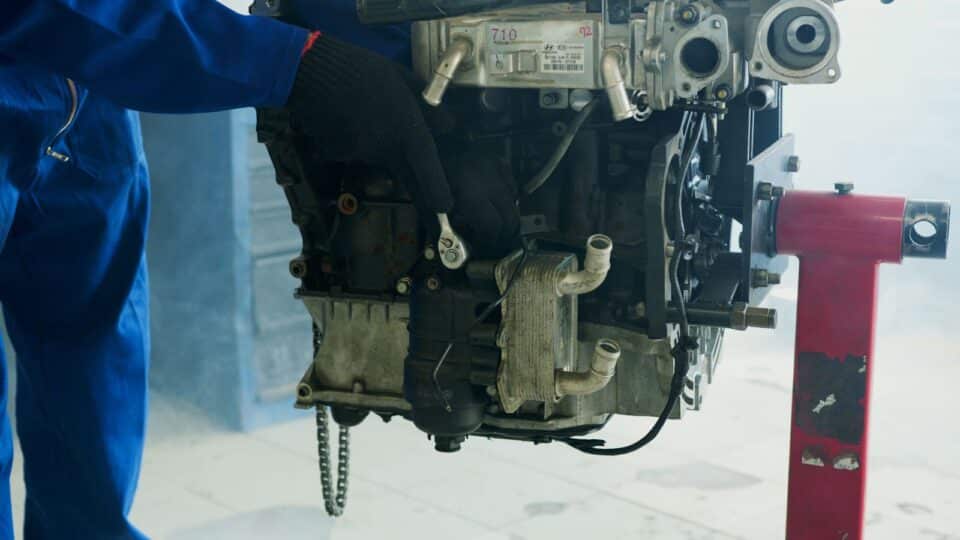
Editorial research: 24 October 2026. This guide concerns general principles for diesel cars with a DPF. Temperature values, distance intervals, warning lights and regeneration conditions vary between manufacturers, engines and control units. The Škoda Superb II example is a hypothetical scenario only, not an individual diagnosis. Do not carry out forced regenerations without specialist checks; exhaust temperatures can create burn and fire risks. The featured image is illustrative: Artem Podrez / Pexels, used under the platform’s licence; it does not show a DPF regeneration procedure.





Discuția cititorilor
Ai o opinie sau o întrebare despre acest articol? Spune-ne ce crezi.
Fii primul care deschide discuția.
Te rugăm să păstrezi un limbaj civilizat și să discuți la subiect. Comentariile spam sunt filtrate automat.