
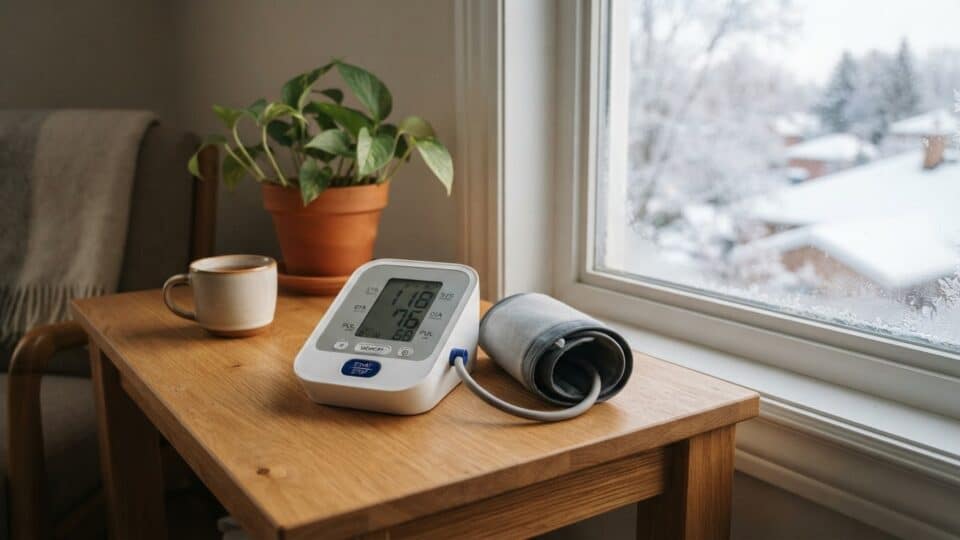
Blood pressure in winter may be higher than during warmer months, even in the same person. Cold causes blood vessels to narrow temporarily to reduce heat loss, which can increase the pressure needed to circulate blood.
This difference does not automatically mean disease, nor does it mean treatment should be changed whenever temperatures fall. However, for people with hypertension, cardiovascular disease or older age, the cold season may more readily bring higher readings to light and increase cardiovascular risk.
Blood pressure in winter: why it can rise
When the body is exposed to cold, blood vessels in the extremities constrict to preserve heat around vital organs. This vasoconstriction increases resistance in the circulatory system, and blood pressure can rise.
Mayo Clinic notes that blood pressure is generally higher in winter and lower in summer. The effect may be more pronounced in older people.
For more information on hypertension, see WHO launches global plan on dangerous high blood pressure in pregnancy, which provides complementary details on this subject.
Alongside the direct effect of cold, winter brings other factors:
- less physical activity;
- weight gain;
- saltier foods;
- higher alcohol consumption during some festive periods;
- less time spent outdoors;
- respiratory infections and physiological stress;
- insufficient or irregular sleep.
Which readings are considered elevated under ESC guidance
The European Society of Cardiology’s 2024 guideline simplified the classification of blood pressure measured in a clinical setting.
| Category | Systolic | Diastolic |
|---|---|---|
| Not elevated | <120 mmHg | <70 mmHg |
| Elevated blood pressure | 120–139 mmHg | 70–89 mmHg |
| Hypertension | ≥140 mmHg | ≥90 mmHg |
Under the guideline, hypertension measured in a clinical setting remains defined as ≥140/90 mmHg.
For measurements taken at home, the indicative threshold for hypertension is lower: ≥135/85 mmHg.
One high reading does not automatically mean hypertension
Blood pressure can temporarily increase after:
- physical exertion;
- coffee;
- smoking;
- stress;
- cold exposure;
- pain;
- lack of sleep;
- talking during the measurement itself.
This is why a diagnosis should not be made from a single isolated reading.
The ESC recommends confirmation through repeated measurements, home monitoring or, where necessary, 24-hour ambulatory monitoring.
How to measure blood pressure correctly at home
An incorrect measurement can add or subtract enough millimetres of mercury to change the interpretation.
For a useful measurement:
- sit in a quiet room;
- rest for at least five minutes beforehand;
- sit with your back supported;
- keep your feet on the floor and do not cross your legs;
- support your arm at heart level;
- use a cuff appropriate to your arm circumference;
- do not talk during the measurement.
The ESC generally recommends two measurements at each session, one to two minutes apart, in the morning and evening, for at least three and ideally seven days.
Do not measure immediately after coming in from the cold
If you have come indoors after exposure to low temperatures, the body is still adapting.
Your blood vessels may be constricted, your pulse may be higher, and your blood pressure may temporarily differ from its resting value.
To compare it properly with your usual readings, allow your body to stabilise in a comfortable environment, then observe the rest period before measuring.
Does cold affect more than blood pressure?
Yes. The American Heart Association says exposure to low temperatures can affect the entire cardiovascular system.
Vasoconstriction raises blood pressure and the workload on the heart. Cold can also alter the properties of blood and increase the risk of clotting, particularly in vulnerable people.
Data reviewed by the AHA associate non-optimal temperatures—both very low and very high—with an increased risk of heart attack, stroke, decompensated heart failure, arrhythmias and sudden cardiac death.
Who is more vulnerable in winter
The risk is not the same for everyone.
People who may be more vulnerable include:
- older people;
- patients with known hypertension;
- people with coronary artery disease;
- patients with heart failure;
- those who have had a heart attack or stroke;
- people with kidney disease;
- those who work in the cold for long periods;
- people without access to adequately heated housing.
Sudden exertion in the cold can be an unfavourable combination
A classic example is intense activity undertaken immediately after going out into the cold: clearing snow, pushing a car, carrying heavy loads or quickly climbing a slope.
Cold causes vasoconstriction, while exertion increases heart rate and the heart’s oxygen demand. The combination can be problematic, particularly for people who already have cardiovascular disease.
The AHA recommends avoiding sudden, intense exertion for people at increased cardiovascular risk.
Salt may matter more than you think
Diet often changes during the cold season: cured meats, salty cheeses, pickled foods, processed products, instant soups and festive meals.
Excess sodium can promote water retention and raise blood pressure in people who are salt-sensitive.
The issue is not limited to salt added at the table. A large share of sodium comes from processed foods.
Alcohol and blood pressure during the cold season
Alcohol can create a feeling of warmth because it dilates blood vessels in the skin, but this promotes heat loss.
In addition, excessive consumption can raise blood pressure and interact with some medicines.
The idea that “a small drink warms you up and is good for circulation” is not a medical strategy for protection in cold weather.
Sleep and inactivity can affect readings
Physical activity declines for many people during winter. At the same time, shorter days and changes in routine can affect sleep.
Less movement, weight gain and poor-quality sleep can contribute to poorer blood-pressure control.
Regular physical activity remains one of the most effective lifestyle measures for cardiovascular health, provided it is adapted to a person’s health condition.
Can you change your medicines yourself in winter?
No.
Mayo Clinic recommends discussing any treatment changes with a doctor. Some people may notice seasonal differences large enough for their regimen to need reassessment, but adjustments should not be made on the basis of a few isolated measurements.
Increasing the dose on your own may later lead to hypotension if the temperature rises or readings return to normal.
When a high reading becomes urgent
The American Heart Association uses a threshold of more than 180/120 mmHg for severe hypertension.
If you have such a reading:
- wait at least one minute;
- measure again;
- check for warning symptoms.
If the reading remains above 180/120 mmHg and you have symptoms such as:
- chest pain;
- shortness of breath;
- severe back pain;
- numbness;
- weakness;
- vision changes;
- difficulty speaking;
it may be a hypertensive emergency. In Romania, call the emergency service on 112.
What if blood pressure is over 180/120 with no symptoms?
Such a reading should still not be ignored.
If it is confirmed on repeat measurement and there are no symptoms of acute organ damage, the AHA recommends contacting a healthcare professional as soon as possible for assessment and possible treatment adjustment.
Taking extra doses of a medicine without medical advice is not recommended.
Hypertension may cause no symptoms
One of the most important points is that high blood pressure may be present without headaches, dizziness or other obvious signs.
The absence of symptoms does not automatically mean that a reading is normal.
The only way to know is to measure it properly.
What a difference between summer and winter may mean
If you notice that your readings are consistently higher in winter than in summer, record them in a log along with:
- the time of measurement;
- ambient temperature;
- medicines taken;
- pulse rate;
- any symptoms;
- special circumstances—illness, stress or lack of sleep.
This record is far more useful to a doctor than a single photograph of a blood-pressure monitor.
Indoor temperature and cardiovascular health
A very cold home can prolong the body’s exposure to temperatures that promote vasoconstriction.
This does not mean there is one universally perfect temperature for blood pressure, but a comfortable, stable environment may reduce thermal stress.
InfoBuz has separately examined the ideal home temperature in winter, and why 18, 20 and 22°C do not mean the same thing for everyone.
Indoor air can also affect general wellbeing
During the cold season, windows are opened less often and indoor air can become laden with CO₂, humidity or other pollutants.
This does not mean high CO₂ levels at home are a direct cause of hypertension, but they may contribute to discomfort, drowsiness and a general feeling of being unwell.
For this subject, see InfoBuz’s guide to CO₂, humidity, mould and ventilation in the home.
What to do if your blood pressure is higher in winter
For most people, reasonable measures are straightforward:
- measure blood pressure correctly and regularly;
- record the readings;
- maintain physical activity within appropriate limits;
- reduce excessive salt intake;
- limit excessive alcohol consumption;
- avoid sudden exertion in the cold if you have cardiovascular risk;
- dress appropriately;
- do not alter treatment without consulting a doctor;
- seek assessment if readings remain elevated.
The bottom line on blood pressure in winter
Cold can raise blood pressure by narrowing blood vessels, while winter lifestyle changes can compound the effect.
For healthy people, the variation may be small and have no consequences. For people with hypertension or cardiovascular disease, monitoring becomes more important.
The most useful approach is not to focus obsessively on every number, but to measure correctly, follow the trend and speak to a doctor if readings change persistently.
Frequently asked questions
Can cold raise blood pressure?
Yes. Low temperatures cause vasoconstriction, which can temporarily raise blood pressure.
Is it normal for my blood pressure to be higher in winter?
Some seasonal variation may occur, but persistently high readings should be medically assessed, particularly if you already have hypertension.
What is the ESC threshold for hypertension?
For clinical measurements, the ESC’s 2024 guideline defines hypertension as persistent readings of at least 140/90 mmHg. For home measurements, the indicative threshold is 135/85 mmHg.
When should I call 112?
If blood pressure is above 180/120 mmHg and symptoms such as chest pain, breathing difficulties, numbness, weakness, vision changes or speech difficulties occur, the situation may be a medical emergency and 112 should be called.
Can I increase my blood pressure medication dose myself in winter?
No. Any treatment change should be made with a doctor, based on a set of measurements and the clinical context.
Medical note: This information is general and does not replace a doctor’s assessment or advice. If you have very high readings, neurological symptoms, chest pain or shortness of breath, seek emergency medical help.
Sources: Mayo Clinic – blood pressure and cold weather; European Society of Cardiology – 2024 guideline on elevated blood pressure and hypertension; American Heart Association – severe hypertension and hypertensive emergency; American Heart Association – non-optimal temperatures and cardiovascular risk.




Discuția cititorilor
Ai o opinie sau o întrebare despre acest articol? Spune-ne ce crezi.
Fii primul care deschide discuția.
Te rugăm să păstrezi un limbaj civilizat și să discuți la subiect. Comentariile spam sunt filtrate automat.