
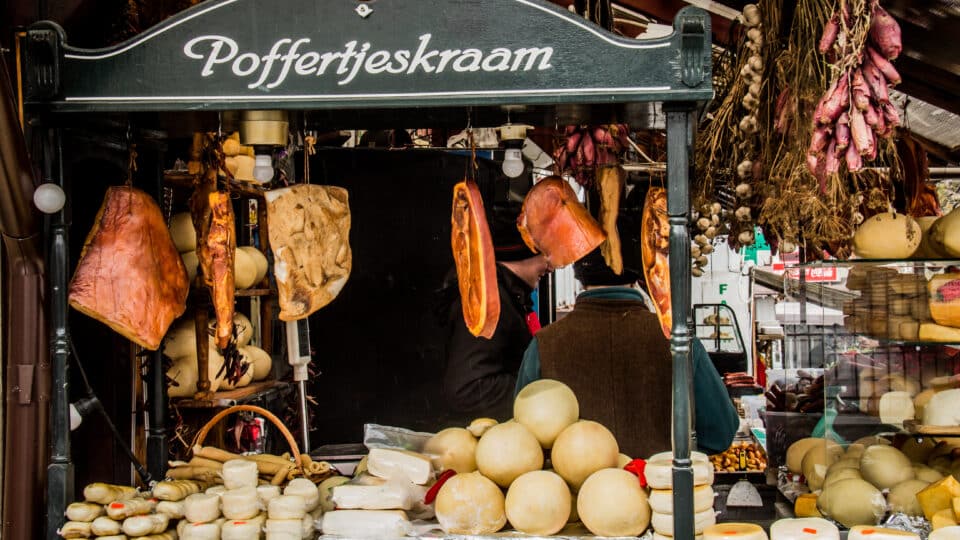
Romania’s lost foods are not simply recipes no longer found in restaurants. They include techniques, ingredients, rituals and local combinations that gradually fell out of use as the traditional household changed and cooking became standardised. Many dishes now survive only in villages, archives, festivals or family memory.
In 2026, interest in Romania’s culinary heritage is growing again. The National Institute of Heritage documents living traditional practices, while local projects in Transylvania, Dobruja, Banat, Moldavia and Oltenia are bringing old recipes back into circulation. In Sighișoara, for example, medieval dishes including lamb stew, garlic soup and traditional lichiu have been recovered from historical sources and returned to local menus.
The following list does not claim to present “Romania’s 20 oldest recipes”. Instead, it brings together regional dishes that have been documented or preserved in local tradition, some of which are now very rare. In many cases, the recipes vary from one village to another.
Romania’s lost foods: 20 nearly forgotten regional dishes
1. Transylvanian lichiu
Lichiu is a Saxon dish found in Transylvania, especially around Sibiu and in the areas of former Saxon communities. It resembles a tray-baked pie, with a simple dough and sweet or savoury fillings. Traditional versions use sour cream, egg, cheese, plums or semolina.
In Sighișoara, a medieval version of lichiu has recently been returned to public attention following local historical research. Its revival illustrates how readily a regional dish can disappear when it is no longer cooked regularly.
2. Sheep stew with cornmeal in pastoral areas
In Carpathian shepherding communities, sheep meat was used in simple, slow-cooked dishes, often served with mămăligă, Romania’s cornmeal porridge. Sheep stew was not a “restaurant recipe”, but food prepared at the sheepfold from available ingredients.
Carpathian transhumance, recognised as an element of intangible cultural heritage, created an entire food culture based on milk, cheeses, meat, whey and cornmeal.
3. Traditional sheepfold balmoș
Balmoș is one of those dishes that many people know by name but few still make in its traditional form. In the pastoral version, cornmeal is cooked in rich whey, jintiță, or a mixture of milk and sour cream, then cheese is added.
The result is far richer than plain mămăligă with cheese. The dish is directly tied to sheepfold culture and the full use of milk.
4. Jintiță with mămăligă
Jintiță is the rich liquid produced at certain stages of sheep-cheese making. In many pastoral households it was eaten warm with mămăligă, or used as a base for other dishes.
Today, the term itself is unfamiliar to many young people, although it was commonplace in a rural economy in which no part of the milk was wasted.
5. Scrobul with pork cracklings and onion
Scrobul was a rustic form of scrambled eggs found in several regions of Romania. In households in Transylvania and Maramureș, it was combined with pork cracklings, bacon, onion or cheese.
The recipe has not disappeared completely, but its traditional, rich form, tied to produce from the household, is far less common than it once was.
6. Păsat with milk
Păsat is coarsely ground corn, before it is milled into fine cornmeal. It was used in many villages for porridges, side dishes and simple desserts.
Cooked in milk with a little sugar or honey, păsat became a filling breakfast or dessert. The industrialisation of milling and the arrival of processed foods gradually pushed it out of urban kitchens.
7. Păsat with sauerkraut
In parts of Transylvania and Banat, păsat was paired with sauerkraut and smoked meat. The dish was substantial, inexpensive and suited to the cold season.
It is a classic example of winter cooking built around naturally preserved foods.
8. Zamă de șelată
Some areas of Transylvania have old soups made with lettuce, whey, milk or sour cream, known in different local forms. Some versions include garlic, egg or smoked meat.
Such soups now rarely appear on urban menus, despite relying on simple seasonal ingredients.
9. Orache soup with borș
In Moldavia and Wallachia, orache was widely used in spring soups soured with borș, a fermented wheat-bran liquid. With spring onions, lovage and sometimes rice, it was one of the first “green” dishes after winter.
As wild and seasonal greens have been replaced by vegetables available year-round, this soup has become less common.
10. Dried wild mushroom borș
In Bukovina and the mountain areas of Moldavia, wild mushrooms were dried for winter and used in fasting-season borș. Porcini, chanterelles and other local edible species provided intense flavour without meat.
The dish depends, however, on knowing mushrooms, drying them properly and having access to forest land—three things less common in today’s urban cooking.
11. Stuffed sorrel leaves
Sarmale, Romania’s stuffed rolls, were not made only with cabbage or vine leaves. Depending on the season and local tradition, regions used sorrel, horseradish or lime-tree leaves, as well as other edible plants.
In 2026, researchers and advocates of gastronomic heritage have again highlighted the variety of these wrappers, including versions using sorrel and even squash blossoms.
12. Stuffed squash blossoms
Stuffed squash blossoms are rare in Romania today, although they appear in culinary traditions shaped by the Balkan and Ottoman worlds. The filling could be rice with herbs, sometimes with raisins, or meat.
It is one of the most striking examples of a seasonal dish that has nearly vanished from the modern household.
13. Pie with urdă and dill
In many pastoral regions, urdă, a fresh whey cheese, was used immediately after it was made because it did not keep as long as aged cheeses. A classic version was a pie with urdă, egg and dill.
Today, industrial cheese pies have largely replaced these seasonal versions linked to milk production.
14. Moldavian alivancă
Alivancă is a Moldavian dish traditionally made from cornmeal, cheese, eggs, milk or sour cream, and baked in the oven. It can be sweet or savoury.
Once an ordinary food in rural households, it is now more often encountered at festivals, guesthouses or in reinterpreted traditional cooking.
15. Poale-n brâu in its old, unfussy form
Poale-n brâu are famous, but the modern recipe is often far sweeter and richer than older peasant versions. At home, dough and fresh cow’s cheese were used sparingly, and sugar was not always the dominant ingredient.
The difference between the commercial and traditional versions shows how a dish can survive in name while losing its original character.
16. Sweet tray-baked cornbread
Before cakes made with white flour, cocoa and cream became accessible in rural areas, sweet cornbread was a simple dessert. It was made with cornmeal, milk, eggs and sweetener, then baked in a tray or a wood-fired oven.
Some versions include pumpkin, apples or cheese.
17. Cornmeal and pumpkin cake
The combination of baked pumpkin and cornmeal appears in rural recipes from several regions. It was an inexpensive autumn dessert based on ingredients produced by the household.
Today, pumpkin is more often associated with pie and cornmeal with mămăligă, making such desserts unusual.
18. Griddle fish with simple brine in Dobruja
In Dobruja and the Danube Delta, one of the simplest dishes was fish cooked on a griddle or grill and served with a brine of water, salt, garlic and roasted peppers.
Modern versions often include complex sauces and side dishes, but in fishing households the preparation was straightforward and relied on the fish’s freshness.
InfoBuz has separately covered Dobruja’s cuisine and its Turkish, Tatar, Greek and Romanian influences.
19. Old-style fish plachie
Plachie is now associated chiefly with fish, onions and tomato sauce, but local versions differ widely. In the Danube Delta and Dobruja, the dish made use of available fish and vegetables from the household, without the standardisation now seen in online recipes.
It is an example of a dish that still exists but has become far more uniform than its regional forms once were.
20. Flatbread baked on the hearth or under a țest
Simple flatbread made with flour, water, salt and sometimes sourdough was one of the fundamental forms of rural bread. In Oltenia and other southern regions, baking under a țest—a dome-shaped earthenware cover—produced a crust and aroma that cannot be reproduced identically in an electric oven.
At recent food events in Craiova, organisers specifically discussed bringing țest-baked products and the flavours of childhood back into the spotlight.
Why these dishes disappear
Traditional recipes rarely disappear for just one reason. More often, they fade because the ecosystem that supported them disappears.
- Households no longer produce milk, cheese, meat and grain at home;
- wood-fired ovens, țest covers and hearths are becoming rare;
- seasonal ingredients are replaced by products available throughout the year;
- young people move from villages to cities;
- recipes are passed on orally and disappear with generations;
- restaurants favour dishes that are easy to standardise;
- some recipes require more labour than modern life allows.
Traditional does not necessarily mean “purely Romanian”
One of the most interesting features of Romanian cooking is precisely its mixture of influences. The Ottoman Empire; Saxon and Hungarian communities; and Greek, Tatar, Turkish, Armenian, Jewish, Slavic and Balkan populations have all left clear traces in what is now called Romanian cuisine.
Sarmale are an excellent example. Although their Ottoman influences are clear, they have been documented in Transylvania for centuries and adapted into hundreds of local versions. In October 2026, AGERPRES reported on research placing some documented sarmale recipes in Transylvania as early as 1550–1600.
A dish becomes traditional through transmission, adaptation and integration into the life of a community—not because it was supposedly invented in one place and preserved unchanged.
How culinary heritage can be preserved
Preserving these dishes does not mean keeping them in a museum. A recipe remains alive only if it is cooked, adapted and passed on.
Museums, archives, food festivals and researchers can document the techniques, but restaurants, guesthouses and households are the ones that can genuinely return them to everyday life.
A recent example comes from Sighișoara, where three old dishes were recovered from manuscripts and introduced into the local food scene. Initiatives of this kind turn heritage from an archival subject into a cultural and tourism resource.
Why these foods are worth rediscovering
At a time when the same pizza, burgers and pasta can be found almost anywhere in the world, local cuisine is one of the few forms of identity a place can retain.
An authentic balmoș, a well-made alivancă, a Dobruja fish brine or a țest-baked flatbread says more about a region’s geography and history than a standardised recipe.
Many of these dishes also rely on local, seasonal ingredients and the principle of using resources in full. In that sense, traditional cooking can be surprisingly modern.
Conclusion
Romania’s lost foods are not entirely lost. Fragments survive in villages, family notebooks, museums, grandparents’ recipes and the projects of those seeking to recover culinary heritage.
The problem is that without documentation and transmission, many of these recipes could disappear within a single generation. When a recipe vanishes, the loss is not only a flavour, but part of the history of the community that created and preserved it.
For more on traditional recipes, see 15 reinterpreted traditional Romanian recipes: less oil, more flavour and accessible ingredients, which offers complementary details on the subject.
Frequently asked questions
What is the oldest traditional Romanian food?
No single dish can be identified with certainty as “the oldest”. Many recipes evolved from pastoral and agricultural traditions, as well as regional influences. Some forms of grain porridge, flatbread, milk dishes and meat dishes are, however, very old.
Are sarmale Romanian?
Sarmale have multiple origins and influences in the Ottoman and Balkan world, but they have been cooked in the Romanian lands for centuries and have become part of the local culinary heritage through their many regional variants.
What is balmoș?
Balmoș is a pastoral dish of cornmeal cooked in a rich liquid produced during milk processing, such as rich whey or jintiță, and combined with cheese.
What is alivancă?
Alivancă is a baked Moldavian dish traditionally made with cornmeal, milk, eggs and cheese. Both sweet and savoury versions exist.
Which dishes are specific to Dobruja?
Dobruja has a highly diverse cuisine built on Romanian, Turkish, Tatar, Greek and Lipovan influences. Fish, pies, sheep meat and grain-based dishes are especially important.
Sources: National Institute of Heritage – Inventory of Intangible Cultural Heritage; AGERPRES – Sighișoara rewrites its culinary identity; AGERPRES – gastronomic heritage and artisanal producers; Radio Romania Actualități – food traditions and țest-baked products.


Discuția cititorilor
Ai o opinie sau o întrebare despre acest articol? Spune-ne ce crezi.
Fii primul care deschide discuția.
Te rugăm să păstrezi un limbaj civilizat și să discuți la subiect. Comentariile spam sunt filtrate automat.