
inDrive Romania is beginning to take shape: the international ride-hailing platform has launched a Romanian-language page to recruit fleet partners and is advertising 0% platform commission during its launch period, for up to one year. Its model differs from the established Uber and Bolt approach by allowing passengers and drivers to negotiate the fare before a ride is accepted.
There is, however, a crucial qualification, reported on 28 November 2026: commercial preparations do not amount to the public launch of the transport service. The technical approval procedure at Romania’s Authority for the Digitalisation of Romania (ADR) is still under way, according to information provided by the authority to Profit.ro. There is no official date for the first rides, nor a confirmed list of cities where they will be available. InfoBuz examines what is known, how competition could change, and under what conditions the offer could benefit passengers and drivers.
inDrive Romania: what is confirmed as of 28 November 2026
The official inDrive page for fleet partners in Romania is live and allows interested parties to register. The commercial offer is intended to attract both new fleets and those already working with other platforms. The form includes an option to join a waiting list. The company says it will present the required terms and documents after contacting partners.
Ziarul Financiar reported on 26 November that fleets were being recruited and that no launch timetable had been published. In a response reported on 28 November by Profit.ro, the company stressed that assessing a market does not guarantee that operations will actually be launched. The publication also reported that the documentation submitted by Suol Innovations for approval requires additions and clarification, and that the authority is examining a complaint. The existence of a complaint does not in itself establish that the law has been broken.
| Information | Status as of 28 November 2026 |
|---|---|
| Romanian-language recruitment page | Confirmed |
| 0% commission offer for the launch period | Published, for up to one year |
| ADR technical approval for the platform | Procedure under way, according to the response reported by Profit.ro |
| Official date of the first ride | Not announced |
| Commercial fares for Romanian passengers | Unconfirmed |
| List of launch cities | Not officially confirmed |
How inDrive works and why negotiation changes the passenger experience
Under the international model described by inDrive on its city rides page, the customer enters a destination and proposes an amount. Available drivers can accept it or make a counter-offer, while the customer can compare options by price, ratings and pickup time. The app provides a fare reference point. The exact rules and any limits applicable to the Romanian market will need to be checked once the service has been legally launched.
The difference is not that one app uses algorithms and another does not. All platforms use technology to identify routes and match supply with demand. inDrive’s distinguishing feature is that fare-setting involves explicit negotiation, rather than usually being limited to accepting the price displayed by the platform. This may make the choice more transparent, but it can add time before a ride is confirmed.
For example, a customer seeking an urban trip might offer 25 lei, while two drivers respond with offers of 27 and 30 lei. If the first can arrive sooner and has good ratings, the customer may prefer that offer. If no driver is willing to make the trip for the proposed amount, the customer must adjust their expectations or choose another means of transport. These figures are strictly illustrative, not inDrive Romania prices.
inDrive versus Uber and Bolt: comparing fare models
Bolt explains in its documentation that prices take account of distance, duration, traffic conditions and potential dynamic pricing. Uber describes upfront fares as being influenced by ride characteristics, local demand and the data used for estimates. In both cases, the final amount may be adjusted in certain situations. It would not be accurate to compare an imagined fixed inDrive fare with a single Uber or Bolt estimate and declare a universal winner.
| Feature | inDrive | Uber | Bolt |
|---|---|---|---|
| Usual fare-setting model | Proposal and negotiation | Fare calculated by the platform | Fare estimated by the platform |
| Individual driver counter-offer | A feature of the international model | Not the standard mechanism | Not the standard mechanism |
| Effect of supply and demand | Reflected also in driver offers | Can alter fares | Can alter fares |
| Commission | Local launch promotion of 0%, for up to one year | Subject to contractual structure and terms | 25%, according to the help page consulted |
| Local market status | Preparations and approval under way | Service already available | Service already available |
For passengers, the lowest price is not always the best option. An offer involving a 20-minute pickup time may be less useful than a slightly more expensive one available immediately. In a market with several apps, waiting time, cancellations, safety and service quality become criteria as important as the fare.
Zero commission: how much more could a driver earn?
A lower platform commission can allow a driver and fleet to keep a larger share of a ride’s value. inDrive’s offer does not mean that the full amount paid by the passenger becomes profit, however. Fuel, maintenance, depreciation, insurance, any fleet deductions and tax obligations remain relevant. Nor should the one-year period be treated as a guaranteed duration for every contract: the commercial wording sets a maximum limit.
To assess the effect, assume monthly ride revenue of 8,000 lei, excluding tips and bonuses. The four hypothetical commission rates below are applied to the same base. This model isolates the effect of commission and does not attribute the 10% or 15% rate to a specific platform.
| Commission | Monthly deduction | Amount remaining after commission |
|---|---|---|
| 0% | 0 lei | 8,000 lei |
| 10% | 800 lei | 7,200 lei |
| 15% | 1,200 lei | 6,800 lei |
| 25% | 2,000 lei | 6,000 lei |
With the same ride revenue, moving from a 25% commission to 0% would leave 2,000 lei more before other costs. But ride volume is not guaranteed. If the new platform has fewer customers and produces only 5,000 lei per month, the amount remaining after zero commission is lower than the 6,000 lei produced in the scenario with 8,000 lei in revenue and a 25% commission.
The break-even point in this comparison is 6,000 lei in ride value for the commission-free platform, if all other conditions are identical. In reality, the number of kilometres driven without a passenger and waiting time can change the result even when revenue is the same. For a fleet, diversifying booking sources may be more relevant than moving all drivers to a single service.
The real cost of a ride: an eight-kilometre example
A driver must account not only for the journey with the passenger, but also for the trip to collect them and any repositioning. Assume an 8 km ride, 3 km to the pickup point and a total of 30 minutes, including waiting and pickup. In this model, fuel consumption is 7 litres per 100 km, fuel hypothetically costs 8 lei per litre, and the maintenance and wear-and-tear allowance is 0.35 lei per km. Direct costs for the 11 km are 6.16 lei for fuel and 3.85 lei for wear and tear, or 10.01 lei in total.
| Scenario | Passenger fare | Commission | Amount after direct costs | Hourly equivalent |
|---|---|---|---|---|
| A | 25 lei | 0% | 14.99 lei | 29.98 lei |
| B | 30 lei | 25% | 12.49 lei | 24.98 lei |
| C | 20 lei | 0% | 9.99 lei | 19.98 lei |
Zero commission can allow for a lower customer fare and a better result for the driver, as the comparison between A and B shows. But a fare that is too low can erase that advantage, as scenario C illustrates. The hourly equivalent is calculated only for the 30 minutes in this example; it cannot automatically be extrapolated to an entire working day.
A practical metric for drivers is the amount remaining after costs per hour actually available for work, including periods without bookings. For calculating fuel and other costs, see also InfoBuz’s guide to calculating the cost of a car journey.
When could rides be available in Bucharest and Constanța?
Reports have suggested that Bucharest could be the first city targeted. Ziarul Financiar explained, however, that this information came from a message whose official connection to the company was not confirmed. At the time of reporting, there was no officially announced launch for Bucharest, Constanța, Cluj-Napoca, Iași, Timișoara or any other city.
In Bucharest, the high volume of urban travel could provide a basis for building a new driver network, but competition is already strong. In Constanța, tourism seasonality means that summer demand differs from demand in the winter months. Any expansion to the coast would need to be assessed against the consistent availability of drivers, not only the potential of busy weekends. These are economic considerations, not information about an expansion plan announced by the company.
What drivers and fleets should check before registering
Ride-hailing, legally referred to in Romania as alternative transport, is regulated by Government Emergency Ordinance No. 49/2019, as subsequently amended. The ADR page for platforms sets out approval procedures and lists approved operators. The platform’s technical approval does not replace the transport operator’s authorisation or the documentation required for each vehicle.
The Romanian Road Authority (ARR) explains the need for an authorisation, certified copy and vehicle badges, as well as the applicable professional documentation. From September 2026, the authority began issuing these documents online, according to its official statement on the full digitalisation of alternative transport documentation. Checking that documentation is current is essential before carrying out rides.
For fleets, it is useful to obtain the commercial terms in writing: the effective duration of the zero-commission period, the basis on which any later fees apply, settlement arrangements, cancellation policy, tax documents, the possibility of working with other platforms and contract termination conditions. It would not be prudent to buy a vehicle specifically for a new platform before approval, local launch and potential booking volume have been confirmed.
Will ride-hailing become cheaper in Romania?
Additional competition may create pressure for more attractive fares, promotions and better conditions for drivers. It does not follow, however, that all rides will become cheaper. A ride-hailing platform needs both enough drivers and enough passengers. If supply is limited, a fare that is too low may receive no response. If many drivers are available, the customer may have more alternatives.
A proper comparison between services should be made for the same destination, at roughly the same time, in comparable vehicle categories and under the same conditions for stops and fees. Following any inDrive launch, repeated measurements during peak hours, daytime and weekends would be relevant, rather than a single promotional ride. Until then, there is no basis for publishing definite percentage savings for the Romanian market.
Passengers should check the driver’s identity and vehicle registration number before getting in, keep the ride confirmation in the app and use official reporting mechanisms for complaints. If someone requests confidential banking details or an unjustified external payment, the service should be independently verified. See also InfoBuz’s guide to checking transactions and protecting banking data.
Frequently asked questions about inDrive Romania
Can I already order an inDrive ride in Romania?
As of 28 November 2026, a commercial launch for passengers has not been confirmed. The app’s presence in digital app stores and the Romanian recruitment page do not demonstrate that the service is operating locally.
Does zero commission mean the driver keeps all the money?
The offer refers to the platform commission during the promotional period. Vehicle costs, the fleet contract and taxes still apply. The exact terms should be checked in the contract.
Will inDrive be available in Constanța?
There is no confirmed date for Constanța yet. An official announcement and platform approval are the necessary markers before the service can be considered launched.
The real test begins after approval
inDrive Romania could become an important competitor to Uber and Bolt if it completes the necessary procedures and builds a functioning network of drivers and passengers. Fare negotiation and lower commission may offer advantages, but the economic outcome depends on the number of rides, fares and costs. At this point, the confirmed news is the recruitment of fleets and preparation for market entry. The launch date, cities and actual prices remain unknown.
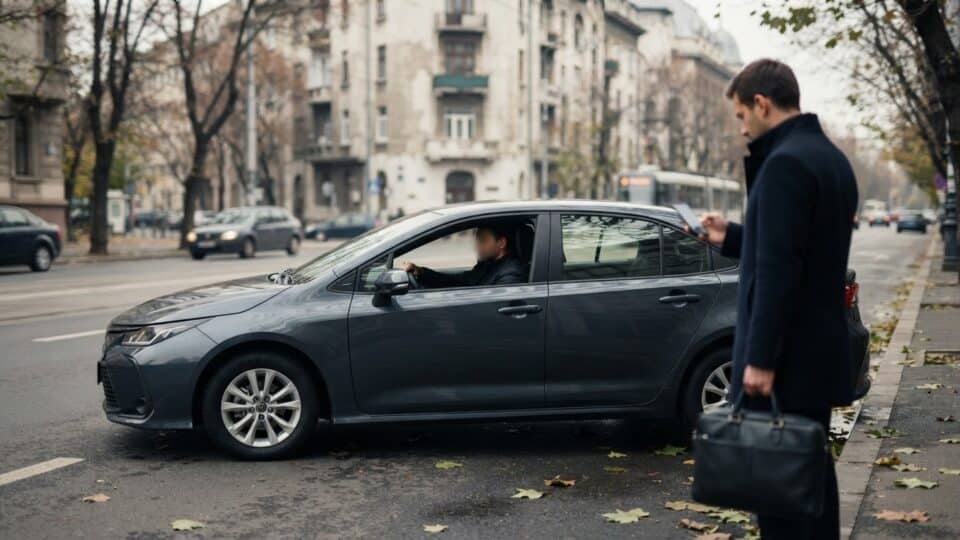
InfoBuz editorial analysis, documented on 28 November 2026. The approval status is based on information from the authority as reported by Profit.ro, while the fare and earnings examples are InfoBuz’s own simulations, not the results of test rides. The main image is an AI-generated illustration.


Discuția cititorilor
Ai o opinie sau o întrebare despre acest articol? Spune-ne ce crezi.
Fii primul care deschide discuția.
Te rugăm să păstrezi un limbaj civilizat și să discuți la subiect. Comentariile spam sunt filtrate automat.