
Updated: 22 November 2026 la 11:03. Articolul a fost revizuit pentru a reflecta informațiile disponibile la această dată.
The first funding session for Romania’s manufacturing industry has a budget of 759 million lei. The government has announced an extension of the first application session under its state-aid scheme for industrial investment. Here is who may apply, the investment threshold, co-financing requirements, risks and documents to check before submitting an application.
759 million lei for manufacturing: key conditions of the session
The 759 million lei manufacturing scheme is an instrument for large initial investments, not a small-grants programme. Projects must involve an investment of at least €10 million, and funding remains subject to assessment and state-aid rules.
A clear distinction is needed between total investment, eligible costs and the aid actually awarded. A €12 million project, for example, does not mean €12 million in state aid; the amount depends on the maximum applicable aid intensity and other criteria. A mature application must show how the portion not covered by the grant will be financed.
Companies should obtain evidence of eligibility, document the market for the intended products, and compare technology and energy options. Modern machinery does not automatically make a business competitive if it lacks qualified staff, supply contracts and stable customers.
See also InfoBuz’s analysis of renewable-energy investment and grid constraints, which are relevant to future industrial capacity.
What the government decided on 20 November 2026
On 20 November 2026, the government approved an extension of the first application session under the state-aid scheme for manufacturing investment, regulated by Government Decision No. 486/2026. The session opened on 15 October and had originally been due to close on 25 November. The revised timetable should be checked on the Ministry of Finance website; the source reviewed did not state an exact new deadline, so none is given here.
The first session has a budget of 759 million lei. Its stated aim is to create or expand Romanian production capacity for goods with a significant trade deficit, reduce import dependency and strengthen domestic supplier chains. The money is not a subsidy automatically available to every business.
Why the session was extended
The Ministry of Finance said that companies’ stated interest had not translated quickly enough into complete funding applications. Preparing the technical, economic and financial documentation for an initial investment of at least €10 million can take time, and companies must demonstrate the project’s feasibility, co-financing sources and eligibility.
According to information made public on 20 November, only four applications had been submitted by 13 November. That figure indicates the number of files lodged at that point, not the total number of potentially viable or approved projects. It would be incorrect to treat it as evidence of a complete lack of interest.
Who can apply
The programme is aimed at businesses developing manufacturing investments in Romania, including existing and newly established companies, small and medium-sized enterprises and large firms, subject to the scheme and the applicant guide. Having an industrial CAEN activity code—the Romanian business-classification code—or owning a factory does not in itself guarantee eligibility.
A central condition announced by the Ministry of Finance is an initial investment of at least €10 million. This threshold refers to the value of the investment; it does not mean every beneficiary receives a non-refundable €10 million. The aid amount depends on further rules, regional aid intensity, eligible costs and funds available under the scheme.
What types of investment may be included
Ministry of Finance communications mention projects to build new production capacity, purchase new technological equipment and acquire new intangible assets. This is a scheme for developing production, not a general programme to cover routine expenditure, bills or payrolls for all companies.
Each applicant must consult the list of eligible codes and sectors, rules on the incentive effect, investment location, eligible expenditure, obligations to maintain the investment and rules on cumulating aid, in line with the updated guide. It would not be prudent to promise funding for a particular installation before the application has been assessed.
Why the €10 million threshold changes the competition
Large projects require suitable land or industrial premises, utilities, permits, design work, equipment, staff, a sales plan and a means of financing costs not covered by aid. A company may have an economically sound project but still not be ready to apply.
Preparing the documentation before registration is therefore essential. Sales projections should rest on explicit assumptions, while costs should be based on credible technical estimates. In a state-aid programme, compliance with the sequence of steps and rules on when an investment may begin can be decisive.
How to apply and where to find the guide
According to the initial notice, applications and supporting documents are submitted online through the dedicated Big Project 486 application, made available by the Ministry of Finance during the session. Following the deadline changes, applicants should monitor official notices for the updated application period and any amended instructions.
In practical terms, applicants should check their legal and sectoral eligibility; define the investment and budget; obtain design data and quotes; calculate co-financing; prepare economic indicators; and upload the file in the required format. The official state-aid assistance form may be used for clarification.
What the scheme funds—and what should not be confused
759 million lei is the budget available for the first session, not the minimum value of an application or an amount guaranteed to each company. According to the Ministry of Finance, 5.313 billion lei is the budget for the multiannual programme, with funding agreements to be issued in 2026–2032 and payments potentially continuing until 2036. These sums have different timeframes and purposes.
There is also a difference between an “application submitted”, an “eligible application”, a “funding agreement issued” and “aid paid”. Data on the number of files cannot automatically be treated as data on investments actually completed or jobs created.
Potential impact on the economy and local supply chains
If competitive investments materialise, the effects could include higher demand for component suppliers, industrial construction, logistics, maintenance, vocational training and engineering services. Reducing imports of certain products could lessen trade vulnerability, but the real assessment depends on demand for the products made and on long-term competitiveness.
A new factory does not automatically generate high local added value if it imports almost all its components and does not establish relationships with Romanian suppliers. Qualitative indicators and transparency in project selection are therefore important.
What to check before applying
Applicants should follow the publication of the updated timetable, the final version of the amending decision, the applicant guide, annexes and any frequently asked questions. The 25 November date was the original deadline and should not be treated as the final deadline after the extension announcement.
Companies should not make irreversible contractual commitments solely on the basis of a press article. Legal and tax advisers, as well as the funding authority, need to be consulted for projects on this scale.
Frequently asked questions
Can I apply if I run a small company?
Yes. A company’s size does not automatically exclude it, but it must meet every condition, including the minimum initial-investment threshold of €10 million.
Do I automatically receive 759 million lei?
No. This is the session’s allocation for all selected projects.
What is the application deadline?
The original deadline was 25 November 2026. The government decided to extend the session, and the revised timetable must be checked on the Ministry of Finance website.
Can only machinery be funded?
The programme covers a broader range of eligible investment, including construction and certain intangible assets, but detailed conditions are set by the scheme and the updated guide.
Sources and transparency
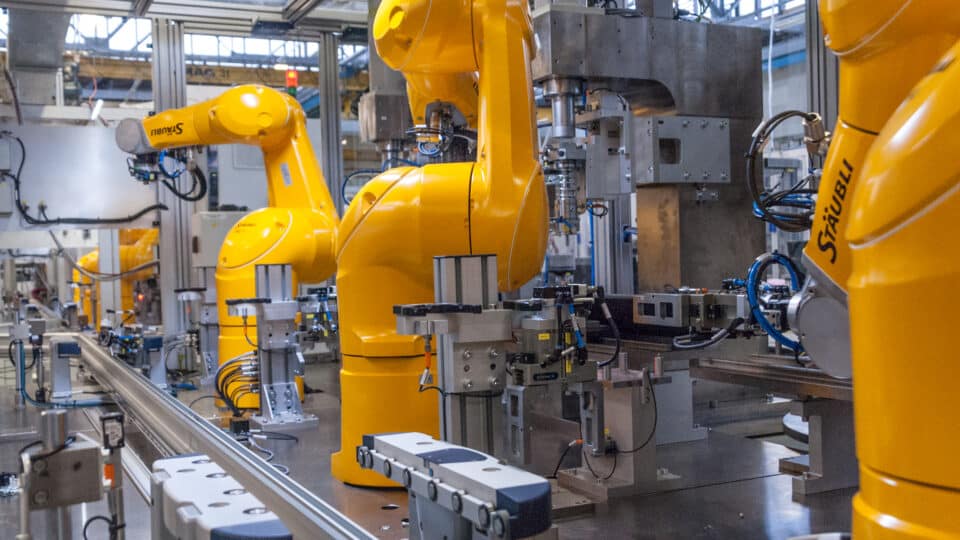
Sources: Romanian government press release of 20 November 2026; Ministry of Finance press release of 3 September 2026; Ministry of Finance — guides, timetables and the official application. Illustrative industry photograph: Clemenspool / Wikimedia Commons, public-domain CC0; it does not depict a beneficiary factory. Checked on 21 November 2026.
What the 759 million lei represents
It is the session allocation, not a sum automatically offered to every company. The investment threshold, eligible expenditure and aid intensity must be checked in the guide.
How to prepare a project
Technical documentation, co-financing sources, permits, quotations and evidence of commercial viability are important.
Risks for beneficiaries
A delivery delay or failure to meet targets can affect funding. A funding agreement should not be confused with final payment.
Sources
Ministry of Finance: https://mfinante.gov.ro/.
State aid and competition
Industrial funding is subject to state-aid rules and the conditions of the approved scheme. Maximum aid intensity may vary by region, company size and type of investment. A total announced allocation does not automatically indicate the cap for each project.
Beneficiaries must check cumulation with other aid, obligations to maintain the investment and eligibility conditions. An incorrect declaration can affect the award of funding or lead to its recovery.
How to build a realistic budget
The budget should separate equipment, works, services and ineligible costs. Post-completion operating costs, staff training and maintenance need to be assessed even if they are not funded. An investment may be formally eligible yet still difficult to sustain economically.
For every expense, quotations, technical justification, a procurement timetable and payment documents matter. Optimistic estimates without a contingency for delays increase project risk.
Example of co-financing
If a hypothetical project has eligible expenditure of 10 million lei and an aid intensity of 40%, support would be no more than 4 million lei and the beneficiary would cover the remaining 6 million lei of eligible expenditure. This is only a mathematical example, not a confirmed condition of the scheme examined.
Ineligible costs and any exchange-rate differences are added separately. Cash flow also matters to an investment decision: some programmes reimburse costs after they have been incurred.
How to check whether the call is open
The decisive documents are the applicant guide, the approval order, the timetable and any official clarifications. The article should be updated if the deadline changes. Repeating news of an extension without checking the precise application date is not sufficient.
Companies should consult the funding authority directly and seek advice from a state-aid specialist in complex cases.
759 million lei: assessing the opportunity
Funding may be attractive, but the decision should not be made on the basis of the non-refundable percentage alone. A company needs to estimate future sales, energy, staffing and maintenance costs, as well as the liquidity required before reimbursement. It is prudent to test a scenario involving delayed delivery or weaker-than-expected demand.
A complete assessment requires checking primary documents and the period to which the figures relate. For the public, the value of an analysis lies in context, methodology and the ability to reproduce its calculations—not in unsupported dramatic wording.
Why 759 million lei does not mean 759 million lei has been paid
The announced sum is the budget for the first session, not expenditure already made and not a guarantee that the full allocation will be contracted. Several filters stand between publication of the call and final payment: eligibility checks, project assessment, issuing the agreement, carrying out the investment and submitting supporting documents.
For meaningful public monitoring, the number of applications, value of proposed investments, aid requested, selected projects, agreements issued and actual payments should be published separately. Confusing these stages can create the false impression that investments have already been completed.
Financial model: large investment and co-financing
A strictly hypothetical example: a factory proposes an eligible investment of €12 million and the applicable aid intensity is 40%. The theoretical aid would be €4.8 million, while €7.2 million of eligible costs would remain uncovered by the grant. This is not a simulation of an actual approval: the percentage, cap and calculation base must be confirmed for each region and applicant.
In addition to co-financing, a company needs capital for VAT, ineligible costs, commissioning, inventories and wages during the launch period. If the grant is paid after costs are incurred, bridge financing may be needed. Its interest and fees should be included in the liquidity analysis.
Stress test before submission
A credible financial plan should include at least three scenarios: a baseline, lower commercial demand and higher implementation costs. In the adverse scenario, it could test, for example, a six-month delay in equipment installation and order volumes 15% below forecast. These percentages are working assumptions, not scheme parameters.
Managers need to answer whether the factory can meet its obligations even in the difficult scenario. Estimated long-term profitability does not replace the cash required during construction and the start-up of production.
The incentive effect: why the order of documents matters
Regional state-aid rules may make eligibility conditional on when an application is submitted and when work begins. Depending on the applicable legal framework, making firm commitments too early may call the incentive effect into question. Beneficiaries should therefore check the precise definition of the start of works in the guide and funding scheme.
Buying land, requesting a quotation and signing an irrevocable contract are not necessarily treated in the same way. No universal rule can be inferred from a news article; investments worth millions of euros require an analysis of official documents and the specific legal circumstances.
How to assess the economic benefit for Romania
A project can generate economic effects through jobs, orders for local suppliers, vocational training and lower imports. But the relevant measure is not merely the value of machinery purchased. What matters is the value added created in Romania, productivity, energy consumption and the ability to sell in competitive markets.
An investment may increase local production while remaining highly dependent on imported components. Effects on the trade balance should therefore be assessed across the entire supply chain, not only through the label on the final product.
Applicant document checklist
Before uploading an application, a company should compare its investment plan with the updated guide, eligible CAEN codes, requirements for financial statements, location, right to use the land, timetable, technical quotations and funding sources. The documents and forms actually required may vary according to the legal form of the applicant and the type of investment.
A two-step internal review is useful: the technical team confirms the need for each expense, while the finance and legal team checks eligibility and the risk of aid recovery. An error in financial annexes can delay assessment even where the project itself is sound.
Frequently asked questions about the extended session
Can SMEs apply? A smaller company is not automatically excluded, but the initial-investment threshold and all other conditions remain mandatory. Is the aid a loan? The scheme is state aid, but the beneficiary must finance the uncovered portion and comply with the conditions of the agreement. Can current expenditure be included? This should not be assumed; eligibility must be checked for each category in the guide.
What is the new deadline? After the extension announcement, the exact date must be verified in the Ministry of Finance’s official documents. Can work begin immediately? Not without checking rules on the incentive effect and the point at which the investment is deemed to begin.
Editorial methodology and update
The 759 million lei for the first session and 5.313 billion lei for the multiannual programme have different meanings. The €10 million threshold refers to the initial investment, not a guaranteed grant. The 40% aid-intensity examples and financial scenarios in this article are illustrative, not official funding offers.
For verification, consult the Ministry of Finance, the government press release of 20 November 2026 and the version in force of Government Decision No. 486/2026. The revised deadline and the version of the applicant guide should be reconfirmed before publication.



Discuția cititorilor
Ai o opinie sau o întrebare despre acest articol? Spune-ne ce crezi.
Fii primul care deschide discuția.
Te rugăm să păstrezi un limbaj civilizat și să discuți la subiect. Comentariile spam sunt filtrate automat.