
Updated: 22 November 2026 la 11:28. Articolul a fost revizuit pentru a reflecta informațiile disponibile la această dată.
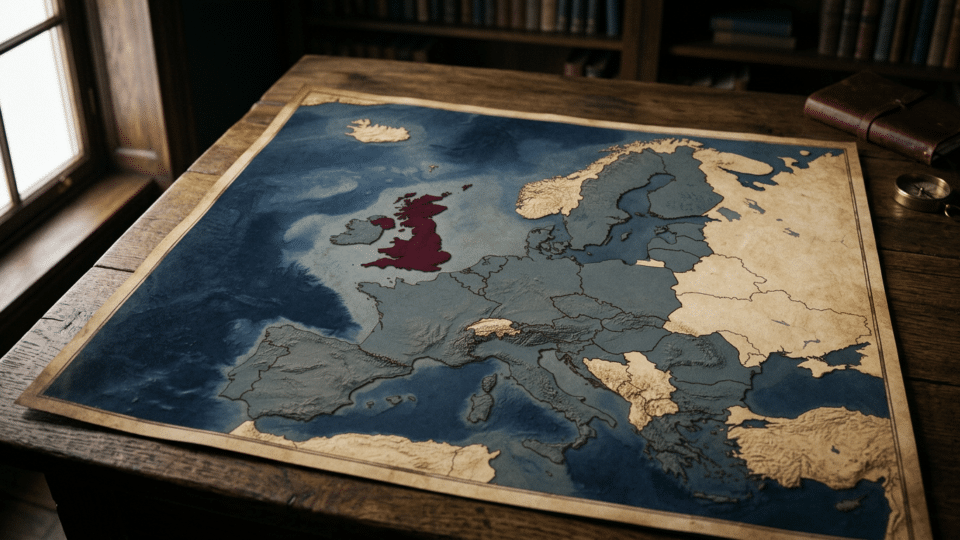
The EU and the UK after Brexit: the United Kingdom’s withdrawal from the European Union changed trade, border checks and the conditions for Romanians who travel, study or work there. This article explains the applicable rules, the agreements governing the relationship and what the new strategic cooperation entails, without confusing political announcements with rights that have already entered into force.
Trade after Brexit
The Trade and Cooperation Agreement in principle provides for zero tariffs on goods that meet the rules of origin, but customs formalities and standards can create costs. Trade in services is governed by separate rules.
Mobility for Romanians
Visits, study and work in the United Kingdom are subject to the applicable British conditions. The rights of people protected by the EU Settlement Scheme differ from those of new arrivals.
Northern Ireland
Special arrangements seek to protect the movement of goods and the peace agreements. Businesses must check the updated procedures.
Strategic cooperation
The EU and the United Kingdom can cooperate on security, energy and sanctions without this meaning a return to the single market.
What comes next
Sectoral agreements and implementation measures must be followed in official documents. Political statements are not equivalent to treaties that have entered into force.
Sources
European Commission; GOV.UK. Context analysis as of 21 November 2026.
Trade in practice
The trade agreement provides tariff preferences for products that comply with rules of origin. It does not automatically remove customs declarations, sanitary checks or VAT obligations. A company must distinguish the origin of goods from the country from which they are dispatched.
Citizens’ mobility
Romanians travelling to the United Kingdom must check entry rules, authorisations and the purpose of their stay. Visits, study and work are subject to different conditions. People with protected status under the EU Settlement Scheme have rights that do not automatically apply to new arrivals.
Services and qualifications
The rules for providing services and recognising qualifications vary by profession and jurisdiction. A cross-border contract may involve licensing, professional insurance and separate tax obligations.
Strategic cooperation
Partnerships on defence, sanctions and energy security do not amount to the United Kingdom rejoining the single market. Political statements must be distinguished from agreements that have been signed and entered into force.
Official sources
European Commission; UK Government; EU legislation.
A necessary legal timeline
The post-Brexit trade relationship is based on the Withdrawal Agreement and the Trade and Cooperation Agreement. Subsequent negotiations may add sectoral arrangements, but they do not automatically replace the existing documents. A summit declaration may have political value without immediately changing citizens’ rights.
For a news report about a meeting in November 2026, the date, participants, the text of the communiqué and any legal documents must be checked separately. Without these elements, no concrete decisions can be attributed to the meeting.
How the cost of an export changes
Tariff preferences depend on rules of origin. Goods dispatched from the United Kingdom may originate in another country, and customs treatment depends on documents proving their origin. VAT, formalities and checks may be added to transport costs.
A Romanian exporter must check the tariff code, delivery terms, responsibility for the declaration and the product’s technical rules. For services, licensing and taxation may differ from those applicable to goods.
Guide for travellers and students
A Romanian citizen must check entry conditions and any electronic authorisation on GOV.UK, depending on their circumstances. A visit does not automatically confer the right to work. The status of people protected by the EU Settlement Scheme may provide different rights.
Students must calculate tuition fees, accommodation, insurance and visa conditions. Recognition of diplomas or professional qualifications must be checked for the specific profession.
What this means for Romania
The EU–UK relationship matters for trade, the Romanian community, research and security. Closer cooperation may have positive effects, but their scale cannot be quantified without adopted measures and data on economic exchanges.
Sources: European Commission, GOV.UK and EUR-Lex.
The EU and the UK after Brexit: the two essential agreements
The Withdrawal Agreement set the terms of the United Kingdom’s departure from the EU and protected certain rights acquired beforehand. The Trade and Cooperation Agreement (TCA) governs an important part of the subsequent trade and institutional relationship. They are distinct instruments: one does not fully replace the other.
The United Kingdom is no longer part of the EU single market or customs union. As a result, the removal of certain customs tariffs does not mean that economic borders have disappeared. For businesses and travellers, the difference between the previous and current regimes is visible in documents, procedures and compliance costs.
Romanian exports: why zero tariffs do not mean zero costs
The TCA in principle allows preferential tariff treatment for goods that meet rules of origin. A product sent from Romania does not automatically qualify for preference merely because the sender is Romanian; its origin and supporting documentation must be checked. Depending on the goods, technical, sanitary or phytosanitary checks may apply.
An exporter should check the tariff code, product classification, proof of origin, Incoterms, VAT, responsibility for the customs declaration and UK compliance rules. An attractively priced offer can become uncompetitive if it does not include the cost of brokerage, delays and possible checks.
An example calculation for a commercial shipment
Assume a hypothetical shipment of goods worth €20,000, with transport costing €1,000 and formalities costing €250. The cost before other taxes would reach €21,250. If the goods do not meet the rules of origin, a customs tariff corresponding to the product code may also apply; it cannot be inferred from the invoice value.
The example is illustrative, not a customs-duty calculation for a specific product. VAT treatment, the tax base and the obligations of buyer or seller must be determined according to the transaction, contract and current legislation. For companies, checking before dispatch is cheaper than correcting an incorrect declaration.
Romanians visiting the United Kingdom: documents and ETA
For most short visits, Romanian citizens must use a valid passport and check whether they need an Electronic Travel Authorisation (ETA). Requirements may depend on immigration status and the travel category. An ETA is not a work visa and does not guarantee entry; the final decision rests with border control.
People with status under the EU Settlement Scheme may be subject to different rules. Before departure, checks should be made using the official GOV.UK visa tool and the ETA page, rather than through intermediary websites that may charge additional fees.
Working in the UK after Brexit
Free movement of workers between the EU and the United Kingdom no longer operates as it did before Brexit. For someone who does not benefit from protected residence status, work may require an appropriate visa, meeting the eligibility conditions and, for certain routes, sponsorship by an authorised employer.
A job offer does not automatically amount to the right to start work. Applicants must check the visa type, eligible salary and occupation, fees, language requirements and any insurance obligations. Rules can change; official documentation on the day of application takes precedence over general guidance.
University study and research
Students from Romania should not assume that they automatically benefit from the same fees and loans as before Brexit. The cost of a programme depends on the institution, residence status, level of study and admission conditions. Many programmes may require a student visa and proof of financial resources.
Scientific collaboration is a separate matter from student status. UK participation in European programmes such as Horizon Europe is based on specific agreements, which must be checked for each call. No announcement on strategic cooperation automatically means the removal of university fees for EU citizens.
Recognition of diplomas and regulated professions
A citizen wishing to practise a profession in the United Kingdom must check whether the occupation is regulated and which competent authority recognises the qualification. Doctors, nurses, architects and other professions may have different requirements concerning diplomas, language, experience and professional registration.
Academic recognition of a diploma and the legal right to practise a profession are not the same. Rules may also vary between England, Scotland, Wales and Northern Ireland. Direct verification with the relevant professional body is recommended before accepting a contract.
Northern Ireland and the Windsor Framework
Northern Ireland has special arrangements to avoid a hard physical border on the island of Ireland, in the context of the Good Friday Agreement. The Windsor Framework adapted the implementation of the Protocol on Ireland and Northern Ireland, particularly for the movement of certain goods between Great Britain and Northern Ireland.
Companies should not automatically treat a delivery to Belfast in the same way as one to London. The regime depends on the goods, route and the operator’s status. For agri-food products or goods subject to specific requirements, checking updated documentation is indispensable.
The new strategic relationship: security, energy and cooperation
The EU and the United Kingdom have common interests in European security, defence, sanctions, energy and combating crime. Political dialogue can produce sectoral partnerships, coordination mechanisms and information-sharing. These may matter even while the United Kingdom remains outside EU institutions and the single market.
It is nevertheless necessary to distinguish between joint statements, negotiations, signed agreements and rules that actually apply. A summit does not automatically change Romanians’ right to work or import tariffs. Each measure requires an official text and an entry-into-force date.
What the post-Brexit relationship means for Romania’s economy
For Romania, links with the United Kingdom include exports, services, transport, investment, education and the diaspora. Economic effects may differ by sector: logistics companies face formalities, exporters face rules of origin, and service providers face professional or tax requirements.
A serious assessment would compare trade volumes before and after the change in regime, adjusting for inflation, exchange rates and wider economic shocks. Not every change in trade can be attributed solely to Brexit. Official data can be followed through Eurostat, Romania’s National Institute of Statistics (INS) and UK authorities.
Checklist for travellers and businesses
For a trip, check the passport, whether an ETA or visa is required, the permitted period, medical insurance, entry conditions and baggage rules. For study, add tuition fees, accommodation, visa conditions and recognition of qualifications. For work, check the employer, immigration route and right to work.
For a company, establish the tariff code, origin of goods, VAT, transport documents, product standards and contractual responsibility for customs. It is useful to check all these elements before signing the contract, not only at the border.
Frequently asked questions after Brexit
Can Romanians enter the United Kingdom using only an identity card? Visitors ordinarily need a passport; there are exceptions for certain categories with protected status. Does an ETA permit work? No. Travel authorisation does not replace a work visa. Are customs duties charged on all EU products? No; tariff preferences depend on rules of origin.
Can the United Kingdom cooperate with the EU without rejoining it? Yes, through sectoral agreements. Is Northern Ireland subject to the same rules as the rest of the United Kingdom? Not in every situation, especially in trade in goods. Do free-movement rights return automatically? No; explicit legal changes would be required.
Official sources and methodology
The core documents are European Commission — relations with the United Kingdom, GOV.UK, EUR-Lex and Eurostat. For economic context, also read InfoBuz analyses of the European economy.
This article separates existing rules from possible future agreements. It does not attribute specific, undocumented measures to a 2026 summit and does not present universal tariffs, visas or university fees. Editorial update: 22 November 2026.


Discuția cititorilor
Ai o opinie sau o întrebare despre acest articol? Spune-ne ce crezi.
Fii primul care deschide discuția.
Te rugăm să păstrezi un limbaj civilizat și să discuți la subiect. Comentariile spam sunt filtrate automat.