
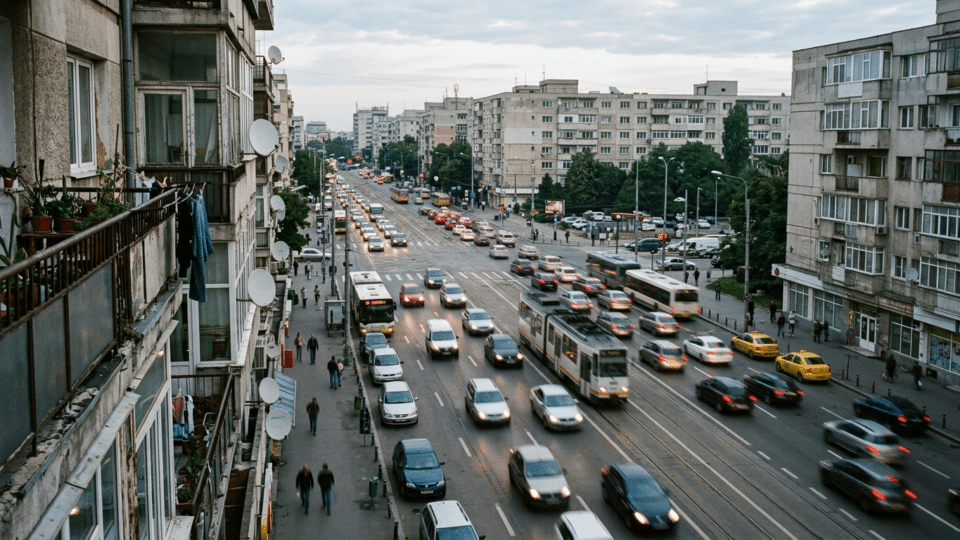
Traffic noise is not distributed equally, either geographically or across people’s lives. A child learning at a school beside a busy road, a person who has had a heart attack and lives in a traffic corridor, and an older person with fragmented sleep may face the same source of noise, but not the same risk or the same resources to avoid it.
An analysis published on 27 October 2026 by the European Environment Agency (EEA) does not provide a simple ranking of those “most affected”. Instead, it offers a more useful explanation: vulnerability arises when noise exposure overlaps with greater susceptibility to its effects and a reduced ability to avoid or mitigate it.
In brief: children and people with pre-existing cardiovascular disease are the groups for whom the EEA report sets out the clearest case for targeted protection. Older people may be more vulnerable largely because chronic illnesses and sleep disruption are more common, but there is not enough evidence to say that every older person has a biologically stronger reaction to the same exposure.
Traffic noise becomes a health issue when exposure overlaps with vulnerability
Road traffic is Europe’s most widespread source of transport noise. In its assessment for 2021, the EEA estimated that long-term exposure to transport noise was associated, across the European population, with around 73,000 premature deaths a year, 49,000 new cases of cardiovascular disease and 23,000 new cases of type 2 diabetes.
These are not diagnoses for individuals and cannot automatically be applied to Romania. They are epidemiological estimates: they indicate the probable burden in a population, calculated from exposure and risks observed in studies. The report Environmental noise in Europe 2025 shows why noise should not be reduced to a matter of discomfort.
Exposure can disrupt sleep, sustain stress responses and is associated with cardiovascular effects. The World Health Organization lists environmental noise among the environmental factors relevant to sleep disturbance, annoyance, hypertension and ischaemic heart disease. An association at population level does not mean, however, that noise is the only cause of an individual’s illness.
For more information on sleep, see Why you wake up tired after 8 hours of sleep: deep sleep, REM, sleep apnoea and circadian rhythm, which provides complementary detail on the subject.
People with cardiovascular disease have the most consistent evidence of greater susceptibility
In the EEA’s synthesis, the most consistent evidence of greater susceptibility concerns people with pre-existing cardiovascular disease, particularly coronary heart disease or a history of myocardial infarction. For them, persistent noise can add to an existing vulnerability; it is not a single explanation for a worsening medical condition, nor a tool for predicting individual outcomes.
A 2025 systematic review and meta-analysis combining 20 studies and more than 8.4 million participants found increases in the relative risk of ischaemic heart disease, myocardial infarction and stroke for every 10-decibel increase in road-traffic-noise exposure. The study, available through PubMed, was not conducted in Romania and does not make it possible to calculate a reader’s personal risk.
The practical message for public authorities is clearer than the message for individuals: hospitals, medical centres and neighbourhoods with many residents living with chronic illness merit priority assessment when traffic- and noise-reduction measures are being designed.
Children are exposed at a time when learning and sleep matter greatly
Children are not simply smaller adults. The EEA stresses that exposure during important developmental periods may be relevant to reading, memory and attention. Across Europe, the agency estimates that around 60,000 schools and 15,000 hospitals or medical centres are in areas exposed to transport-noise levels of at least 55 dB Lden.
Lden is an indicator combining daytime, evening and night-time noise, with penalties for the more sensitive periods. It describes modelled exposure, not the health outcome for every child in a building. It does not show whether windows are open, how well a classroom is insulated or how much time each pupil spends there.
A meta-analysis on noise and cognition found associations that warrant caution, including for certain reading-related outcomes. But its authors also noted important differences among noise types, ages, methods and the indicators measured. To say that any road traffic noise automatically causes cognitive declines would go beyond what the evidence demonstrates.
In local practice, a school beside a heavily trafficked road should be treated as a place where outdoor noise, the ability to ventilate rooms, window quality and traffic-calming options all need to be examined together. The issue is also linked to the problem previously explained by InfoBuz: the difficulty of ventilating some classrooms because of noise.
Older people: real vulnerability, but no automatic biological label
Some research has observed stronger associations between noise and certain outcomes, such as sleep disturbance, myocardial infarction or mortality, among older people. However, the EEA cautions that evidence for universally greater biological susceptibility in older people remains limited.
The distinction matters. A 75-year-old is not automatically more sensitive than every younger adult at the same level of exposure. But older age may more often coincide with cardiovascular disease, diabetes, medication use, reduced mobility, homes that are difficult to adapt or more fragile sleep. These overlaps can increase the real burden of noise.
It is more accurate than saying “older people are the most sensitive” to say that public measures should identify areas where exposure meets these vulnerabilities.
A noise map in Romania is not yet a disease map
Romania has European mapping and planning obligations. The European Environmental Noise Directive requires strategic maps and action plans, updated in five-year cycles, for certain urban agglomerations and road, rail or airport infrastructure. The directive, explained by the European Commission, does not set a single noise limit for every situation or prescribe one standard intervention.
Spatial data published by the Ministry of Environment can help locate exposed areas. They are useful for showing where traffic generates high noise levels, not for directly inferring how many children have concentration difficulties, how many older people sleep poorly or how many cardiovascular patients have experienced a complication.
In Bucharest, the city administration announced in July 2025 that it had approved an action plan based on strategic maps approved at the start of 2024. The plan mentions road traffic, trams and some industrial activities, and proposes measures involving infrastructure, public transport, traffic management and sound insulation in highly exposed areas.
This is an example of an administrative instrument, not evidence that exposure has already fallen or that health effects have been measured. The sources consulted do not contain a robust national epidemiological assessment identifying which groups in Romania bear the greatest medical burden of road traffic noise.
Why the share of people bothered by noise cannot be equated with traffic exposure
Eurostat reported that, in 2023, around 20% of Romania’s residents said they suffered from noise from neighbours or the street. The figure reflects a relevant everyday experience, but it does not measure road traffic alone and is not equivalent to a diagnosis, an acoustic value at a home’s façade or cardiovascular risk.
Two types of data need to be distinguished here. Strategic maps model exposure geographically; population surveys capture perceived annoyance. Both are useful, but they answer different questions. Serious public policy also requires data on people who live or study in exposed areas and, where confidentiality rules allow, properly analysed health indicators.
Which measures make sense for those most exposed
The EEA recommends combining measures that reduce noise for the whole population with targeted interventions. Lower speed limits, traffic-flow management, quieter public transport, appropriate road surfaces and urban design can reduce exposure at its source. Near schools, hospitals and centres for older people, prioritisation can be justified by the overlap between sensitive places and populations with fewer options for protection.
Better windows, insulated façades or reorganising rooms can help in certain buildings, but they do not replace measures addressing traffic. Nor are earplugs a public-health response to a permanently noisy street, especially for children, patients and people who need to remain alert to safety signals.
For someone experiencing persistent insomnia, worsening health or a significant effect on day-to-day life, noise may be a factor to discuss with a doctor alongside sleep, medication, stress and other exposures. It is not possible to establish an individual medical cause merely from the presence of traffic.
The right question for Romania is not yet “which group is most affected?” but where noise, sensitive places, chronic illness and a lack of alternatives overlap. Existing maps can be the start of an answer; a genuine map of the health burden requires more detailed local data and independent assessments.
Frequently asked questions
Can traffic noise cause a heart attack?
Epidemiological studies show associations between long-term exposure to road traffic noise and higher cardiovascular risks at population level. They cannot establish, however, that noise alone caused a particular person’s heart attack.
Why are children considered vulnerable to noise?
Children go through developmental periods in which sleep, attention and learning are important. The evidence supports concern about effects on some cognitive outcomes, but the size of those effects varies by noise source, duration of exposure and context.
Are older people automatically more sensitive to noise?
No. The EEA says the evidence for universally greater biological susceptibility among older people is limited. Vulnerability may increase because chronic illness is more common, sleep is more fragile, mobility is reduced or housing conditions are unsuitable.
What do strategic noise maps show?
They estimate noise exposure in particular areas and at buildings, using models and traffic or infrastructure data. They do not directly measure medical history, sleep quality or an individual’s risk of disease.
Sources consulted
- European Environment Agency — Transport noise, vulnerability and inequalities: who is most affected?
- European Environment Agency — Environmental noise in Europe 2025
- World Health Organization — Environmental noise
- PubMed — Road traffic noise and incident ischemic heart disease, myocardial infarction, and stroke: systematic review and meta-analysis
- European Commission — Environmental Noise Directive




Discuția cititorilor
Ai o opinie sau o întrebare despre acest articol? Spune-ne ce crezi.
Fii primul care deschide discuția.
Te rugăm să păstrezi un limbaj civilizat și să discuți la subiect. Comentariile spam sunt filtrate automat.