
A first documented human case of Shamonda virus has been reported in France, involving an older man with profound immunosuppression who developed severe encephalitis and died. It is an important public-health event, but it is not, in itself, evidence of an epidemic among people.
As of the reference date in the cited updates, 6 November 2026, the World Health Organization described a single confirmed human case worldwide. The source of infection has not been established, no additional human cases have been identified, and there is no evidence of person-to-person transmission.
In brief: the case calls for investigation and coordinated surveillance across human medicine, veterinary medicine and vector research. But based on the available data, there is no reason to change one’s diet, avoid dairy products, cancel travel or self-diagnose.
For more information about the WHO, see also Lead remains hidden in everyday objects, and the WHO calls for stricter measures, which provides complementary details on the subject.
Shamonda virus: one human case is not a population risk estimate
Shamonda virus is an orthobunyavirus in the Peribunyaviridae family, within the Simbu serogroup, and is related to Schmallenberg virus. It was first identified in cattle in Nigeria in 1965. In veterinary epidemiology, such viruses are primarily associated with transmission by blood-feeding midges of the genus Culicoides, rather than through ordinary contact between people.
For the patient in France, the WHO report says the virus was identified in cerebrospinal fluid through metagenomics and confirmed by RT-PCR. Post-mortem samples from the brain, liver and spleen had high viral loads, while investigations for other causes of encephalitis were negative.
These findings strongly support the existence of infection. They do not, however, allow three calculations that frequently—and incorrectly—appear in online discussion: how often people become infected, how many develop severe disease, and how contagious the virus is between people. Answering all of these questions would require more cases, targeted testing and exposure follow-up.
There is another important limitation. The patient was profoundly immunocompromised and had serious underlying illness. The ECDC’s European report stresses that the virus’s precise role in the patient’s clinical deterioration and death must be interpreted in that context. A death associated with a single case cannot be turned into a case-fatality rate.
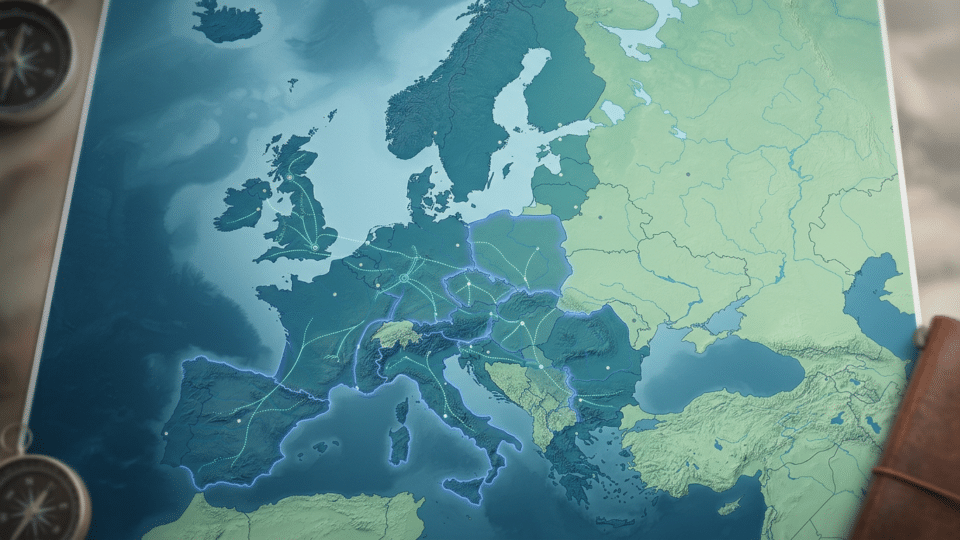
Two maps that should not be confused
There are, in fact, two distinct epidemiological pictures.
| What is being tracked | What the available data show | What cannot be inferred |
|---|---|---|
| Human disease | One confirmed case in France, in a profoundly immunocompromised person. | The frequency of infections, the risk to healthy people or person-to-person transmission. |
| Animal circulation | Virus detections in animals in several European countries, reported through veterinary systems. | A number of human cases or a human epidemic. |
The veterinary map is broader than the human one. The World Organisation for Animal Health, WOAH, notes that two variants, SHAV-EU1 and SHAV-EU2, have been described in Europe. Their precise role, distribution and any differences in pathogenicity are still under study.
In Germany and Switzerland, a study published in Emerging Infectious Diseases documented an acute syndrome in cattle involving fever, diarrhoea, lethargy and lower milk production. The teams confirmed the virus through laboratory methods including RT-PCR and sequencing. This is a separate line of evidence from the French clinical case: it shows that the virus circulates in animals, not that it automatically causes widespread human disease.
National reports have also emerged. The Czech veterinary authority confirmed the virus in an aborted bovine fetus in the Tábor district, while British authorities reported on 2 November 2026 that it had been detected on two farms: one in Powys, Wales, and one in Shropshire, England. At the time, the UK government announcement assessed the risk to the general population as very low and did not indicate any additional public control measures.
What is known about transmission—and what remains a hypothesis
The route of infection in the human case has not been established. The leading hypothesis is exposure to a blood-feeding midge of the genus Culicoides, given the known biology of related viruses and local animal circulation. Plausible does not mean proven: no complete link has been established between the patient, an infected vector and the time of infection.
The WHO report says other possible routes were also investigated. Foodborne transmission was considered unlikely, and checks involving transfusion-associated donors did not support blood-borne transmission. French authorities also stated that there are no scientific data documenting transmission through meat, milk or derived products.
That is not a promise that the risk will remain zero forever. It means that, at the time of the assessment, there was no basis for recommending that the public avoid foods of animal origin, farms or travel because of Shamonda virus.
Why immunosuppression changes how the case is interpreted
Profound immunosuppression means that the body’s defences against infection are severely reduced, usually because of illness or treatment. A person in this situation may have a different vulnerability from that of the general population: some infections can become more severe, last longer or be harder to clear.
That is why a severe case in an immunocompromised patient must be taken very seriously in clinical terms, but should not automatically be extrapolated to everyone. It is not yet known whether immunocompetent people can be infected, how often this might happen or what forms of illness they might develop. One case cannot answer those questions.
For anyone, the sudden onset of severe neurological signs—such as confusion, seizures, loss of consciousness or new weakness—requires urgent medical assessment. These symptoms have many possible causes and should not be interpreted at home as a specific sign of Shamonda infection.
What would change the risk assessment
Surveillance is not a vague formula. It has concrete aims: laboratory confirmation of suspected cases, comparison of viral sequences, investigation of exposures, vector searches, and correlation of veterinary and clinical data.
The public message should be reassessed if one or more of the following were to emerge:
- additional confirmed human cases with no epidemiological link between them;
- documented infections in people without severe immunosuppression;
- credible evidence of person-to-person transmission;
- confirmation of a route of transmission through food, blood or another common exposure;
- data showing that one of the European variants behaves differently in people.
Until then, the accurate wording is more nuanced than “there is no risk”: the risk to the general population cannot be reliably calculated from a single case, and authorities have not so far reported sustained human transmission.
What the situation means for Romania
It would not be correct to draw a conclusion about the presence or absence of the virus in Romania solely from a European map or from the lack of a public announcement at a particular time. International maps depend on testing, laboratory capacity and reporting; WOAH notes that reporting of Shamonda is voluntary, and the level of detail varies between countries.
The useful question for Romanian authorities is whether relevant veterinary samples can be monitored and diagnosed, including in situations such as abortions, congenital malformations or non-viable births in cattle. The Czech model shows how testing can be directed towards such signals without turning every veterinary problem into an alert for the public.
For readers in Romania, the proportionate advice remains straightforward: rely on communications from health and veterinary authorities, avoid sharing alleged “Shamonda symptoms” without a source, and do not change milk or meat consumption on the basis of alarmist posts. Farmers should discuss suspected illness in animals with their veterinarian, rather than infer it from reports of the human case in France.
This episode shows why the One Health approach matters: human, animal and environmental health need to be assessed together. But the same approach also requires discipline in interpretation. A new signal needs close monitoring before it is turned into a definite threat to the entire population.
Frequently asked questions
Is Shamonda virus transmitted from person to person?
At the time of the WHO and ECDC assessments cited in this article, no additional human cases had been identified and there was no evidence of person-to-person transmission. This does not prove that the risk is zero, but it does not support the idea of community spread.
Is it safe to consume milk and meat?
French authorities have stated that there are no scientific data documenting transmission of Shamonda virus through meat, milk or derived products. There is no official recommendation for the public to avoid these foods because of Shamonda.
Why does it matter that the patient was immunocompromised?
Profound immunosuppression can alter susceptibility to infection and its course. A severe case in a person with severely reduced immune defences therefore cannot directly be used to estimate the risk or severity of illness in the general population.
What are Culicoides midges?
They are small blood-feeding insects, distinct from ordinary mosquitoes, that can transmit certain viruses between animals. In the French human case, exposure to Culicoides is an investigated hypothesis, not a proven route of infection.
Sources consulted
- WHO — Shamonda virus in human – France
- ECDC — First detection of Shamonda virus in an immunocompromised patient, France, October 2026
- WOAH — Shamonda virus
- UK Government / APHA — Shamonda virus detected in livestock in Great Britain for the first time
- Emerging Infectious Diseases — Emergence of Shamonda Orthobunyavirus, Central Europe, 2026




Discuția cititorilor
Ai o opinie sau o întrebare despre acest articol? Spune-ne ce crezi.
Fii primul care deschide discuția.
Te rugăm să păstrezi un limbaj civilizat și să discuți la subiect. Comentariile spam sunt filtrate automat.