
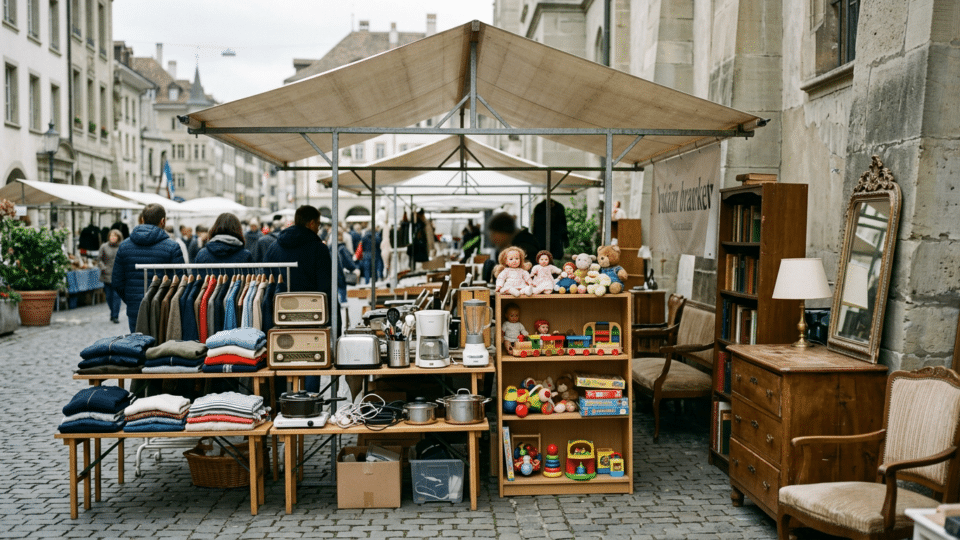
Romania has notified the European Commission of a draft ordinance on used, repaired and refurbished goods, including goods brought in from other countries. The text proposes checks, sanitisation, documentation, labelling and traceability for several categories of goods. Crucially for buyers and traders, the draft is not in itself evidence that a rule has already entered into force.
The European file is registered in the TRIS system as notification 2026/0220/RO. According to the timeline displayed on the platform, Romania notified the draft on 5 May 2026, the European Commission issued a detailed opinion on 6 August 2026, and Romanian authorities submitted a response on 6 November 2026. The TRIS procedure assesses whether national drafts are compatible with internal-market rules; it does not amount to adoption of the measure, publication in Romania’s Official Gazette or its effective application.
In brief: the authorities are seeking to prevent waste from being brought in under the label of second-hand goods. For buyers, the relevant change would be additional obligations for businesses. A traceability document or label would not, however, be an absolute guarantee that every item is safe, complete and suitable for the purpose for which it is sold.
Second-hand goods rules: the real issue is the status of the item
Public discussion of “second-hand imports” can be misleading when it reduces the question to an item’s age. A used refrigerator, a worn garment or a bicycle showing signs of use do not automatically become waste. But an item declared second-hand may raise questions under waste rules if it is non-functional, incomplete, seriously damaged, or cannot be used without work going beyond normal preparation for reuse.
Romania’s response to the European Commission explicitly argues that assessment must be based on the actual characteristics and condition of the goods, rather than solely on declarations in transport documents. According to the position submitted in the TRIS procedure, simply labelling an item “second-hand” is not enough to demonstrate that it can be reused.
This distinction has two consequences. The first concerns consumers: a used product must be usable safely, within the limits of normal wear and the information provided at sale. The second concerns the environment and costs: if a shipment in fact contains goods intended for disposal, the matter is no longer only commercial, but one of waste management.
What obligations would the notified draft introduce?
The notified version sets out requirements before goods are placed on the market, sold or distributed free of charge, including through donation. Its scope goes beyond the market for used clothes: it mentions textiles and footwear, toys, furniture, low-voltage electrical equipment, vehicles and tyres, as well as new products withdrawn from the market because they are dangerous.
Broadly, the draft seeks to require operators to demonstrate the origin and condition of goods and, where appropriate, to carry out cleaning, disinfection, disinfestation, inspection, labelling and document-retention procedures. The notified text also provides for a mechanism to register certain operators and shipments on a platform called SIATD RO-SH.
The notification alone does not establish that the platform is already operationally available to traders, that procedures have been finalised, or that every requirement will remain unchanged in the version that may eventually be adopted. Traders should therefore not treat the description in TRIS as final compliance guidance, and consumers should not assume the obligations are already operating in the market.
| Category of goods | What the draft seeks to address | What matters in practice for the buyer |
|---|---|---|
| Textiles and footwear | Hygiene, inspection and information requirements for goods. | The condition of the material, odour, stains, seams, zips and any information on sanitisation. |
| Toys | Checking products that can be reused and excluding dangerous ones. | Missing parts, edges, batteries, markings and age warnings. |
| Furniture | Checking the condition and reusability of the product. | Stability, fastenings, structural damage and the presence of mould or pests. |
| Electrical equipment | Inspection and documentation before goods are placed on the market. | Operation, the cable and plug, casing, instructions and the identity of the responsible seller. |
| Vehicles and tyres | Separating goods fit for use from those that cannot safely be put into service. | Vehicle documents, technical condition and, for tyres, wear, cracks and compatibility. |
The table summarises the direction of the draft; it does not set a final list of documents or tests for each item. Those details may depend on the final version of the measure and on any implementing rules.
The draft could cover the whole market, not only imports
The title and initial context of the initiative emphasised goods brought into Romania. In its response to the Commission’s observations, however, Romania argued that the rules would apply to second-hand products sold on the national market, regardless of whether they originate inside or outside the country.
This nuance changes what is at stake. A rule applying only at the border would primarily be a tool for controlling cross-border flows. A rule applying to all goods sold in Romania could also affect shops dealing in products collected or prepared for reuse domestically. The public materials reviewed do not make clear how occasional sales between private individuals, online platforms or non-commercial donations would be treated.
What rules already exist for the safety of used goods?
The draft does not start from zero. The European General Product Safety Regulation, Regulation (EU) 2023/988, also applies to used, repaired or refurbished products made available on the market, provided that they retain the status of products rather than waste. The regulation is explained by EUR-Lex and sets the general safety framework for consumer goods within its scope.
At the same time, the Waste Framework Directive defines waste by whether its holder discards it, intends to discard it, or is required to discard it. It also sets out the general conditions under which a material resulting from recovery may cease to be waste: there must be a specific use, a market or demand, compliance with technical and legal requirements, and no overall adverse effects on human health or the environment. The consolidated text is available on EUR-Lex.
In simple terms, the Romanian draft would add an administrative layer of checks and traceability. It does not remove the general obligation not to sell dangerous products, nor does it automatically turn every worn item into waste.
Why uniform requirements for textiles are contested
The aim of stopping non-compliant shipments is not being questioned simply because it would bring new obligations. Reservations expressed by recycling and reuse organisations concern proportionality above all: should every textile item be required to undergo the same procedures, or should it be assessed according to its actual condition?
In public submissions in the TRIS file, organisations including the Bureau of International Recycling (BIR), FEAD and representatives of the waste-management sector argued for a risk-based approach. Their positions should be read as industry views rather than legal decisions, but they raise a practical question: an identical requirement for every batch may also burden operators that already professionally sort goods suitable for reuse.
A technical report by the European Commission’s Joint Research Centre, published as a basis for possible European criteria, points towards a similar distinction. The document proposes assessment, sorting and separation into streams for direct reuse, reuse after intervention and recycling. It is not binding EU legislation and does not automatically amend Romania’s draft. It is, however, a relevant technical reference: washing, repair or other interventions may make sense when justified by the condition of a particular item, rather than as a uniform formality for every object.
What a buyer can check before purchasing
Until a possible final version is published, the most useful checks remain direct ones. They are particularly relevant for products that may affect safety, health or a household budget.
- Ask for a receipt, invoice or any proof from the professional seller. The document helps identify the operator if a problem arises.
- Check whether the product is complete and functional, and whether visible defects have been disclosed before payment.
- For electrical appliances, avoid goods with damaged insulation, signs of overheating, cracked casings or improvised cables.
- For toys, look for detached small parts, accessible batteries, cracks and missing relevant warnings.
- Consult the official alert platform for dangerous products if you have doubts about a model or product category.
- Keep messages and the original listing when buying online; they may help demonstrate how the product was described.
Cleaning or labelling may offer clues as to how a trader prepares its goods. They do not replace an inspection of the item itself. A garment may be sanitised and still damaged, while an appliance may look fine externally but have an electrical fault.
What remains to be watched before the rules can apply
The next relevant step is not a conclusion drawn from the TRIS notification, but the appearance of an adopted act, its final text and official publication. Only then will it be possible to establish precisely the application date, categories and exemptions, operators’ responsibilities, procedures for the traceability platform and any penalties.
For now, the draft signals the authorities’ intention to make it harder to confuse three different situations: a usable good, a non-compliant good and waste. For buyers, the most useful distinction remains straightforward: a second-hand product is no less a product because it has been used before, and the seller must be able to answer for the goods it places on the market.
Frequently asked questions
Are the new rules for second-hand goods already mandatory?
The TRIS notification does not show that the draft has been adopted, published in Romania’s Official Gazette and entered into force. A European notification is a procedural step, not the automatic application of a law.
Does the draft cover only second-hand clothes?
No. The notified version also mentions footwear, toys, furniture, low-voltage electrical equipment, vehicles and tyres, as well as certain new products withdrawn because they are dangerous.
Does a label or document guarantee that a second-hand product is safe?
No. Documents and labels can improve traceability and the information provided to buyers, but the product’s actual condition must still be checked. For higher-risk goods, such as electrical appliances or toys, physical integrity and operation also matter.
What is the difference between a second-hand product and waste?
Age is not the decisive criterion. A good can be second-hand if it can be reused. If it is non-functional, incomplete, damaged or intended for disposal, it may fall under waste rules, depending on its condition and the specific circumstances.
Sources consulted
- European Commission, TRIS – notification 2026/0220/RO
- European Commission, TRIS – Romania’s response to the Commission’s observations
- EUR-Lex – Regulation (EU) 2023/988 on general product safety
- EUR-Lex – Directive 2008/98/EC on waste, consolidated version
- Joint Research Centre – proposed European criteria for the reuse of textiles and footwear


Discuția cititorilor
Ai o opinie sau o întrebare despre acest articol? Spune-ne ce crezi.
Fii primul care deschide discuția.
Te rugăm să păstrezi un limbaj civilizat și să discuți la subiect. Comentariile spam sunt filtrate automat.