
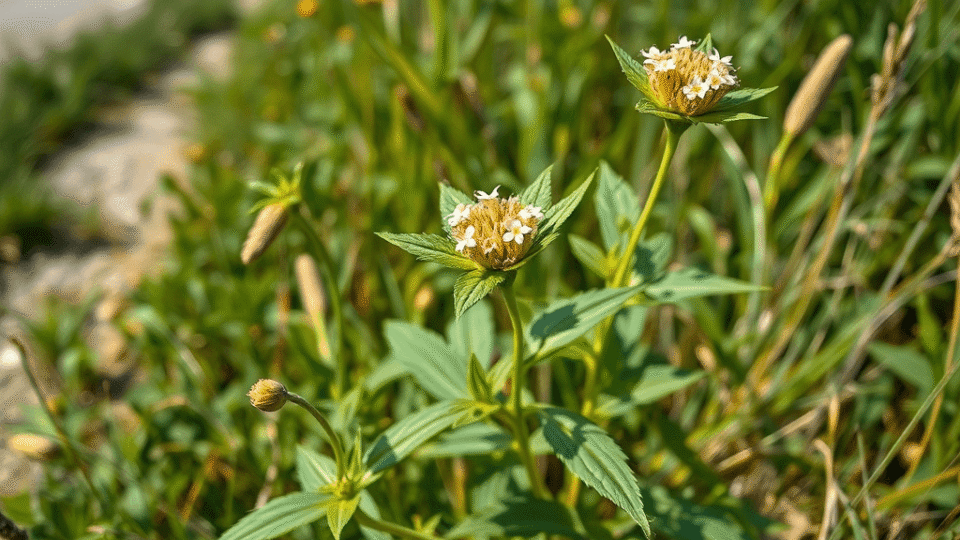
With the arrival of August, millions of Romanians begin to feel the effects of seasonal allergens. Among them, ragweed—one of the most invasive and dangerous plants—tops the list when it comes to unpleasant symptoms: repeated sneezing, an irritated nose, red eyes, fatigue and breathing difficulties. Nationwide, around 2.5 million Romanians are affected each year during this period.
Unfortunately, Romania does not have a national system for monitoring pollen levels, while local solutions, such as the app launched in Timișoara, risk becoming inaccessible because of a lack of funding.
2. What is ragweed and why does it cause so many allergies?
2.1 Plant description
Ambrosia artemisiifolia, known as ragweed, is a weed native to North America that has been reported in Romania since the early 20th century. It prefers sandy, infertile soils and sparse vegetation, appearing on fallow land, along railway lines and roadsides, at construction sites, in neglected gardens and on abandoned plots.
2.2 Pollination season
Ragweed pollinates intensely between August and September, and in some locations even until October–November. The peak allergy season occurs in August, when airborne pollen concentrations reach their highest levels.
2.3 Allergenic impact and public health
Ragweed pollen is highly allergenic: concentrations of fewer than 30 pollen grains/m³ can trigger reactions, while highly sensitive people may be affected by as few as 1–2 pollen grains/m³. Medically, more than 48% of patients with allergic rhinitis react to ragweed, and 73% of them also have allergic conjunctivitis; 22% may develop asthmatic symptoms.
In Romania, more than 5.35% of the active population (over 480,000 people) is allergic to ragweed pollen.
3. Other allergenic plants relevant in August
Besides ragweed, other grasses continue to pollinate and cause allergic symptoms in August:
- Timothy grass (Phleum pratense) – pollinates from June to September
- Couch grass (Agropyron spp.) – pollination season: May–July–August
- Kentucky bluegrass (Poa pratensis) – airborne until September
In addition, grasses such as timothy grass, lawn grasses, fescue and others trigger allergies throughout the summer, including in August.
For more information about August allergies, you can also read “AI Psychosis”: When Emotional Attachment to AI Takes Us Away from Reality, where you can find complementary details on this subject.
4. Common symptoms of pollen allergy (ragweed and grasses)
Symptoms range from mild to severe and may include:
- Allergic rhinitis: repeated sneezing, nasal congestion, watery discharge and nasal itching
- Allergic conjunctivitis: red eyes, tearing, itching and a gritty sensation in the eyes
- Allergic asthma: coughing, wheezing and breathing difficulties
- Other symptoms: headaches, fatigue and reduced quality of life
5. Diagnosis: how do you know whether you have a ragweed allergy?
- Medical history and clinical examination by an allergist.
- Skin tests (prick tests): an allergen is applied to the skin and checked for a characteristic swelling.
- Blood tests (specific IgE): identify IgE antibodies to ragweed and other allergens.
- Multiplex panel (for example, the ALEX test): analyses sensitisation to hundreds of allergens at the same time.
6. Treatment and symptom management
6.1 Avoiding exposure
- Monitor pollen levels, if you have access to local apps or specialised weather sources.
- Avoid outdoor activities during windy weather.
- Keep windows closed during periods of high pollen levels and use air conditioning with a HEPA filter.
- Wash and change your clothes as soon as you come indoors.
6.2 Medication
- Oral antihistamines: reduce itching, sneezing and runny nose.
- Nasal decongestants: for relief from nasal blockage.
- Nasal corticosteroids: effective at reducing long-term inflammation.
6.3 Immunotherapy (desensitisation)
- Gradual, controlled exposure to the allergen, through injections or a sublingual tablet, which can significantly improve symptoms over the long term.
6.4 Ragweed control
- Involve local authorities in enforcing Law 62/2018 on ragweed removal.
- In gardens, on abandoned land or along roadsides, remove the plant by its roots, ideally before it flowers.
7. The influence of climate change on allergies
Pollination seasons are influenced by temperature, precipitation and CO₂ concentrations. Climate change has extended the pollination season and increased the intensity of pollen production, particularly for weeds such as ragweed.
August is the peak of ragweed allergy season in Romania, affecting millions of people. The abundant pollen released by this invasive plant triggers severe symptoms, from rhinitis and conjunctivitis to asthma and exhaustion. Accurate diagnosis, avoiding exposure, medication and immunotherapy, combined with community efforts to control ragweed, can reduce the impact on health.




Discuția cititorilor
Ai o opinie sau o întrebare despre acest articol? Spune-ne ce crezi.
Fii primul care deschide discuția.
Te rugăm să păstrezi un limbaj civilizat și să discuți la subiect. Comentariile spam sunt filtrate automat.