
Updated: 27 October 2026 la 00:12. Articolul a fost revizuit pentru a reflecta informațiile disponibile la această dată.
Future jobs in Romania through 2035 cannot be reduced to “AI programmer” and “robotics engineer”. The real economy also needs electricians, maintenance technicians, energy specialists, healthcare professionals and people who train others. For young people choosing a degree and adults considering a career change, the useful question is not “which job will definitely pay the most?”, but which skills are transferable, what qualifications are required and where real employers are located.
This analysis draws on verifiable sources: Cedefop’s forecast for Romania through 2035, the World Economic Forum report on the future of work through 2030, Eurostat data for 2025, published in May 2026, OECD assessments of Romania, and EURES reporting on labour shortages. The 15 occupations below are a reasoned selection of career opportunities, not an official statistical ranking or a promise that every role will be available in every Romanian county.
InfoBuz analysis updated on 26 October 2026. Forecasts are not individual guarantees of employment, pay or career success. Employment in regulated professions depends on recognised education and authorisations.
What the data says: Romania’s labour market in 2035
The European Education and Training Monitor cites Cedefop 2025 estimates that demand for highly skilled workers in Romania could rise by 26% by 2035, while the share of low-skilled people in the workforce could fall to 8%, from 16% in 2021. The OECD stresses that more than two-thirds of job openings expected by 2035 will require at least medium-level qualifications, and around one-third high-level qualifications. This does not mean every new job will require a university degree, but it does mean formal training and lifelong learning are becoming more important. Source: European Commission – Romania, Education and Training Monitor 2025; OECD Economic Surveys: Romania 2026.
For more on artificial intelligence, see AI agents are starting to work autonomously: the next revolution is no longer the chatbot, but work delegated to machines, which offers complementary detail on the subject.
Globally, the World Economic Forum estimated that, between 2025 and 2030, 170 million roles will be created and 92 million eliminated or transformed, for a net increase of 78 million. These are global estimates from an employer survey, not projections for Romania. The report suggests that around 39% of skills used at work may change or become outdated over the period examined. Technology roles are among those expected to grow rapidly in percentage terms, but potential demand by volume also includes construction, delivery, agriculture, healthcare and education workers. WEF source.
Future jobs: 15 career directions with potential through 2035
| Field | Opportunities examined | Typical route in |
|---|---|---|
| Digital | Software and AI, data engineering, cybersecurity, cloud | IT education or a strong technical pathway, portfolio |
| Industry | Automation, robotics, mechatronics | Engineering, technical school, hands-on practice |
| Energy and buildings | Grids, electricians, HVAC, energy efficiency | Qualifications and, where applicable, authorisations |
| Healthcare and social services | Nursing, rehabilitation, care | Accredited education, practice and professional rules |
| Education | Technical trainers | Subject expertise and teaching skills |
| Logistics | Supply-chain analysis | Operations, data analysis and management tools |
1. Software and AI applications engineer
Field: IT and software. Key skills: programming, testing, AI integration. This specialist builds real applications rather than merely writing prompts for a chatbot. They integrate artificial-intelligence models into services, organise information and check that functions produce safe results. Potential demand is supported by digitalisation, though competition for entry-level roles can be intense. Strong programming, data structures, security, testing and an ability to work with business needs are required. A portfolio of verifiable projects is worth more than a long list of certificates unsupported by practical work.
2. Data engineer
Field: Data and analytics. Key skills: SQL, Python, databases, data quality. Before a company can use predictive analytics, someone must build the infrastructure through which data is collected, cleaned, stored and updated. The data engineer is the professional behind the invisible processes that make reports reliable. In Romania, the role may be found in banking, telecoms, e-commerce, manufacturing or services. A practical starting point includes relational databases, advanced SQL, Python and an understanding of ETL workflows; without an understanding of data protection and cloud costs, a system that performs well on paper can become useless.
3. Cybersecurity specialist
Field: Digital security. Key skills: networks, Linux, risk analysis, incident response. Cyberattacks affect hospitals, factories, public administration and shops, not just technology companies. Security specialists configure defences, detect unusual activity, test procedures and help organisations recover after incidents. There are different routes, including SOC operations, cloud security, auditing and identity management. This is not a profession of spectacular “hacking”, but one involving documentation, responsibility and continuous learning. Candidates are better served by starting with networks, systems and ethical labs than by promises of employment after a very short course.
4. Cloud, DevOps and platform engineering specialist
Field: IT infrastructure. Key skills: Linux, automation, containers, monitoring. Modern applications must run continuously, update without major disruption and recover from failures. Cloud and DevOps engineers build delivery, monitoring and infrastructure automation, including cost-control and security mechanisms. The role cuts across sectors, serving banks, industry, commerce or medical services. But a cloud-platform certification without experience in systems administration is not enough. The foundation is an understanding of networks, code, operating systems and recovery procedures.
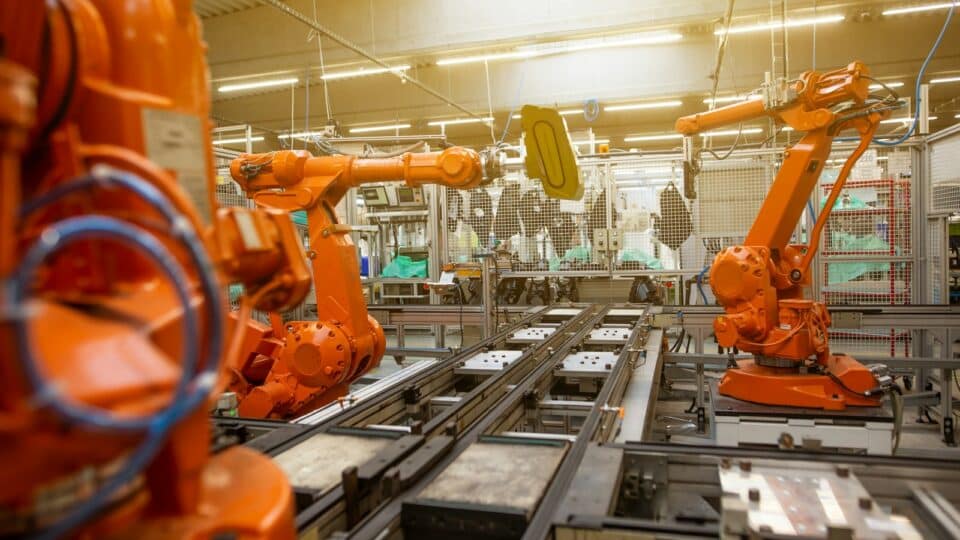
5. Industrial automation and robotics engineer
Field: Industry and factories. Key skills: PLCs, sensors, actuators, industrial safety. Factories need stable production lines, and a robot creates no value without integration, programming and maintenance. Automation engineers connect sensors, controllers, electrical and mechanical systems, and process logic, including functional-safety elements. Romania has automotive, food-processing and components industries where such skills may be relevant, although demand differs by region. Studies in electrical engineering, automation or mechatronics need to be supplemented by real projects and knowledge of industrial protocols.
6. Mechatronics technician for predictive maintenance
Field: Industrial maintenance. Key skills: diagnostics, electrical engineering, mechanics, sensors. Maintenance is gradually moving from post-failure intervention towards early monitoring of vibration, temperature and machine behaviour. The mechatronics technician checks motors, transducers, actuators and drive equipment, then interprets condition data. This is one of the technical paths that does not necessarily require university education for every position, but it does require recognised qualifications, practical experience and compliance with energy-isolation procedures. A good professional combines manual dexterity with the ability to read electrical diagrams and document faults.
7. Electrical-grid and energy-storage engineer
Field: Energy. Key skills: electrical engineering, protection systems, grids, batteries. The integration of renewable sources, electrification and energy storage may make electricity networks more complex. Engineers analyse load, protection systems, power quality, grid connections and stability. Jobs may emerge with network operators, designers, project developers or battery integrators. Knowing the technology of a photovoltaic panel is not enough; calculations, safety standards and professional responsibility are required. Demand growth depends on actual investment and the regulatory framework.
8. Qualified electrician for installations and modern systems
Field: Electrical installations. Key skills: installations, measurements, standards, safety. Modernising buildings, expanding networks and installing electrical equipment require workers with practical skills. Electricians may work on residential and industrial installations, electrical panels, charging stations and monitoring systems. It is a serious career path, not a simple route to “quick money”: it may require authorisation and specific training, while live electrical work entails severe risks. For pupils and adults changing careers, vocational school and supervised apprenticeships are genuine alternatives to university.
9. Air-conditioning, ventilation and heat-pump technician
Field: Buildings and HVAC. Key skills: refrigeration, electricity, controls, efficiency. Heat pumps, controlled ventilation and modern air conditioning do not work well simply because the equipment has been installed. System sizing, balancing, refrigerant, automation and maintenance all matter. HVAC technicians must be able to read parameters, identify leaks and comply with rules on refrigerants. Potential demand is linked to energy-efficiency renovations and the gradual replacement of inefficient equipment, but the volume of work varies with energy prices and funding programmes.
10. Energy auditor and efficient-renovation specialist
Field: Construction and energy. Key skills: building physics, thermal insulation, auditing. Reducing buildings’ energy use involves more than installing polystyrene insulation. Auditors and energy-efficiency specialists assess thermal bridges, losses, moisture, installations and renovation scenarios. The sector also includes practical trades: insulation installers, carpenters and building-envelope technicians. For regulated activities, qualifications and certifications are decisive; a generic “green jobs” course does not replace design or installation skills. Demand may grow through renovation programmes, but an exact number of jobs should not be promised.
11. Nurse with clinical and digital skills
Field: Healthcare. Key skills: accredited education, care, clinical documentation. Population ageing, more complex cases and hospital digitalisation may support the need for care professionals. Nurses combine clinical observation, administering treatment within their competencies, communication with patients and data recording. However, shortages are not uniform across Romania: some regions or specialities may have demand while others have many candidates. The profession requires accredited training, a right to practise and responsibility to the patient; artificial intelligence may assist documentation, but not replace the human relationship and clinical decision-making.
12. Physiotherapist and rehabilitation specialist
Field: Healthcare and rehabilitation. Key skills: anatomy, functional assessment, therapeutic exercise. Chronic illness, recovery after injuries and care for older people may drive interest in rehabilitation services. A physiotherapist does not merely provide “massage” or general training: they assess functioning and contribute to tailored recovery programmes, within the limits of the profession. Communication skills, measuring progress and collaboration with doctors are essential. The market depends on access to services, funding and geographical distribution, so accredited studies and supervised practice matter more than promises of fixed earnings.
13. Professional carer and care-services coordinator
Field: Social services. Key skills: assistance, safety, communication, organisation. As the population ages, home care and support services may become more important. This field includes practical daily-support roles as well as the coordination of teams, programmes and documentation. The work requires patience, empathy, hygiene and the ability to recognise signs that medical staff intervention is needed. It is an essential occupation, but can be poorly paid and physically demanding; a responsible ranking should explain working conditions as well as opportunities, rather than promise an easy career.
14. Technical trainer and vocational-school teacher
Field: Education and qualifications. Key skills: pedagogy, practical trade knowledge, assessment. Industrial and digital transitions cannot happen without people able to prepare others. Technical trainers and vocational-school teachers can support apprenticeships and reskilling for electricians, operators, technicians and service workers. They need to understand both practical work and teaching and assessment methodology. Shortages vary by subject and county; neither teaching nor adult training automatically guarantees a job. Teaching qualifications and practical experience matter.
15. Logistics and supply-chain analyst
Field: Transport and distribution. Key skills: planning, data, operations, risk. Supply chains must manage deadlines, inventories, routes, suppliers and disruptions. A logistics analyst uses data to anticipate demand, reduce shortages and optimise transport, without turning efficiency into a risk to driver safety. In Romania, the role can be found in retail, manufacturing, warehouses, ports or services. Useful tools include advanced Excel, SQL, inventory management and communication with teams. Automation will increase, but operational decisions and unforeseen situations remain relevant.
Why Romania needs more than IT degrees
Eurostat reported in May 2026 that 10.45 million ICT specialists were employed in the EU in 2025, around 5% of all people in employment. In Romania, the share was 2.7%, among the EU’s lowest, according to the series presented in the official release. This gap points to a structural disparity, but does not by itself show how many posts will open by 2035. Investment, productivity, migration, how companies are organised and graduates’ skills must also be considered. Source: Eurostat, 27 May 2026.
At the same time, EURES shows that Europe faces shortages in technical trades, healthcare and services, though their distribution differs sharply between countries. A report published in June 2026 notes that the same occupation may be in shortage in one country and oversupplied in another; qualifications, pay, language and mobility affect recruitment. That is why the advice to “go into nursing, it is definitely in demand everywhere” is too simplistic for a candidate in a Romanian county. EURES analysis, 2026.
Choosing a career: a practical five-question test
- Can I tolerate the day-to-day work? A security specialist often works with logs and policies, not only dramatic incidents; a nurse works with real patients and ongoing responsibility.
- What is the qualification route? Check diplomas, accreditations, placements and the right to practise, especially in healthcare, electrical work and auditing.
- Are there employers in my region? Count genuine vacancies over a sufficiently long period, and check the distinction between junior and senior openings.
- What can I demonstrate in practice? In IT this may be a portfolio; in technical trades, a work test, practice log and professional references.
- What alternatives do I have if demand changes? Look for skills that transfer between industries rather than dependence on one software tool.
Three training routes: pupil, student and adult changing careers
For secondary-school pupils: explore before specialising
In the first year, seek short experiences in different fields: a day observing work in an authorised workshop, a programming project, volunteering where permitted, a conversation with medical staff or a factory visit. Mathematics, Romanian-language expression, English, digital skills and work discipline are useful in multiple occupations. Choosing vocational school or university should be aligned with the real requirements of the profession; no path should be automatically dismissed.
For students: build evidence of competence, not only a degree
A university project can become evidence of how you think and solve problems. Document its objective, method, result and limitations. Look for placements in a company, laboratory or public institution; ask about applicable standards, safety procedures and who checks the work. In digital fields, it is worth understanding security and ethical issues, not just an application’s eye-catching interface.
For adults: change careers in stages, without impulsively giving up income
Start by taking stock of transferable skills: an automotive technician may already have knowledge of electricity and diagnostics, while a logistics specialist understands planning and risk management. Choose a target qualification, compare at least three real vacancies and speak to people working in the field. Test the training through an introductory course or supervised placement before paying for an expensive programme.
There are also public programmes. On 20 October 2026, ANOFM, Romania’s National Employment Agency, announced 84 vocational-training programmes for 1,398 eligible people in November, delivered through local agencies. Free courses depend on legal eligibility conditions and available places; they are not automatically offered to everyone. See the ANOFM announcement and your county agency.
AI will not eliminate every occupation, but it will change tasks within them
Repetitive tasks based on text, data entry and simple classification may be easier to automate than work requiring physical intervention, legal accountability or human care. Still, “hard to automate” does not mean “guaranteed rising pay”, and a “digital profession” is not immune to AI. An organisation may automate part of its activity and require the remaining employees to acquire new skills. For context, see InfoBuz’s analysis of jobs resistant to automation.
A valuable skill across several industries is checking AI-generated results: generated code may contain errors, an automated report may misinterpret figures, and a technical document should not be signed off without specialist review. In healthcare and industrial operations, mistakes can directly affect safety. The professional future rewards not only use of new tools, but also recognition of the points at which they cannot be used without supervision.
Frequently asked questions about future jobs in Romania
Which job will pay the most in 2035?
There is no verifiable answer. Pay depends on the city, industry, level of responsibility, experience, local demand and economic conditions. An income ranking from 2026 is not a reliable forecast for 2035.
Is university compulsory for a future-proof career?
Not for every role. Some technical roles have vocational-education, apprenticeship and accredited-qualification routes. Some occupations, particularly medical, engineering or regulated professions, do require specific education and rights to practise.
If AI writes code, is learning programming still worthwhile?
Yes, if you are interested in solving computing problems, but you also need to learn design, testing, security and how to verify generated code. Memorising syntax alone is becoming an insufficient strategy.
Where can I check real demand for workers?
Compare vacancies published by ANOFM, EURES and employers’ websites, as well as placement programmes. Look at job requirements, location and seniority, not just the total number of advertisements.
Conclusion: the best career investment is demonstrable competence
Future jobs in Romania will combine technology, industry, energy, care services and continuous training. The 15 directions presented here are supported by documented trends, but are not individual forecasts. People who choose a field based on genuine interests, learn the fundamentals, meet the profession’s qualification requirements and build practical evidence have a firmer foundation than those who follow headlines about “guaranteed jobs in 2035”. For a concrete reskilling programme, see InfoBuz’s guide to seven skills and a 90-day plan.
Sources
- European Commission – Education and Training Monitor 2025, Romania, including Cedefop forecasts.
- OECD Economic Survey Romania 2026 – skills and productivity.
- World Economic Forum, Future of Jobs Report 2025 – global trends through 2030.
- Eurostat, May 2026 – ICT specialists in the EU and Romania.
- European Labour Authority – EURES Report on Labour Shortages and Surpluses 2025.
- EURES – labour-market information for Romania.
- ANOFM, 20 October 2026 – vocational-training courses.


Discuția cititorilor
Ai o opinie sau o întrebare despre acest articol? Spune-ne ce crezi.
Fii primul care deschide discuția.
Te rugăm să păstrezi un limbaj civilizat și să discuți la subiect. Comentariile spam sunt filtrate automat.