
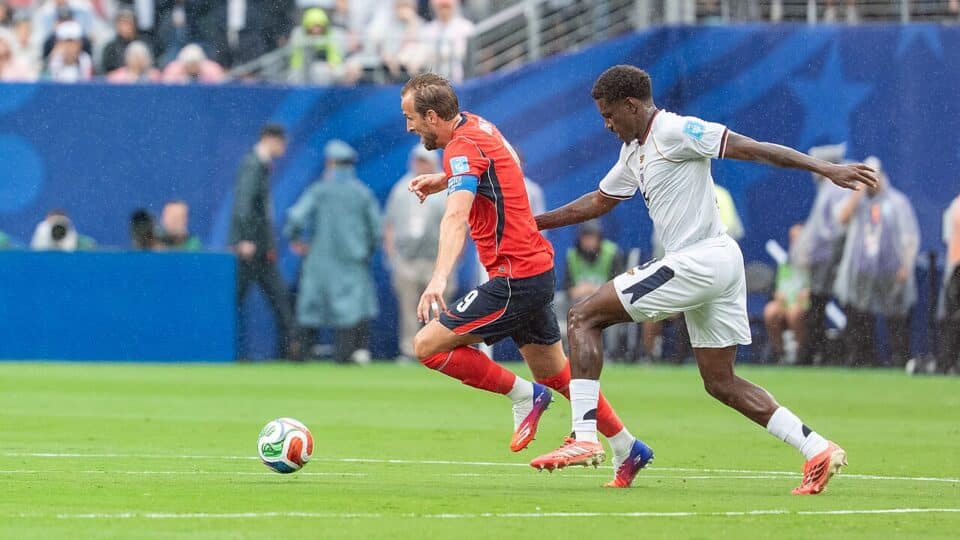
The 2026 Ballon d’Or winners were announced on Monday, 26 October, at a special ceremony held at the London Palladium. Harry Kane, Bayern Munich’s striker and England captain, received the men’s award ahead of Kylian Mbappé and Lamine Yamal. In women’s football, Alexia Putellas won the third Ballon d’Or of her career, following her victories in 2021 and 2022.
The 70th edition brought a geographic first, the first English winner in a quarter of a century, and a strong showing by Spanish football in the other categories. But the evening was about more than two headline awards: the rankings, results from the season and voting criteria help explain why this ceremony will stand as a reference point for 2026.
At a glance: Kane ended a landmark season with 73 goals for club and country; Putellas played a decisive role in Barcelona’s European triumph; and Lamine Yamal won the award for best young player but finished third in the overall ranking. Below are the official rankings, all 13 award recipients and an explanation of the voting system.
Harry Kane’s 2026 Ballon d’Or: first English winner in 25 years
At 33, Harry Kane turned one of the most productive seasons of his career into an individual award England had waited for since Michael Owen’s triumph in 2001. The Bayern striker became the fifth English player to win the men’s Ballon d’Or, after Stanley Matthews, Bobby Charlton, Kevin Keegan and Owen.
The central case for him was efficiency. According to the English Football Association, Kane scored 73 goals in 65 matches for Bayern Munich and England in the 2025/26 campaign: 61 for his club and 12 for the national team. Those figures do not, by themselves, capture every quality of a forward, but they are difficult to overlook in a ranking where individual impact is the leading official criterion.
In the Bundesliga, the Englishman scored 36 goals and finished as the league’s top scorer for a third consecutive season. Bayern won the German league title and the German Cup, while Kane scored 14 times in the Champions League, where the Bavarian side reached the semi-finals. At the 2026 World Cup, his six goals contributed to England’s third-place finish.
Why Kane’s season mattered so much
The numbers were matched by notable consistency across different competitions: league, cup, Champions League and international football. His success can therefore be read as a reward for a complete season, rather than simply a spectacular run of matches. When voters weighed individual output, collective results and sporting conduct, Kane’s profile offered a compelling combination of arguments.
The trophy also marks a milestone for German football: no player from a Bundesliga club had won the men’s Ballon d’Or since Matthias Sammer in 1996. In his speech in London, Kane thanked his teammates, coaches, supporters, family and former club Tottenham, describing his own journey as one built through persistence rather than an ascent without difficulties.
Men’s Ballon d’Or 2026 ranking: official top 10
Real Madrid’s Kylian Mbappé finished second, with Barcelona’s Lamine Yamal completing the podium. The top 10 includes both goalscorers and influential midfielders, suggesting that the vote was not confined to goal totals. The order below is that published by UEFA after the ceremony.
| Place | Player | Team in the official ranking |
|---|---|---|
| 1 | Harry Kane | Bayern Munich |
| 2 | Kylian Mbappé | Real Madrid |
| 3 | Lamine Yamal | Barcelona |
| 4 | Rodri | Manchester City / Barcelona |
| 5 | Lionel Messi | Inter Miami |
| 6 | Khvicha Kvaratskhelia | Paris Saint-Germain |
| 7 | Ousmane Dembélé | Paris Saint-Germain |
| 8 | Erling Haaland | Manchester City |
| 9 | Michael Olise | Bayern Munich |
| 10 | Fabián Ruiz | Paris Saint-Germain |
The gap between the top three should be viewed in the context of very different careers and roles. Mbappé competed as one of his generation’s most prolific forwards, while Yamal’s case rested on creativity and impact at an exceptionally young age. The vote nevertheless favoured Kane, whose combination of scoring volume, consistency and collective results proved decisive in the final ranking.
Alexia Putellas wins a third Ballon d’Or: back at the summit of women’s football
In the women’s game, the main award went to Alexia Putellas, who had also won in 2021 and 2022. The Spaniard finished ahead of Poland’s Ewa Pajor and Jamaica’s Khadija Shaw, returning to the top of the podium in a year shaped by the performances of Barcelona and the Spain national team.
Putellas was named the 2025/26 UEFA Women’s Champions League Player of the Season after a European campaign in which she contributed seven goals and seven assists as Barcelona won the trophy. Internationally, she had also stood out in Spain’s 2025 Women’s Nations League triumph, when she was chosen as the best player of the finals.
There is also an important detail for readers following her club career: Putellas left Barcelona to join London City Lionesses ahead of the 2026/27 season. The 2026 Ballon d’Or, however, chiefly rewards her performances in the preceding season, when she was still playing for the Catalan club. The move should not be confused with the team for which she delivered the European performances that were rewarded.
With three trophies, Putellas strengthened her place among the most important players of her generation. The 2025 winner, Aitana Bonmatí, was unable to defend her title. Barcelona, by contrast, dominated the women’s side of the ceremony through collective and individual awards given to the club, its staff and its players.
Women’s Ballon d’Or 2026 ranking: official top 10
| Place | Player | Club(s) |
|---|---|---|
| 1 | Alexia Putellas | Barcelona / London City Lionesses |
| 2 | Ewa Pajor | Barcelona |
| 3 | Khadija Shaw | Manchester City |
| 4 | Melchie Dumornay | OL Lyonnes |
| 5 | Patri Guijarro | Barcelona |
| 6 | Caroline Graham Hansen | Barcelona |
| 7 | Pernille Harder | Bayern Munich |
| 8 | Clàudia Pina | Barcelona |
| 9 | Alessia Russo | Arsenal |
| 10 | Temwa Chawinga | Kansas City Current |
The presence of several Barcelona players in the top 10 reflects the influence of collective performance, but does not mean team trophies alone decide the winner. The vote assesses individual contribution, club performance and sporting conduct separately, in that order.
All awards presented at the 2026 Ballon d’Or ceremony
The organisers named 13 winners in total, from the two Ballon d’Or awards to honours for young players, goalkeepers, coaches, teams and goalscorers. This is the official list from the London ceremony:
- Men’s Ballon d’Or: Harry Kane (Bayern Munich, England).
- Women’s Ballon d’Or: Alexia Putellas (Barcelona / London City Lionesses, Spain).
- Best young men’s player (Kopa Trophy): Lamine Yamal (Barcelona, Spain).
- Best young women’s player (Kopa Trophy): Vicky López (Barcelona, Spain).
- Best men’s goalkeeper (Yashin Trophy): Unai Simón (Athletic Club, Spain).
- Best women’s goalkeeper (Yashin Trophy): Cata Coll (Barcelona, Spain).
- Best men’s coach (Johan Cruyff Trophy): Luis de la Fuente (Spain national team).
- Best women’s coach (Johan Cruyff Trophy): Pere Romeu (Barcelona).
- Men’s Club of the Year: Paris Saint-Germain.
- Women’s Club of the Year: FC Barcelona.
- Men’s Striker of the Year (Gerd Müller Trophy): Harry Kane (Bayern Munich).
- Women’s Striker of the Year (Gerd Müller Trophy): Charlyn Corral (Pachuca, Mexico).
- Sócrates Award: Bukayo Saka, for his involvement in initiatives with social impact.
Lamine Yamal: a podium finish and the Kopa Trophy
Barcelona’s young star experienced an evening with two sides. On one hand, third place in the Ballon d’Or confirms him among the world’s most valuable players. On the other, missing out on the main prize illustrates how difficult it is to surpass a season such as Kane’s.
Yamal again won the award for the best young player, taking a third consecutive victory in the category. Barcelona’s Vicky López was likewise named the best young women’s player. These honours are separate from the main Ballon d’Or and recognise the quality of players at the start of their careers.
In Yamal’s case, the Kopa Trophy and his overall podium finish complement one another. One rewards his contribution within his age category; the other places him in direct competition with established forwards and midfielders. The debate will remain open in 2027, but the result of one edition does not guarantee the ranking in the next.
Barcelona and Spain dominate the other categories
Beyond Putellas’s trophy, the ceremony highlighted the influence of Spanish football. Lamine Yamal and Vicky López won the young-player awards, Unai Simón and Cata Coll prevailed in the goalkeeper categories, Luis de la Fuente was honoured for his work as Spain coach, and Pere Romeu received the award for the best coach in women’s football.
FC Barcelona were named Women’s Club of the Year in a season in which, according to UEFA, the team won four trophies under Pere Romeu. Paris Saint-Germain took the Men’s Club of the Year award, although the individual Ballon d’Or went to a Bayern Munich player. The distinction matters: the best team and the most highly rated footballer do not necessarily have to come from the same club.
In the same context, see Champions League, 13 October 2026: Club Brugge turned the night around at Inter, Bayern held to a 3-3 draw, which provides additional relevant information.
How the 2026 Ballon d’Or was decided: criteria, assessment period and points system
France Football’s regulations state that the assessment period ran from 3 August 2025 to 19 July 2026, including relevant international competitions such as the 2026 World Cup. Performances at the start of the new 2026/27 season should therefore not be confused with the sporting record assessed for this award.
The three official criteria, in order of importance, were:
- Individual performances: quality, decisiveness and impact on the game.
- Collective performances: team results and trophies won.
- Class and fair play: conduct and sporting behaviour.
For the men’s award, the jury consisted of one specialist journalist from each of the top 100 countries in the FIFA ranking. The top 50 countries were represented in the women’s vote. Each juror selected a top 10 from a final list of 30 players; the points for positions one to 10 were 15, 12, 10, 8, 7, 5, 4, 3, 2 and 1.
The winner is the player who accumulates the most points. In the event of a tie, the rules separate players according to the number of first-place votes. The final ranking is therefore not a direct vote by supporters, nor is it simply a list of the leading goalscorers. It is the outcome of journalists’ individual assessments under criteria set by the organisers.
For readers interested in how performance can be measured beyond goal totals, we have also explained what xG and PPDA are, and why advanced statistics change the way football is interpreted. These tools are not in themselves the official Ballon d’Or voting system, but they can support a more nuanced assessment of the game.
Why the ceremony took place in London rather than Paris
The 26 October edition was held at the London Palladium, the first time in the ceremony’s history. The choice marked 70 years since France Football established the award in 1956 and paid tribute to Stanley Matthews, the first Ballon d’Or winner. The decision added a symbolic dimension to Kane’s triumph: an Englishman won the trophy again in the country of its first recipient.
Thierry Henry and Kate Scott presented the ceremony. France Football remains responsible for the award and its voting system, while UEFA has been a partner in organising the ceremony since 2024. The main award should be distinguished from other international football prizes, which use their own selection methods.
What remains after the 2026 Ballon d’Or ceremony
For Bayern, Kane’s victory validates a project built around a striker who simultaneously delivered goals, trophies and decisive performances. For England, it ends a 25-year wait for the leading individual award in men’s football. And for women’s football, Alexia Putellas’s third trophy confirms that excellence can endure through club changes or difficult periods.
Just as importantly, the 2026 edition shows that individual success does not erase the variety of sporting stories. Yamal was recognised for his precocious ability, Mbappé remained in contention for first place, Barcelona dominated the women’s side, and PSG were recognised as the best men’s team. None of those achievements should be reduced to a popularity contest on social media.
Fans already following the European season can also consult the analysis of matchday three in the 2026/27 Champions League for current competitive context. For the Ballon d’Or, however, the reference remains the 2025/26 season and the international competitions included in the regulations.
Frequently asked questions about the 2026 Ballon d’Or
Who won the 2026 men’s Ballon d’Or?
Harry Kane, Bayern Munich striker and England captain, won the men’s award ahead of Kylian Mbappé and Lamine Yamal.
Who won the 2026 women’s Ballon d’Or?
Alexia Putellas won the third award of her career, following the 2021 and 2022 editions. Ewa Pajor finished second and Khadija Shaw third.
How many goals did Harry Kane score in the season under review?
The English Football Association recorded 73 goals in 65 matches for Bayern Munich and the England national team in the 2025/26 season.
What award did Lamine Yamal receive in 2026?
Lamine Yamal won the Kopa Trophy, the award for the best young footballer, and finished third in the main men’s ranking.
Where was the 26 October 2026 ceremony held?
At the London Palladium in London, for the first time in the history of the ceremony, as part of the award’s 70th anniversary.
Sources
Information on the winners, rankings and awards was checked against official communications from UEFA – men’s results and UEFA – women’s results. Kane’s international statistics are also reported by the English Football Association, while the methodology is set out in France Football’s official regulations for the 2026 edition.
Updated 27 October 2026. Analysis and editorial interpretations are those of the InfoBuz.ro editorial team.
Archive photo: Harry Kane in the England v Panama match on 27 June 2026, not at the London ceremony. Author: Bryan Berlin / WikiPortraits; licence CC BY-SA 4.0.


