
Imports of Russian gas into the EU continue through maritime terminals, even as the European Union prepares to phase them out. Between January and September 2026, European ports received 12.18 million tonnes of liquefied natural gas (LNG) from the Arctic Yamal project, according to an analysis published on 9 October by the German organisation Urgewald, based on Kpler data. The estimated value of those deliveries is €7.88 billion.
For further context, see Neptun Deep in 2027: who stands to gain from Black Sea gas and what the €4 billion investment means, which examines an issue directly related to this subject.
The figures cover a specific segment of the energy trade: the Yamal LNG project, rather than all Russian gas imported by the EU via pipelines or other facilities. Nor should the €7.88 billion figure be confused with direct tax revenue for Moscow or the producers’ net profit.
Russian gas in the EU: how much Yamal LNG arrived in 2026
Urgewald’s analysis identifies 167 seaborne shipments unloaded at European ports during the first nine months of the year. The 12.18 million-tonne volume was 9.5% higher than in the same period of 2025. The organisation says the EU took roughly 85% of the Yamal project’s recorded deliveries, although its global exports fell slightly, by 1.3%.
This combination matters: even if the project’s global market is not growing, Europe has become a relatively more important destination. The geographical proximity between Russia’s Arctic terminals and some European ports can allow relatively quick voyages by specialised vessels under certain conditions.
In the third quarter, the volume delivered to the EU was 2.21 million tonnes, down 13.6% on the comparable quarter of 2025. That quarterly decline, however, did not reverse the increase accumulated since the start of the year.
How the €7.88 billion estimate is calculated
Under the methodology set out by Urgewald, monthly LNG delivery volumes are converted into energy and multiplied by a European price benchmark, the TTF index. The organisation uses a conversion factor of 13.7 MWh per tonne and the reference price for the month of delivery.
The result is an estimate of gross value, useful for approximating the scale of the trade rather than adding up confidential commercial invoices. It does not include individual contractual terms, price discounts, transport costs, regasification fees or subsequent resales. The estimate also does not show how much money actually reached the Russian state budget.
The published 2026 breakdown indicates approximately €2.88 billion in the first quarter, €3.08 billion in the second quarter and €1.92 billion in the third quarter. Together, these figures produce the €7.88 billion estimate for January to September.
September: France was the main entry point
In September, the data analysed point to 792,440 tonnes of LNG from Yamal, with an estimated value of around €818 million. According to Urgewald, nearly three-quarters of the volume arriving at EU ports that month was unloaded in France.
The organisation identified no Yamal deliveries to Spain or Belgium’s Zeebrugge terminal in September. That does not mean those locations did not receive Russian gas in other months, nor that all volumes unloaded in France were consumed exclusively there. The European market includes subsequent transfers and trading.
In an interconnected market, the country where a vessel unloads and the country of final consumption are not always the same. A proper analysis requires shipping data to be read alongside the state of the networks, storage and sales contracts.
When restrictions on Russian LNG take effect
The European timetable explains why imports did not stop immediately when restrictive measures were adopted. According to Urgewald’s summary, restrictions applying to existing eligible short-term contracts have applied since 25 April 2026, while the ban on imports covered by eligible long-term contracts is due to take effect on 1 January 2027.
These two stages should not be conflated. Before the 2027 deadline, some deliveries continue under transition periods provided for in the regulations. The presence of imports in 2026 therefore does not in itself demonstrate a breach of the law. The nature of the contract, the commercial route and the legal classification of each transaction all matter.
Why Arctic ships matter as much as the gas
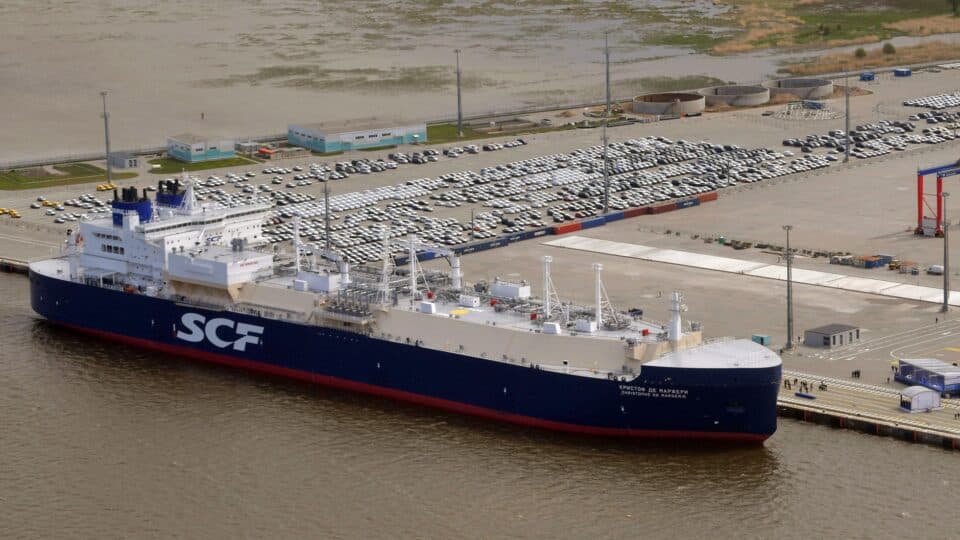
Yamal operates in difficult climatic conditions and relies on vessels designed for navigation in icy waters, including Arc7-class carriers. Without the capacity to load, carry and unload LNG, production from the region cannot reach overseas buyers.
This is why the sanctions debate concerns not only the purchase of gas, but also insurance, financing, port access and services provided to the fleet. Urgewald argues in its document that restricting those services would have a more direct effect on Arctic trade. That is the organisation’s position, not an independently verified conclusion about the outcome of future sanctions.
What the figures mean for Romania and consumers
The Yamal statistics do not allow for a calculation of a direct effect on Romanian household bills. Local prices depend on suppliers’ contracts, domestic production, network costs, storage, regional market conditions and rules applying to consumers. There is no simple link between the estimated €7.88 billion at EU level and the tariff paid by a Romanian customer.
The signal to watch in the coming months is how volumes develop before 1 January 2027, alongside sanctions policy and the availability of alternative supply sources. It will be equally important to see whether lower imports from Russia translate into a genuine reduction in dependence, or merely a reorganisation of routes and suppliers.
For the distinction between import flows and domestic production, see InfoBuz’s section with LIVE data on Romania’s energy system. Electricity indicators should not be confused with LNG volumes, but they provide context on how energy markets operate.
Sources and methodology
- Urgewald — analysis of Yamal imports, 9 October 2026, based on Kpler data.
- Euronews — overview of the data and timetable for phasing out imports.
Photo: kremlin.ru website team / Wikimedia Commons, CC BY-SA. The Arctic LNG carrier Christophe de Margerie, archive photograph; it does not document a September 2026 delivery.
Information verified by InfoBuz on 9 October 2026. The euro figures are estimates by a non-governmental organisation and do not represent audited contractual payments.


Discuția cititorilor
Ai o opinie sau o întrebare despre acest articol? Spune-ne ce crezi.
Fii primul care deschide discuția.
Te rugăm să păstrezi un limbaj civilizat și să discuți la subiect. Comentariile spam sunt filtrate automat.