
ANRE’s traffic-light system will add a new criterion for choosing an electricity or gas supplier: how it resolves customer complaints. Rather than seeing tariffs alone, consumers will be able to consult an indicator ranging from red to green. The regulation was approved in October 2026 but takes effect on 1 January 2027; the colours do not currently constitute an already published ranking of companies.
The change comes in a market where the same price offer can mask very different experiences: a disputed bill, an unanswered complaint, or a problem resolved quickly. Romania’s National Energy Regulatory Authority (ANRE) wants to make this part of the commercial relationship measurable and visible.
What is ANRE’s traffic-light system and how will it work?
The mechanism is set out in ANRE Order No. 61/2026, which approves the framework procedure for handling complaints from final customers of electricity and natural gas. The colours are based on the Complaint Management Index (IGP), calculated for each supplier.
For more information about ANRE, see ANRE Order 9/2026: the new rule that could change locally produced energy in Romania, which provides complementary details on the subject.
According to ANRE’s official statement of 8 October, the assessment takes into account complaints submitted to the authority, substantiated complaints sent directly to the supplier, and substantiated cases that remain unresolved within the legal deadline. The indicators are adjusted for the company’s number of customers, to avoid simplistic comparisons between a small supplier and one with millions of contracts.
The IGP is determined quarterly. The colour should therefore not be read as a permanent label: a company’s performance can change according to the data reported for the period assessed.
What the six colours mean for energy suppliers
The new classification has six levels, rather than the three colours of a conventional traffic light:
- Red: IGP below 50, a very poor result.
- Light red: IGP between 50 and 60, a poor result.
- Yellow: IGP between 60 and 70, an average result.
- Light yellow: IGP between 70 and 80, a satisfactory result.
- Light green: IGP between 80 and 90, a good result.
- Green: IGP above 90, a very good result, according to ANRE’s presentation.
The colour reflects an assessment of complaint handling, not whether energy is cheaper, “greener”, or whether supply will be uninterrupted. A supplier may offer a competitive tariff while receiving a modest customer-relations result; conversely, better service does not automatically guarantee the lowest bill.
When the new indicator will appear in ANRE comparison tools
Order No. 61/2026 was published in Official Gazette No. 849 of 9 October 2026 and enters into force on 1 January 2027. This distinction is important: announcing the procedure in 2026 does not mean that all companies have already received an official colour.
ANRE intends to display the classification in its free standard-offer comparison tools, for both electricity and natural gas. Until those comparison tools are adapted, IGP values are to be published on the authority’s website.
In practice, consumers will be able to view the financial offer alongside an indication of how problems are managed. Contract terms will still matter, including how long the price applies, any subscription charges, payment deadlines, and the terms for amending or terminating the contract.
How customer complaints will be assessed
The procedure is intended to standardise the receipt, registration and resolution of complaints. For consumers, the main change is that substantiated complaints and complaints left unresolved by the deadline will affect a public indicator. The assessment is not determined simply by the raw number of messages sent.
For that reason, a complaint should include contract details, the bill number, an exact description of the problem, the period concerned and relevant documents. It is worth retaining confirmation of registration and any responses received. If the matter is not resolved through the supplier’s procedure, the customer may turn to ANRE’s petition mechanisms, under the applicable rules.
ANRE president George Niculescu described the initiative as an exercise in transparency rather than a sanction. For the public, the traffic light’s practical value will depend on the clarity of the methodology, regular updates to the data and how easily it can be found.
What to check before changing energy supplier in Romania
A careful consumer should first compare the final price and every component of the bill, then consider the complaints indicator once it becomes available. An offer that looks attractive at first glance says nothing about the time needed to correct a bill or clarify a meter reading.
It is also important to distinguish between changing supplier and changing the network distribution operator. The supplier issues the contract and commercial bill, while the distribution operator manages the local network; the supplier traffic-light system should not be confused with a technical score for infrastructure. For further information on energy production and consumption, InfoBuz also follows real-time data from Romania’s energy system.
Frequently asked questions about ANRE’s traffic-light system
Will all companies appear in the ranking?
The regulation covers electricity and natural-gas suppliers. The practical display method and the first results will need to be followed in ANRE communications in 2027.
Will a red-rated supplier be fined automatically?
No. ANRE presents the colour as an information tool. Any penalties are a separate matter, subject to the applicable regulations.
When can I use the colours when choosing an offer?
After the procedure enters into force and the corresponding values are published. On 9 October 2026, the mechanism had been approved but did not yet constitute an operational ranking of suppliers.
Sources and documents consulted
- ANRE — statement on the introduction of the “traffic-light system”, 8 October 2026.
- ANRE Order No. 61/2026 — publication in the Official Gazette and entry into force.
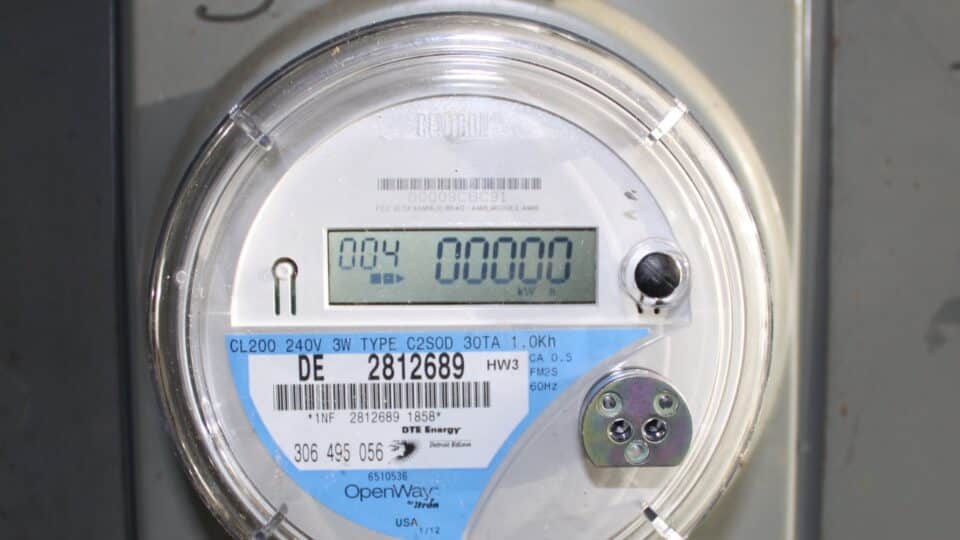
Photo: Dwight Burdette / Wikimedia Commons, CC BY. Illustrative photograph of an electricity meter, unrelated to a Romanian supplier.
InfoBuz editorial check: 9 October 2026. This article explains a future regulation and will need to be updated when the first IGP values are published.


Discuția cititorilor
Ai o opinie sau o întrebare despre acest articol? Spune-ne ce crezi.
Fii primul care deschide discuția.
Te rugăm să păstrezi un limbaj civilizat și să discuți la subiect. Comentariile spam sunt filtrate automat.