
Neptun Deep is approaching its decisive phase: OMV Petrom and Romgaz estimate that the first natural gas will enter Romania’s National Transmission System in the first half of 2027. According to the official update of 28 September 2026, production is expected to increase gradually to a stable level of around 8 billion cubic metres a year, which could be reached by the end of the third quarter of 2027. The timetable is the developers’ estimate, not output that has already been achieved.
The Black Sea project has a development budget of about €4 billion, estimated recoverable volumes of 100 billion cubic metres and two licence holders with equal stakes. But the headline figures obscure the questions that matter to the public: who will sell the gas, how much will actually reach Romania’s state budget, who will win contracts, and whether consumers’ bills will fall.
Neptun Deep in 2026: platform installed and seven wells completed
On 28 September, the companies announced the completion of seven of the ten development wells, the installation of the Neptun Alpha platform, and progress on the offshore pipeline to shore. In July, the operator confirmed that the platform had been installed with the help of the Saipem 7000 crane vessel. The structure weighs more than 16,500 tonnes and has a total height of about 225 metres; it was installed in water roughly 120 metres deep.
These milestones do not mean that the facility is already ready to produce. Work is still needed on the remaining wells, the connection of subsea systems, equipment integration, leak testing, and testing of gas metering and transportation. First delivery depends on the entire system working together, rather than simply on the platform standing above the sea.

Where the fields are and how gas will reach Tuzla
The licence area is about 160 kilometres off Romania’s coast and covers approximately 7,500 sq km, in water depths ranging from 100 to 1,000 metres. Production is focused on the Domino and Pelican South fields. The technical plan includes ten wells, three subsea production systems, pipelines and control cables, an offshore platform, a pipeline to Tuzla, and a metering station.
Gas extracted from the wells is collected, transported and conditioned before entering the National Transmission System. This route illustrates why an offshore project depends on both maritime and onshore infrastructure. A problem with the connection or commissioning tests could alter the schedule even if the underground reserves remain unchanged.
Who owns the €4 billion project
OMV Petrom and Romgaz each hold a 50% stake in Neptun Deep. OMV Petrom is the project operator and coordinates the technical work; Romgaz participates through Romgaz Black Sea Limited as a non-operating licence holder. The investment is funded in line with the stakes and contractual arrangements. It would not be accurate to describe the entire €4 billion budget as a direct expense from the state budget.
Romgaz is a company in which the Romanian state is the majority shareholder. OMV Petrom has a mixed shareholder structure and its shares are publicly traded. The state may benefit through several channels: taxes, royalties and other statutory contributions, as well as dividends arising from its stakes in companies. Gross revenue, net profit, dividends and tax payments are not the same measure.
OMV Petrom has said that each licence holder will market the gas corresponding to its own stake separately. The documents reviewed therefore contain no commitment to sell the full volume at a single price to Romanian households. Contracts, commercial destinations and prices will need to be tracked through future disclosures, where they can be made public.
What are 100 billion cubic metres of gas worth?
100 billion cubic metres is an estimate of recoverable volumes over the life of the fields, not an annual quantity. Multiplying the full volume by a one-day exchange price would create a striking but misleading figure: prices change continuously, while production entails investment, operating costs, transport, taxes and eventual decommissioning costs.
Plateau production of around 8 billion cubic metres a year is anticipated for a period of nearly ten years. The arithmetic calculation of 8 × 10 yields 80 billion cubic metres, but this does not amount to a guaranteed production schedule. Fields do not operate like a tank from which an absolutely constant volume can be drawn regardless of changes in pressure, wells and equipment.
On its project page, OMV Petrom cites estimated contributions to the state budget of around €20 billion over the life of the operation. This is a developer projection, not revenue already received, nor an independently verified amount without knowledge of the underlying economic assumptions. Turning the estimate into an actual balance sheet would require tracking payments recorded each year.
Will Romanians pay lower gas bills?
Additional domestic production may reduce the need for imports and improve security of supply in a crisis. However, the final price paid by a household also depends on network costs, taxes, conditions in the regional market, commercial contracts and consumer-protection rules. The project does not come with an announced fixed price for household customers.
Nor does more gas produced in Romania automatically mean that all of it will remain in the country. The licence holders may market their shares separately, while European transmission systems and interconnected markets make it possible for commercial destinations to change. Assessing the real effects requires comparing volumes entering Romania’s network with consumption, imports, exports and price trends.
For additional context, see Romania ranks third in the EU for risk of poverty: what Eurostat’s 27.4% figure means and who is most affected, which examines an aspect directly connected to this subject.
For context, InfoBuz separately publishes data on Romania’s energy system. Electricity data are not equivalent to gas production and cannot be used to calculate an individual customer’s bill directly.
What the project means for Dobruja and Constanța County
The transmission link to Tuzla and the offshore operations bring Romania’s Dobruja region into focus. Offshore projects require port services, marine transport, engineering, logistics, maintenance, quality control, inspections, welding, assembly and safety checks. Some work is performed by international contractors; other work may involve local suppliers and employees.
Temporary construction jobs should not, however, be confused with permanent positions during operations. A modern automated facility can achieve high production with fewer permanent employees than the installation site requires. For a credible local assessment, companies and authorities should publish data on the value of contracts awarded in Romania, local employees and taxes actually collected.
Operational risks and environmental questions
The period between equipment installation and the start of production includes highly complex operations: offshore lifts, pipeline testing, subsea equipment integration and checks of automated controls. Weather conditions, system integrity and rules governing simultaneous operations can affect the pace of work. Any delay should be explained through technical documents and announcements, rather than speculation.
The operator estimates direct operational emissions of about 2.2 kg of CO₂ per barrel of oil equivalent at plateau production. This measure describes one part of the operation, not the full climate impact of the gas. Natural gas remains a fossil fuel, and its combustion generates emissions that are not fully reflected in the direct extraction metric.
The impact on the marine environment requires examination of authorised assessments, conditions imposed by authorities and ongoing monitoring. Without such documents, categorical claims of “zero impact” or irreversible consequences are not justified. Responsible reporting follows the evidence, rather than advertising messages or unconfirmed fears alone.
What to watch in 2027
The first verifiable information will be the date on which gas enters the system and the commercially metered volume. After that, the rate at which production rises, periods of technical shutdown, commercial destinations, taxes actually paid and import trends will matter. A public report comparing these results with the 2026 forecasts would allow a real assessment of the project.
When considering state revenue, it is necessary to distinguish the investment budget from taxes and royalties, company profits and dividends. The timing of when these sums are recognised matters as much as their cumulative value over decades. For consumers, the most useful measure will be an observable change in gas prices and availability, rather than an isolated profit estimate.
Frequently asked questions
Is Neptun Deep already producing gas in October 2026?
No. Official documents still schedule first production for the first half of 2027.
Who owns Neptun Deep?
OMV Petrom and Romgaz each own 50%, while OMV Petrom is the technical operator.
Will all the gas be consumed in Romania?
There is no confirmation that the entire volume will be destined exclusively for the domestic market; each licence holder markets its own share separately.
Has the state already received €20 billion?
No. This is an estimate published by the developer for potential contributions over the life of the project.
What information should be published regularly for independent monitoring?
A project update may state how many wells have been drilled or when the platform was lifted into place, but an independent assessment requires indicators that can be compared over time. At the initial stage, useful information would include the progress of subsea-facility integration, the testing schedule and any changes from the original deadline. Once production begins, reports should distinguish between gross volumes extracted, gas commercially delivered, planned maintenance shutdowns and unplanned shutdowns.
The quality of estimates also matters. Recoverable volumes in a field may be revised as well data and pressure behaviour become better understood. A revision does not necessarily demonstrate an initial error or a technical problem; it may reflect new information. The public should receive explanations of the methodology used to present reserves and production, rather than comparisons between figures taken out of context.
What questions should be asked about contracts and state taxes?
An assessment of the economic contribution should separate the investment cost, payments to subcontractors, taxes and royalties paid, profits earned by each company and any dividends distributed to shareholders. These flows may be recognised at different times, and not all of them go directly to the central budget. Nor can the amount retained in Romania through wages or local contracts be inferred solely from the nationality of one of the companies involved.
In a gas supply contract, commercial details may be confidential. That does not, however, prevent the publication of aggregated data on total production and actual tax obligations, to the extent permitted by law. Such reporting would make it possible to compare the operator’s estimate of around €20 billion in budget contributions with the results achieved over the years.
Why the difference between energy independence and low prices matters
A country that produces more gas can become more resilient to disruptions on import routes. That is one dimension of energy security. But gas produced domestically still has an economic value and may be sold in an interconnected market. For this reason, security of supply and a household’s final bill are related objectives, not synonyms.
Public policy can seek to reduce volatility, diversify sources, invest in networks and protect vulnerable consumers. Each measure has distinct costs and effects. Neptun Deep may affect one component of the system, but it does not replace investment in building energy efficiency, storage, transmission and alternative sources. In 2027, the most important test will not only be whether the project starts, but whether institutions can show transparently what has changed for the economy and consumers.
Official sources
- OMV Petrom and Romgaz — progress and timetable, 28 September 2026.
- OMV Petrom — installation of the Neptun Alpha platform, 20 July 2026.
- OMV Petrom — project overview and investment estimates.
- OMV — installation of the offshore pipeline to shore, May 2026.
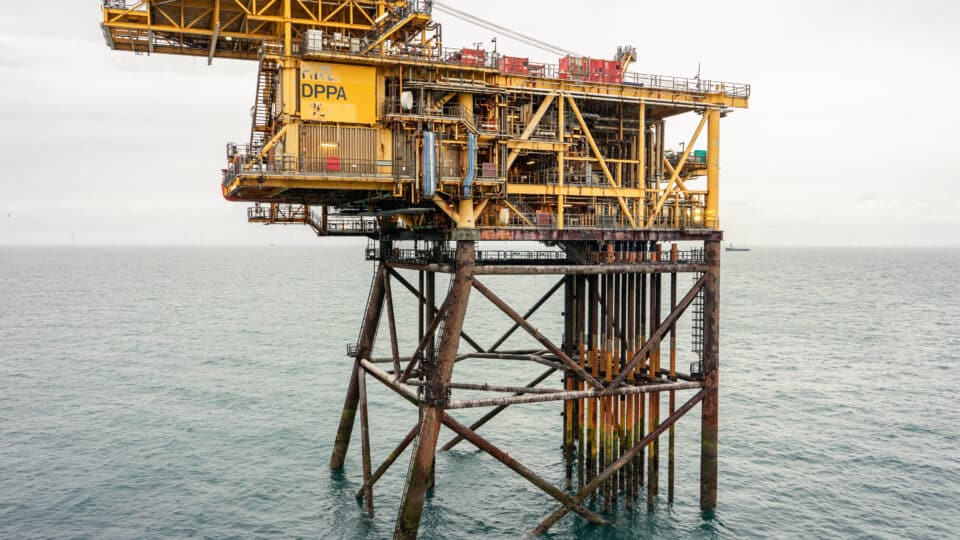
InfoBuz research: 9 October 2026. The timetable, volumes and future contributions are operators’ estimates, not guarantees. We did not carry out independent offshore inspections. The featured image is illustrative and does not show Neptun Alpha.


Discuția cititorilor
Ai o opinie sau o întrebare despre acest articol? Spune-ne ce crezi.
Fii primul care deschide discuția.
Te rugăm să păstrezi un limbaj civilizat și să discuți la subiect. Comentariile spam sunt filtrate automat.